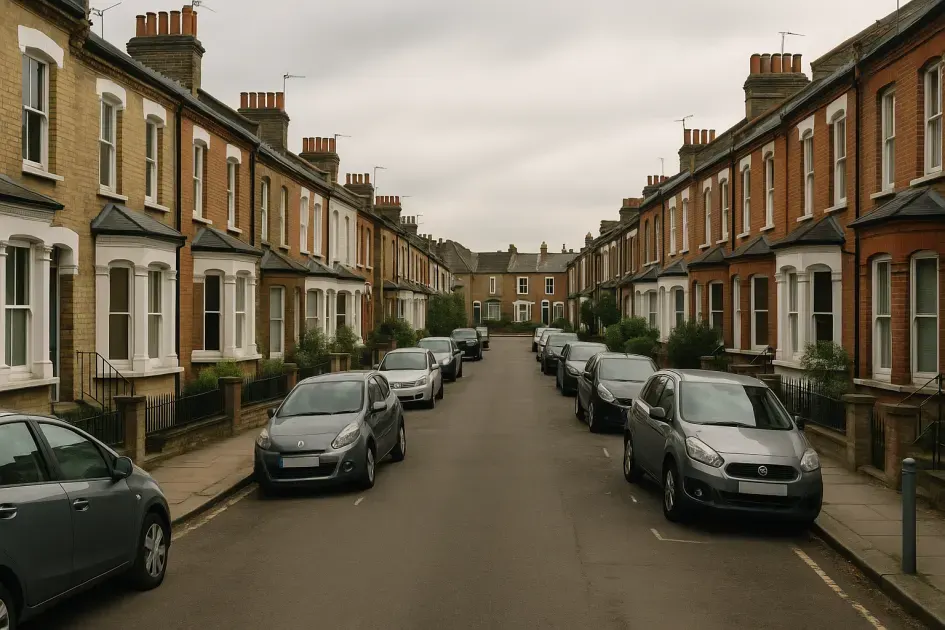
Start with a usable loading position at each address, then follow the carrying route through the entrance to the rooms. Confirm the road authority or property manager, any space or lift booking, and the access details your move needs.
On this page
Choose the loading position at each address
Start outside the collection and delivery properties. Identify where the van can load, the route from that position to the entrance and who manages the space. London streets, private estates and apartment developments can involve different arrangements even within the same neighbourhood.
For a council-controlled bay, ask the borough which parking or suspension arrangement suits the work. A visitor parking permit, a bay suspension and a yellow-line dispensation serve different purposes. Choose the arrangement for the actual position and activity, then keep its confirmation with your moving notes.
- Council street or parking bay: check the borough's guidance, the location and the signs for the intended date and loading period.
- TfL red route: use TfL's loading guidance and the bay signs to check permitted activity and times.
- Private forecourt, driveway or estate: confirm the space, vehicle access and any booking arrangements with the owner or manager.
Give the responsible authority the precise location and the information it requests, including the dates, times and vehicle details. Check its current notice period and charges early enough to arrange the space. Keep public-road permission and private-building arrangements as two parts of the same access plan.
Use the guidance for the right borough
Use the borough that controls the proposed stop at each end of the move. A move between neighbourhoods may need two separate enquiries. If the space belongs to an estate or building, ask its manager which process applies.
For example, Camden's suspension guidance asks for a clear description of the spaces, dates, times and vehicle registrations. Westminster distinguishes parking bay suspensions and yellow-line dispensations. Use the current authority guidance for the arrangement you need.
These local guides help you work through the checks for an address:
Walk the route from van to room
Follow the whole carrying route at both properties. Include the pavement or driveway, front steps, entrance, communal corridor, stairs or lift and the room where each larger item will go. Note the approximate distance from the loading position to the door as well as the floor number.
For a Victorian terrace or converted flat, check front steps, narrow doors and turns on the stairs. A basement entrance may have a different route from the main front door. Measure bulky furniture and the tight points it needs to pass through; share photographs or measurements when explaining an awkward turn.
In a mansion block, check the communal entrance, internal corridors and whether furniture can use the lift. For a suburban house with a driveway, confirm its usable space, entrance width and the carrying route from the parked van. These address-level details are more useful than assuming every terrace, block or outer-London street works in the same way.
Keep boxes and furniture ready along a clear route, with shared entrances and escape routes available. Label items by destination room so unloading follows the same plan.
Arrange lifts, entrances and loading bays together
In a managed apartment building or estate, ask which entrance is used for moves, who provides access and whether the loading bay or service lift needs a booking. Confirm the time available, lift dimensions, vehicle-height clearance and any protection or sign-in arrangements requested by the manager.
Put the loading-bay and lift appointments together so the items can travel from the van through the building during the agreed window. Include any walk between the bay and service entrance: the presence of a lift alone describes only one stage of the route.
Keep the manager or concierge contact, booking reference, entrance instructions and confirmed times in one place. Share the relevant notes with the booking team. Use the London scheduling guide to coordinate the confirmed appointments with collection and delivery. For the approach roads and vehicle checks, continue with the London route guide.
Turn the address checks into an access plan
These planning illustrations show how different London properties can call for different notes. Use the confirmed arrangements for your own addresses.
Terrace collection to a suburban house
At collection, record the agreed street loading position, front steps and stair turn. At delivery, confirm the driveway dimensions and the path to the destination rooms. Share the longer carrying route and bulky-item measurements when choosing loading help.
Flat collection to a managed development
Check the collection floor and lift, then record the destination's service entrance, loading-bay window, lift booking and internal corridor. Keep the access contact and appointment confirmation with the same notes.
Choose the van and loading option from the item list and these handling arrangements. The London costs guide explains how to turn that information into quote inputs and compare the complete setup.
Your two-address access checklist
Prepare a short access note for collection and another for delivery. For any extra stop, add the same information:
- Loading position: street, bay, driveway or private loading area, plus the authority or manager responsible.
- Permission or reservation: agreed dates and times, reference, vehicle details and the person arranging it.
- Carrying route: approximate distance, entrance, floor, steps, stairs, lift and relevant dimensions.
- Building arrangements: entrance instructions, access fob, loading-bay or lift appointment and contact.
- Items and help: bulky-item measurements, any selected furniture work and the loading option needed.
Before moving day, check the access confirmations and current signs, and share any change to the loading position or carrying route. With the outside space and inside route agreed, you can prepare the items and give clear arrival instructions.
Questions about London property access
What if the loading position is further from the door?
Record the approximate carrying distance, steps and surface between the van and entrance, and share those details with the item list. Include the distance at delivery too, so the loading help and booked time can be planned around the full carrying route.
What should I ask before using a shared lift?
Ask the manager which lift may be used for furniture, its dimensions, whether a move slot is needed and how access is provided. Put the confirmed lift arrangement alongside the loading-bay or street-loading plan.
Sources and further detail
Address-level access planning, with road-loading guidance reviewed on 12 November 2026. Building examples are planning illustrations; confirm the arrangements with the property manager.
Ready to plan your London move?
Use your access notes to check the service, pricing and availability for your move.
Plan and price your London move