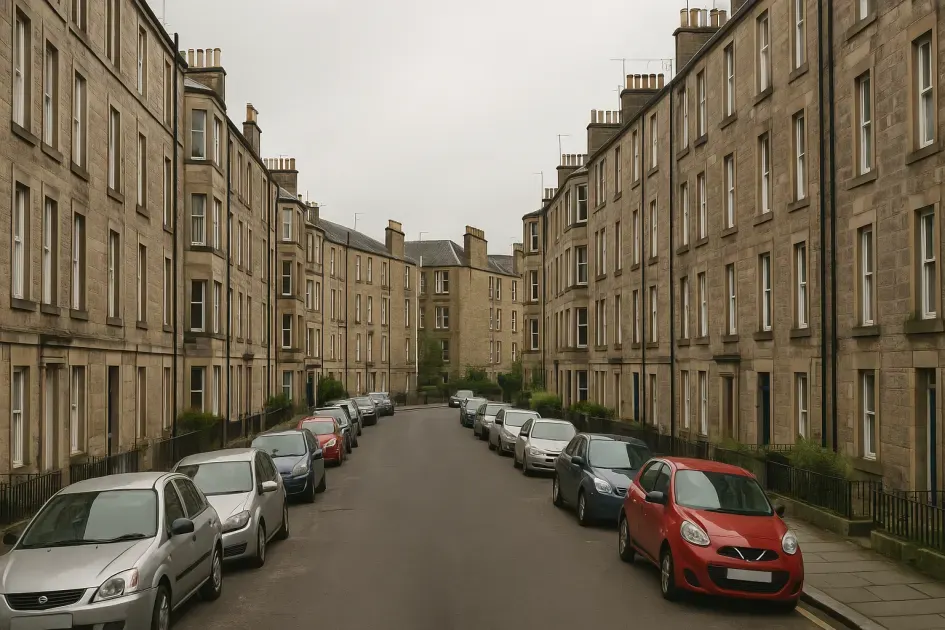
Identify the road or private controller, accepted loading position, permitted building entrance, complete carrying route and person who keeps each stage available.
On this page
Establish who controls the proposed position
Start with both full addresses and the exact street section or private space where the vehicle may stand. Identify the responsible road authority, landowner or building contact at each stop. The Edinburgh service area includes places beyond the city council boundary: a South Queensferry position and a North Queensferry position do not share one council process.
For an Edinburgh-controlled stop, the council publishes separate dispensation and suspension procedures. Ask which arrangement is relevant to the signs, vehicle, period and activity. Retain the current requirements, any charge and the actual outcome. An application or a visitor parking entitlement is not a confirmed reservation for a moving vehicle.
Describe the property entrance rather than its general type
Ask the occupier which door the goods may use and how it is reached from the working position. Include an outside stair, raised entrance, close, courtyard, gate or long path before recording the internal floor. The New Town character appraisal describes entrance steps and platts across basement areas within that conservation area. For such a property, the street-level description alone can hide a level change or a separate basement route.
The Queensferry appraisal describes narrow rear accessways and connected levels in its historic core. Those examples call for checking the actual route; they do not establish that all homes in either area have those features. With a Leith collection, a managed flat elsewhere or a house, obtain the property’s own entrance and access instructions rather than assuming them from its locality.
Follow the prepared furniture through both properties
Give each bulky piece’s dimensions in its planned travelling form, including protection, detached sections and fittings. Record every opening, step, landing, turn and outside carry between its starting room and the vehicle. Check the receiving route independently through to the final room, including any lift’s dimensions, permitted use and availability.
Use the furniture access checklist to show uncertain points safely and ask support whether assessment is needed before booking. Select carrying help for both complete routes and relevant stops. With customer loading/unloading, provide sufficient people throughout both ends; a person opening a communal door is not automatically helping carry.
Keep building admission separate from road and vehicle checks
Confirm who opens every required gate or shared door and whether an appointment covers vehicle presence, lift use, loading or the complete handover. Ask about current building instructions and any required information; do not promise a particular allocated vehicle or provider while those details are still pending. Keep the contact available until the relevant carrying and selected finishing work is complete.
Road permission does not establish private admission, and neither establishes LEZ eligibility or a permitted approach. The Edinburgh vehicle and route guide covers those journey checks. Keep an unconfirmed position, lift or alternative exit pending instead of treating a nearby open door as an accepted fallback.
Test the access periods against the complete operation
In a hypothetical move, furniture leaves a flat by a shared stair, while the receiving home has a raised entrance and a separate keyholder. Both contacts supply their accepted routes and limits. The customer gives all seller appointments, keyholder availability and any key-handover deadlines, building access periods and facility access periods to support before booking and checks that sufficient help is available for each full carry.
Allow time to get in and check all the goods and their parts. Finish any remaining agreed preparation before carrying the items that need it. Include the full collection carry and loading, the journey and every agreed stop. At each delivery, allow for access, unloading and carrying the goods into their agreed final rooms, and place them there before any selected finishing work. Pickup arrival is not completed delivery. The Edinburgh scheduling guide connects the periods; the cost guide carries the full access work into a comparable quote.
Keep one two-address access record
Record each controller and working position, current conditions, goods entrance, item-route measurements, opening contact and completion period. Mark unanswered questions and name the person resolving them. If a gate, item form or accepted entrance changes, report the new full route to support promptly.
Use the record when choosing vehicle capacity, help and booked work through Edinburgh man and van services. Keep the receiving address as detailed as collection; an accessible starting property does not settle the second carry.
Edinburgh neighbourhood moving FAQs
These answers apply neighbourhood context to the actual position, building and carrying route.
How does neighbourhood layout affect moving time in Edinburgh?
Use the layout to identify the actual carrying stages: shared doors, steps, corridors, outside sections and the lawful vehicle position. Obtain the same detail at delivery. The neighbourhood name does not determine the route or how long your full load will take.
How do parking rules change loading and unloading time?
Check what activity the signs and any permission allow at the proposed position and for what period. If a workable stop is farther away, describe that full carry in the booking brief. Building admission and a lift appointment need separate agreement.
Why can short distances still take longer than expected?
A short drive can connect two substantial carries, goods checks, preparation and controlled entrances. Plan the complete work through receiving-room placement and selected finishing, and give fixed limits to support before booking rather than using distance as the completion estimate.
How does housing density influence van positioning and timing?
Inspect the actual frontage and current road conditions instead of deciding from a density label. Record the proposed lawful position, entrance and full carry; ask the controller about permission where required and keep an unresolved position pending.
What building rules can extend a move schedule?
Ask what the building requires for admission, doors, lifts, documents and completion. Establish what each appointment covers and who stays available through all repeated carries and selected finishing. Report a conflict before booking rather than assuming that vehicle arrival meets the building limit.
How do neighbourhood traffic patterns affect a move?
Check current notices and the actual approach for your moving date, then compare them with the building’s access period. Pass relevant restrictions to support and the allocated provider. A general peak-time description does not establish a permitted route, legal stop or completion time.
Sources and further detail
Street-to-room access planning for addresses in the Edinburgh service area. Historic appraisals describe their named conservation areas; confirm the current entrance, permission and furniture route for each property. Examples are hypothetical.
Plan your Edinburgh access
Use the confirmed positions and both complete carrying routes to explain your move.
Plan and price your Edinburgh move