
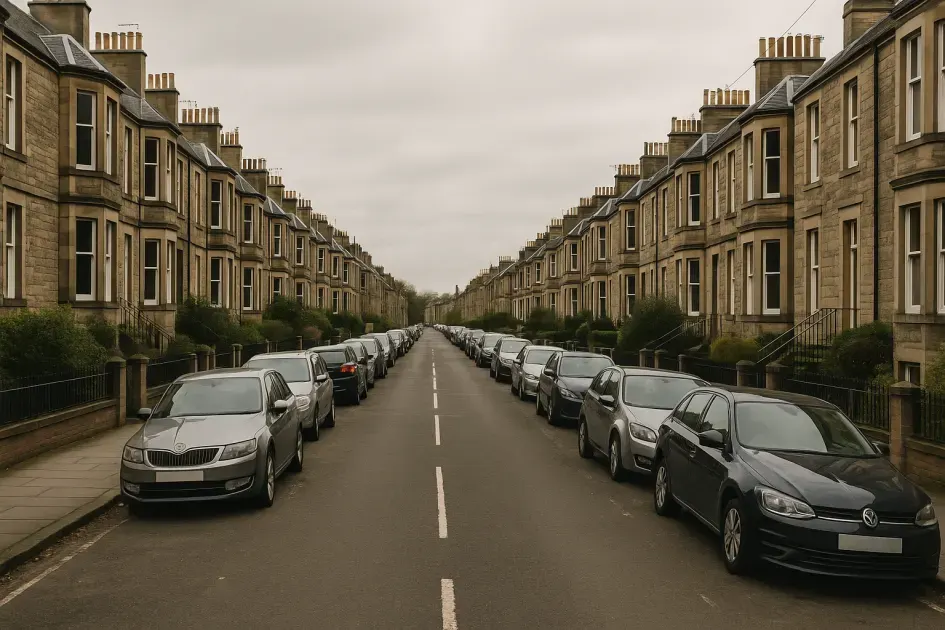
What affects cost planning for moves in Edinburgh
Moves cost more when crews spend longer on site. The main drivers are loading distance, stairs and internal routes, lift or loading-bay bookings, and parking restrictions around tenements and mixed-use blocks. Distance influences cost less than handling speed: a short hop across town can overrun if the van parks far from the entrance or items must be carried through tight stairwells.
Stairs increase handling time per item and can require an extra mover for safety. Permit zones and controlled streets create walking distance or waiting for spaces, while managed buildings often require lift bookings or security sign-ins that compress loading into fixed windows. Traffic timing around commuter peaks and school-run periods reduces route predictability and can delay arrival or departure. A big part of that sits in how route planning affects Edinburgh moves. Scheduling pressure becomes clearer in Edinburgh demand patterns at different times. Similar time pressure also shows up in man and van services in Morningside.
Loading time usually outweighs driving time. That is why a short local move with a long carry or tight staircase can cost more than a slightly longer trip with easy parking and a clearer route inside the property.
What affects cost planning for moves in Edinburgh
| Cost driver | What changes the time | Why it affects total cost |
|---|---|---|
| Parking access | Permit zones, limited bays, or distance from kerb to door | Longer walks and staging add handling minutes per item, increasing billed labour hours |
| Building layout | Stairs, narrow turns, lift availability, internal corridor length | Slower, careful carrying and possible extra crew extend on-site time |
| Van size / movers | Matching vehicle capacity and crew to volume and access | Too small a van causes extra trips; too few movers slow handling, both adding hours |
| Route timing | School-run, commuter peaks, event traffic, roadworks | Reduced route predictability extends travel and compresses loading windows |
Typical move price patterns in Edinburgh
Pricing scales with duration because labour time is the primary cost. Simple, ground-floor moves with close parking fit shorter slots; tenement stairs, longer carries and managed-building rules shift similar volumes into longer time blocks. That pattern is also reflected in how neighbourhood layout changes moving time.
| Move type | Typical time range | What affects duration |
|---|---|---|
| Room or studio with light furniture | Short window | Nearby parking, minimal packing needs, ground-floor or lift access |
| 1-bed flat in a tenement | Short window to half-day | Stairs, tight turns, and carry distance from controlled parking bays |
| 2-bed flat or terrace | Half-day to long half-day | Volume, internal routes, and whether a loading bay or lift must be scheduled |
| Larger home or added packing | Full day or more | Multiple rooms, fragile packing, and traffic timing across busy corridors |
Cost examples by move type
Example 1: Small studio, ground-floor to ground-floor
Close kerb access and compact items allow quick loading. Minimal carry distance keeps handling efficient, so time is focused on a single, well-organised load.
Example 2: Small flat with permit parking
Volume is light, but controlled bays sit a short walk from the entrance. Each item takes longer to carry, extending the schedule and increasing labour cost despite a short drive.
Example 3: 1-bed tenement, second floor, no lift
Stairs and narrow turns slow movement and require careful protection on corners. Handling time per item rises, lengthening the job even if the addresses are close together.
Example 4: 2-bed flat with loading-bay booking
A loading bay must be used within a fixed slot. The team stages items to meet the window, which reduces flexibility; any delay pushes handling beyond the slot and adds time.
Example 5: House move with partial packing and school-run traffic
Extra packing plus peak-time congestion create longer dwell and travel times. More wrapping and slower routes extend the hours, which increases the total labour charge.
How to keep the move efficient
- Permit or controlled parking zone → Arrange a temporary permit or pre-book a loading bay so the van can stop close to the entrance.
- Long kerb-to-door carry → Stage items by the exit and clear corridors to shorten walking distance per trip.
- Stairs or narrow turns → Disassemble large furniture and pre-wrap corners to prevent slow, careful manoeuvring delays.
- Managed buildings with lifts → Reserve the lift and confirm loading window rules to avoid waiting and re-staging.
- Peak traffic corridors → Schedule departures outside commuter and school-run periods to maintain route predictability.
- Mixed item sizes → Group boxes by room and weight so crews can load in balanced, efficient sequences.
- Accurate inventory → Share volume, access notes and photos in advance so the right van size and crew are allocated first time.
Across Edinburgh, neighbourhoods present different parking layouts, housing density and street widths. Tenement-heavy areas often mean stairs and permit zones; newer developments may rely on booked bays and managed access. Local conditions change handling time more than mileage.
We provide man and van services across the wider area, including man and van services in Portobello and man and van services in Queensferry, with bookings managed through one system coordinating bookings with pre-checked drivers.