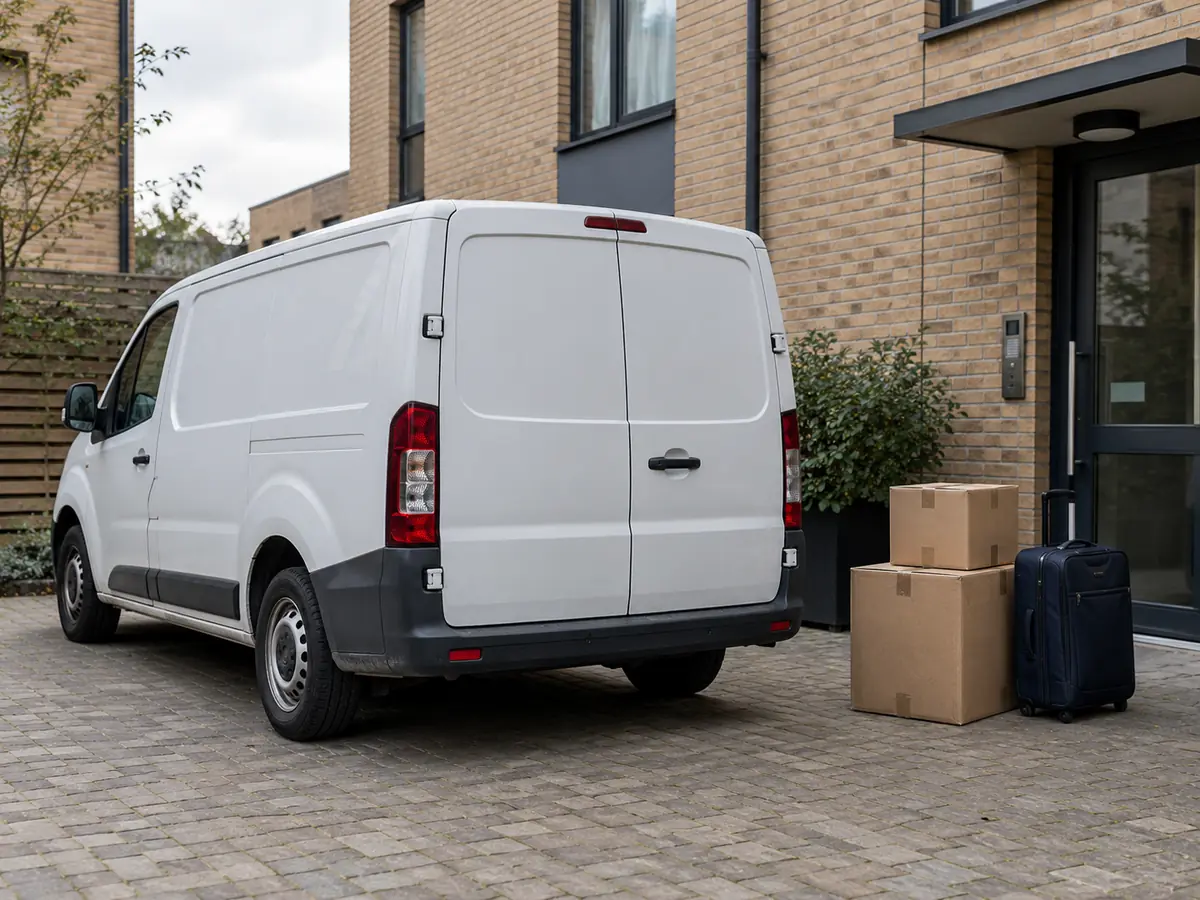
A student room move can be a few boxes, a suitcase and a desk chair. The part that needs the most coordination may be the arrival: collecting keys, reaching the correct entrance and unloading within the residence's rules.
For a London man and van booking, start with the room inventory and the actual access arrangements. A university name or a postcode alone will not tell the driver where the belongings need to go.
Confirm the hall's arrival process first
Check the instructions for your particular residence before fixing the van time. University-managed halls, private halls and shared houses can have different check-in arrangements, even within the same university.
For example, UCL's moving-in guidance asks residents to book an arrival slot and provides building-specific check-in and unloading information. Some halls use a reception at another building. That makes the check-in address and the unloading address two separate details to confirm.
King's College London also uses booked arrival slots and describes a stop-and-drop system for move-in. Treat these as examples of why you need your own instructions, rather than a rule for every London hall.
Ask the residence what happens if traffic delays your arrival and keep its contact details available. Do not promise the driver a loading bay or waiting space that the hall has not confirmed.
Build a room-sized inventory
Check what is supplied in the room and shared kitchen before adding furniture or appliances to the load. Include the size and number of boxes, suitcases, storage bags and any furniture you are taking. Photograph awkward items and measure the largest pieces.
A useful inventory distinguishes between a chair that travels assembled and a desk that must be dismantled before collection. Agree any dismantling or packing help separately; do not assume it comes with transport.
Keep identification, check-in information, medication, a phone charger and anything needed that evening in a bag you can reach yourself. UCL's guidance also explains that ordinary deliveries cannot simply be sent to its halls before arrival. Check your provider's policy before sending boxes ahead or arranging a separate delivery.
Work backwards from unloading, not just the postcode
Ask which vehicle entrance to use, whether there is a height barrier and how long unloading is allowed. Then establish the route from the stopping point to your room: floor, stairs, lift availability and any doors controlled by reception.
If key collection takes place elsewhere, allow for it before the unloading window begins where possible. A van arriving at the entrance does not mean the room is ready to receive the load.
For on-street unloading, check the actual signs and who manages the road. TfL's red-route guidance explains that signs and markings control stopping. Permission to enter a private residence is a different matter from permission to stop on the road outside it.
Choose loading help for both ends
Describe the collection address as carefully as the hall. A ground-floor family home and a third-floor shared flat create different carrying arrangements, even with the same small load.
Confirm who will carry each item and what help is included in the booking. If friends are helping, make sure they can attend at the agreed time and that their role fits the plan. Do not base the booking on help that has not been arranged.
If you hope to travel with the driver, confirm passenger arrangements in advance. A passenger place depends on appropriate seating, insurance and the driver's acceptance; it is not automatic with a student move. Have your own travel plan ready if needed.
Moving between London rooms or sharing a van
For a move from one London room to another, match the old property's departure time with the new property's access time. If there is a gap, resolve where the belongings will go before booking; do not assume storage or waiting is included.
Sharing transport with a housemate only works when the full load and every address are declared. Label boxes by person and destination, and agree the stop order before collection. Two students with separate room allocations may need different check-in arrangements.
Check capacity against the complete combined inventory. An extra trip is subject to availability and additional charges under the booking terms, so it should not be the fallback for an incomplete list.
Send one clear booking brief
Provide the collection and delivery addresses, room inventory, preferred date, confirmed arrival window, vehicle entrance, floors and lifts, carrying distance and chosen loading help. Include any passenger request or additional stop before confirming the booking.
Use the London man and van service to price those details. Keep the hall's arrival instructions with your confirmation and update the booking if the load or access changes. The aim is a small move with a complete plan, rather than a van arriving before you can get in.

Liz
Liz is a content creator and digital marketing consultant. Originally from Toronto, Ontario, Canada, she is now happily settled in the UK (after living in four different countries across 2 continents and moving house 10 times). Drawing on her experiences, Liz shares practical advice and insider tips to help others enjoy smoother, stress-free moves.

The Man and Van Guides from Find My Man and Van are designed to help you understand how man and van services work, when they’re the right option, and how to get the best value for your move. From van sizes and loading tips to short-notice bookings and single-item moves, our expert guides break down everything you need to know before hiring a man and van anywhere in the UK.