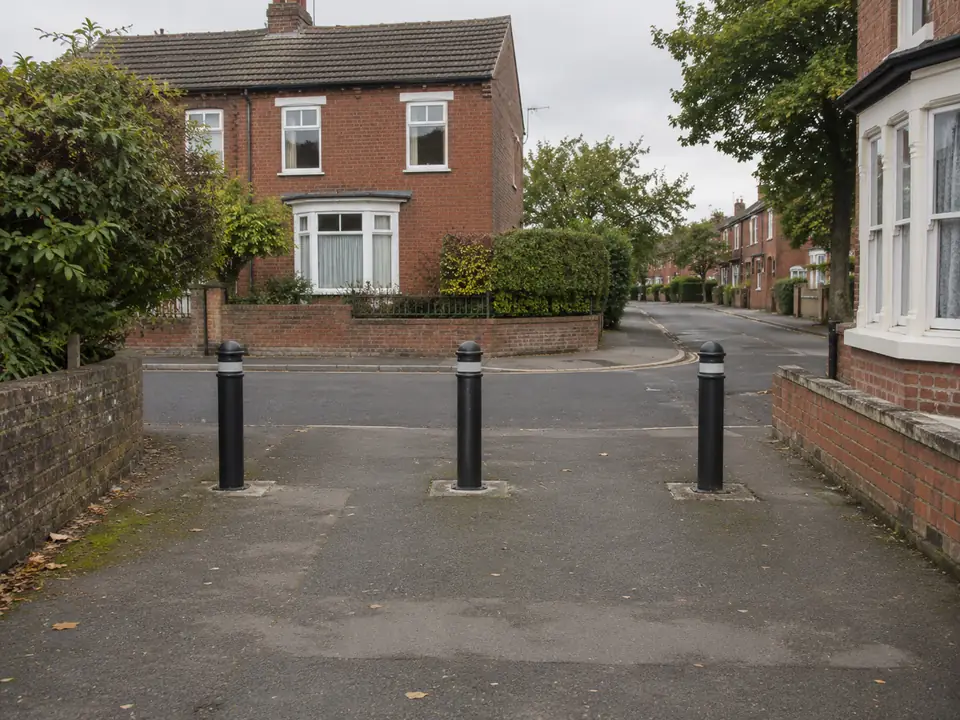
The shortest line between two addresses may not be a route the moving van can use. A bus gate, fixed barrier or camera-enforced traffic filter can change the approach to a property even when the address itself remains reachable.
Give the provider the entrance used for moving and any known access restriction before agreeing the arrival plan. The question is whether the actual vehicle can use the intended approach on the moving date, not whether an ordinary car route reaches the postcode.
Identify the restriction before choosing an alternative
Find the authority’s current scheme map and read the signs for the exact location and direction. Record whether it is a bus gate, bus lane, timed motor-vehicle restriction, physical closure or another control. Similar-looking schemes can permit different vehicles.
Check whether the source describes a proposal, trial or operating arrangement. Ask the traffic or highways team to clarify an uncertain entrance, boundary or exception. A seller, concierge or neighbour may describe a convenient route, but their directions do not establish road-entry permission.
Do not plan to move bollards or use an emergency-access facility. If a private barrier is involved, ask its authorised manager about the normal access process and keep that separate from highway restrictions.
Bristol shows why a bus gate is a precise location check
Bristol City Council’s bus-gate page, checked on 13 November 2026, describes its bus gates as operating continuously and lists location-specific vehicle exceptions. The listed HGV treatment differs between some gates. That is not permission for an ordinary moving van to use a gate.
Use the location’s actual rule and the provider’s vehicle information. Do not translate an HGV entry in a table into “commercial vehicles allowed”, or assume that a loading appointment beyond the gate creates an exemption. Where a dedicated scheme page has additional conditions, read that page too.
Oxford illustrates a different vehicle rule
Oxfordshire’s traffic-filter guidance, checked on the same date, says the filters apply to cars and motorhomes classified M1, while vans and other listed vehicle categories are not affected by those filters. It directs users to check vehicle type approval if unsure.
This contrast is the useful lesson: a restriction’s name does not settle which vehicle can pass. Do not apply Oxford’s rule to Bristol, a private estate barrier or another traffic scheme. Nor does passage through one filter settle any separate emissions, loading or turning restriction on the journey.
Confirm the allocated vehicle and any permit process
Ask the provider for the vehicle classification needed by the scheme, with registration and relevant dimensions when available. Describe the load and access early if a particular vehicle type may be unsuitable. A general vehicle label on an enquiry is not a registration-specific permission check.
Where an exception or permit may apply, establish who can apply, which vehicle it covers, when it becomes valid and how confirmation reaches the driver. Keep an unapproved application marked as pending. If the van changes, repeat the checks affected by that change.
Use the authority’s own contact route for eligibility questions. The moving provider assesses the transport and route; the relevant authority determines its scheme permissions. Neither role is replaced by a sat-nav suggestion.
Plan the final approach to the loading entrance
Start from the agreed loading place and work backwards with the provider. Record the street it is on, the direction of approach, permitted turn and any gate or barrier before it. If a building’s service entrance differs from its postal address, show both clearly.
Share the official scheme map rather than drawing an unverified shortcut. The provider should assess the whole alternative for the allocated vehicle, including height or width limits, weak bridges, one-way streets and turning room. A detour that avoids one restriction may introduce another.
Our historic and restricted-access guide covers street-to-room planning. For a London endpoint, keep the London route checks with that endpoint; they do not govern a delivery elsewhere.
Keep road entry, loading and the quote separate
Permission to pass a filter does not reserve kerb space or authorise waiting. Confirm the lawful stopping position with the appropriate council or landowner. If an alternative position creates a longer carry, explain the distance, steps and surfaces before the handling and time are agreed.
A changed approach can also affect mileage and an appointment. Discuss a route change through the booking channel before proceeding; FMMV’s journey-change FAQ explains the need for agreement. Do not treat a possible additional stop or detour as already included.
Give the driver a usable arrival record
Keep one compact record for each address: moving entrance; scheme/map link and check date; vehicle/category used for the check; permission status and reference; intended loading place; assessed alternative; appointment; and contact who can resolve access on the day.
For example, “rear loading entrance on a different street, council map attached, gate eligibility awaiting actual registration” is useful information. “Follow the postcode and call when outside” hides the decision until the van arrives.
Recheck if the vehicle, street arrangement or moving date changes. For a single-item enquiry, include this arrival record with the item measurements and release contact. For a full household, supply it with the complete removals inventory. The aim is an agreed approach to a usable entrance, followed by the handling work actually booked.

Liz
Liz is a content creator and digital marketing consultant. Originally from Toronto, Ontario, Canada, she is now happily settled in the UK (after living in four different countries across 2 continents and moving house 10 times). Drawing on her experiences, Liz shares practical advice and insider tips to help others enjoy smoother, stress-free moves.

The Man and Van Guides from Find My Man and Van are designed to help you understand how man and van services work, when they’re the right option, and how to get the best value for your move. From van sizes and loading tips to short-notice bookings and single-item moves, our expert guides break down everything you need to know before hiring a man and van anywhere in the UK.