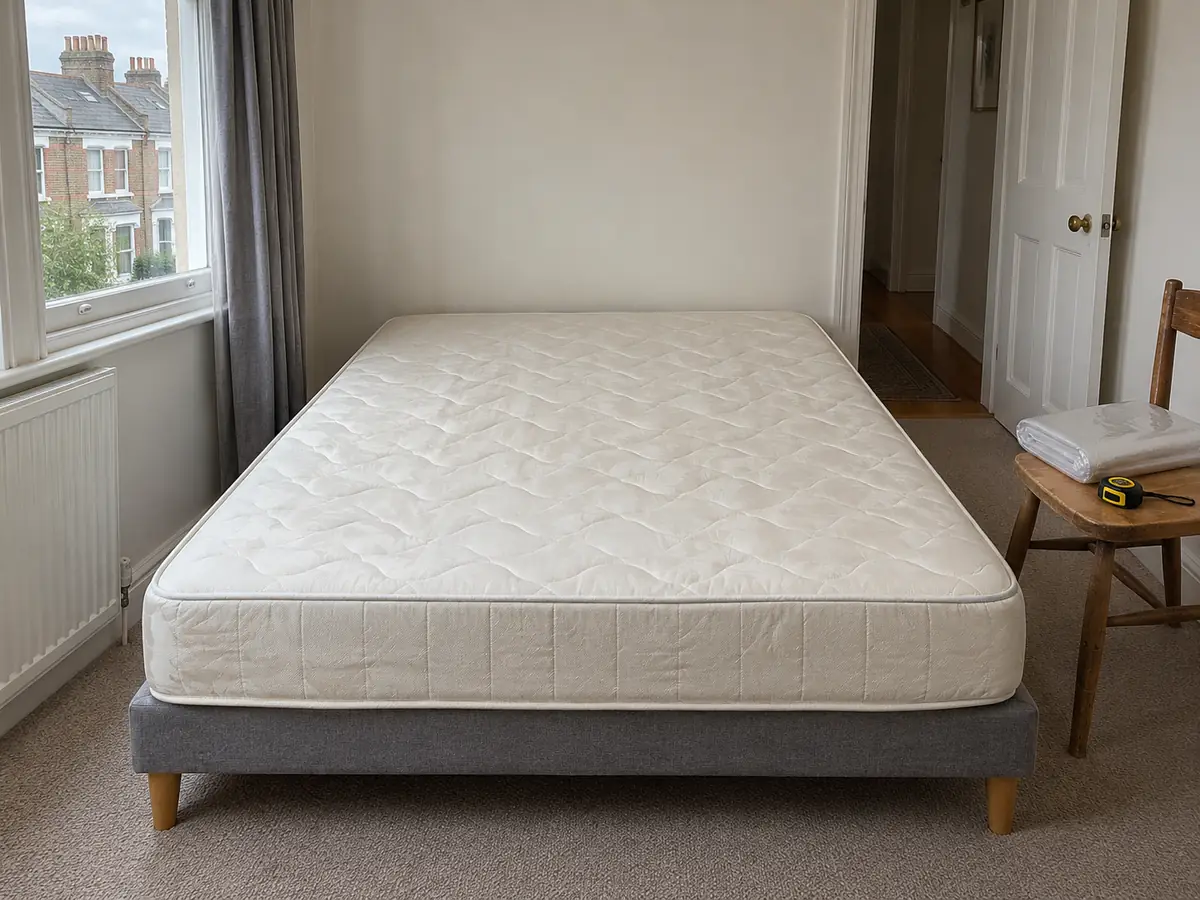
A mattress can be the only item in a collection and still need a detailed plan. Its length, depth and permitted transport position affect both the vehicle space and the route through the building. In a London flat, the awkward part may be the turn at the landing rather than the journey between postcodes.
Before booking a man and van, identify the mattress and check how it can be moved. Then agree the carrying help, protection and access at both addresses. A booking for a mattress does not automatically include a bed frame, dismantling or removing an unwanted mattress.
Start with the mattress, not just the bed-size name
Record the make and model if you can, together with its actual length, width and depth. Include its weight if the manufacturer provides it, and tell the booking team if you do not know. A label such as “double” is a starting point, not a substitute for measurements.
Explain whether it is already expanded or still in the manufacturer's unopened delivery packaging. An expanded mattress should not be described using the dimensions of the box it originally arrived in. Include any separate topper or base in the inventory.
Check the permitted position before choosing space
Find the manufacturer's instructions for moving your particular mattress. Do not assume it can be bent round a stairwell or rolled back into its original box because it was delivered compressed.
Simba's moving guidance, for example, advises against bending an expanded mattress and describes its own limits for being on its side. TEMPUR's care guidance has its own handling and storage instructions. These are product-specific examples, not a universal rule for foam, sprung and hybrid mattresses.
Share the relevant instructions with the mover before confirming transport. If the required position cannot be accommodated in the proposed vehicle or along the route, resolve that first. Do not plan around forcing the mattress through a gap.
Measure the complete route out and in
Check the bedroom doorway, corridors, stair turns, shared entrance and the receiving room. Measure the usable openings and note low ceilings, handrails or other fixed obstructions. Photographs can help explain the route, but they do not prove an item will fit.
For a lift, ask the building manager about the usable opening, cabin size, weight limit and any booking or protection requirements. A lift being present does not mean it can take the mattress in its permitted position.
Tell the booking team the floor at each end, any stairs before the lift and the distance between the entrance and a lawful loading position. A short road journey can still involve a long carry inside an estate or apartment building.
Agree clean, dry protection and the people handling it
Ask what cover or packaging suits the mattress and who supplies and fits it. Have protection ready before the item leaves the room. A cover should not be treated as a lifting device, and packaging does not remove the need for suitable handling.
Discuss the number of people and the work required at both addresses. Do not assume a driver-only booking includes carrying the mattress upstairs, or that a seller, concierge or neighbour will help. If a bed frame also needs taking apart, identify that as a separate task and confirm it in the booking scope.
Keep the agreed route clear for collection and delivery. Have somewhere suitable to receive the mattress so it is not left blocking a shared entrance while you prepare the room.
Check the London loading arrangements for the actual address
Find out where the van can lawfully stop at each property and whether the building has its own loading entrance or arrival window. Check the relevant borough or TfL information and the restrictions at the location; a clear-looking space outside is not a confirmed loading place.
London Councils' loading guidance distinguishes loading from waiting and explains that restrictions and permitted times vary. Do not build the collection around a supposed London-wide allowance. If you need a suspension, dispensation or private loading slot, establish the requirements before fixing the transport time.
For broader local booking details, use the London man and van page. Give the actual entrance and carry distance rather than only the postcode.
Keep the collection and disposal arrangements separate
For a purchase or a mattress held by someone else, confirm who will release it and when it will be ready. Check its condition and suitability before arranging collection; transporting it is not a hygiene inspection or a decision about whether you should buy it.
Make the item count clear at handover. If an old mattress is staying behind or going elsewhere, say so. Do not assume the delivery includes taking it away, returning to another address or disposal.
Send one complete collection brief
Include the mattress model and measurements, its permitted transport position, photographs, cover arrangements, collection contact and access at both ends. Declare any other pieces travelling with it and agree the applicable cover and reporting process.
Use single-item transport for an enquiry about the mattress on its own, or furniture movers when a bed or other furniture is part of the load. Confirm acceptance and the full scope for this particular job before relying on the collection date.

Liz
Liz is a content creator and digital marketing consultant. Originally from Toronto, Ontario, Canada, she is now happily settled in the UK (after living in four different countries across 2 continents and moving house 10 times). Drawing on her experiences, Liz shares practical advice and insider tips to help others enjoy smoother, stress-free moves.

The Man and Van Guides from Find My Man and Van are designed to help you understand how man and van services work, when they’re the right option, and how to get the best value for your move. From van sizes and loading tips to short-notice bookings and single-item moves, our expert guides break down everything you need to know before hiring a man and van anywhere in the UK.