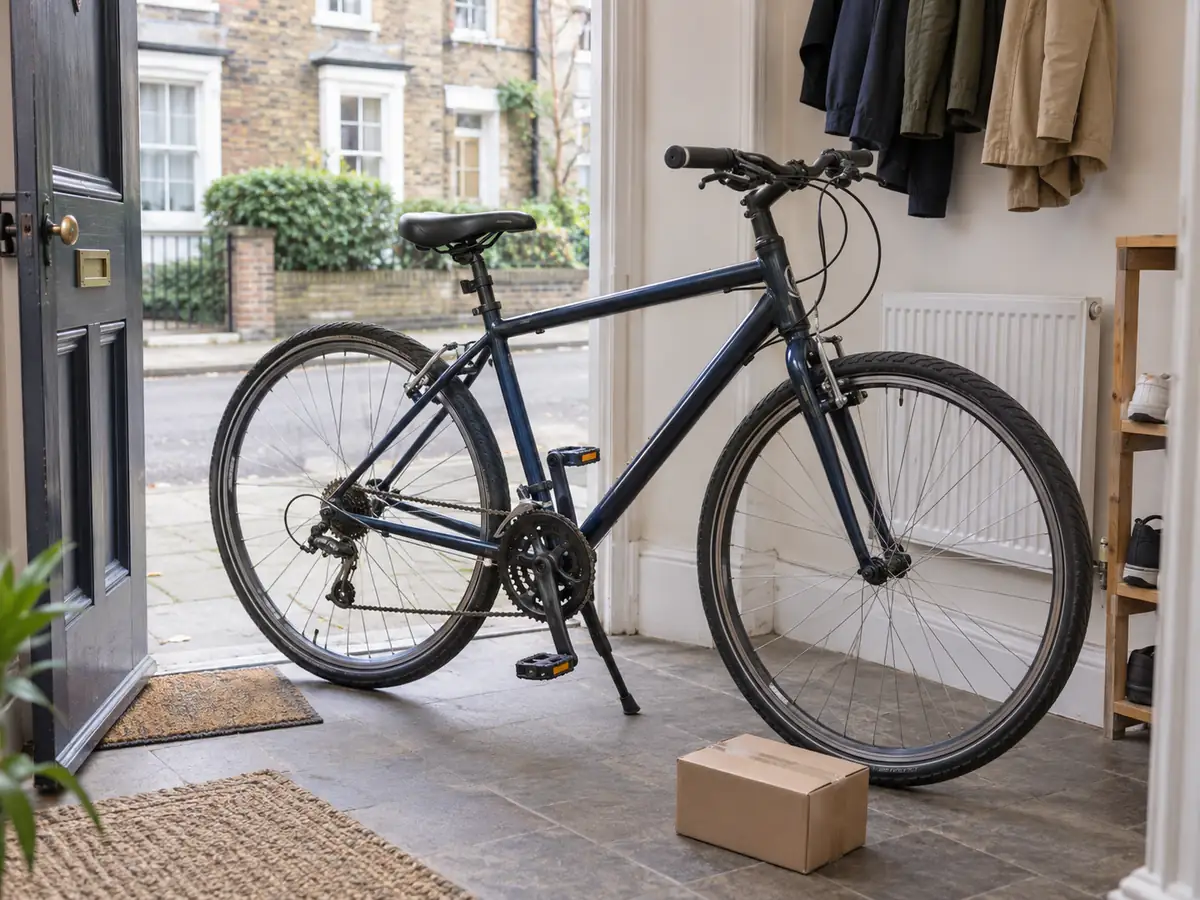
A bicycle collection needs more information than “one bike”. A complete adult cycle, a boxed frame and a bicycle with detached wheels present different loads. Accessories, preparation and access can also change what the collecting person is expected to do.
For a London man-and-van enquiry, describe the actual bicycle and the collection arrangement before fixing the date. Confirm that it can be accepted with the proposed preparation, handling and cover. This checklist concerns an ordinary pedal bicycle; declare an e-bike, cargo cycle, tandem or other unusual item separately rather than assuming the same arrangement applies.
Describe the bicycle in its travelling configuration
Record the make, model, frame type and overall dimensions in the condition in which it will be collected. Include handlebars, mudguards, racks and anything else that affects its space. If it is packed in a case or carton, give the outside measurements too.
Photograph the bicycle from useful angles and say whether both wheels will be attached. Identify any damage or handling concern, including a wheel that will not turn or a part that is loose. Do not describe a folded bicycle using its unfolded dimensions or assume a folding model will be folded by the driver.
For several bicycles, list them separately. Count each travel case, wheel bag and accessory carton as well, so the handover has a clear item record.
Agree preparation using the model's instructions
Check the bicycle and packaging manufacturers' transport instructions. Establish whether it will travel complete or require preparation by you or a cycle shop. Do not remove components merely to fit a guessed van size.
Cycling UK's transport guide highlights that removing a wheel can introduce extra protection requirements, particularly around disc brakes. That is a reason to arrange the correct preparation, not a universal instruction to dismantle every bicycle for a van journey.
Ask a competent cycle technician if you are unsure about wheel removal, frame protection or reassembly. Agree who supplies suitable packaging and who completes the work before collection. A man-and-van booking does not itself include cycle servicing, adjustment or a mechanical inspection.
Keep accessories and personal belongings on the list
Decide what stays fitted and what will be packed separately, following the relevant instructions. Include detachable bags, lights, locks, chargers where relevant and any loose parts. Keep keys and the information you need at the receiving address accessible to you.
Do not leave small items attached loosely or expect the collecting person to search a property for them. If you are collecting from a shop or another owner, agree which accessories form part of the handover before the appointment.
Declare anything with a battery and ask for acceptance and preparation instructions before booking. This article does not establish whether a particular battery-powered cycle or separate battery can be carried.
Confirm who may release the bicycle
For a shop collection, wait until the shop confirms that the bicycle is ready and ask what authority is needed for someone else to collect. Supply the actual branch or workshop entrance, collection contact and agreed appointment. An order confirmation is not necessarily a ready-to-collect notice.
For a private purchase, settle ownership, payment and any inspection separately. Give the seller clear instructions about the person collecting and the items being released. The driver should not be expected to test ride the bicycle, negotiate the purchase or decide whether its condition matches the advertisement.
If something is missing or differs from the agreed handover details, contact the relevant parties before the collection proceeds. A clear item record makes that conversation more useful than a vague instruction to collect “the bike”.
Check London access at both ends
Explain whether the bicycle is in a flat, basement, communal cycle store or shop. Confirm who can unlock doors and how the bicycle will reach the loading position. A concierge or building manager should not be assumed to provide access without an agreed arrangement.
Check stairs, tight turns and lift rules for the bicycle or its case. Give the distance from the lawful stopping place to the entrance and any timed access restriction. Keep routes usable for other residents and pedestrians.
London Councils' loading guidance explains that loading permissions depend on the location and restrictions. Confirm the arrangements for each address rather than treating a brief collection as permission to stop anywhere. The London man and van page covers the wider service enquiry.
Agree protection, cover and the receiving handover
Describe the bicycle's nature and value and check the applicable cover, limits and exclusions before accepting the transport arrangement. Do not assume that a cycle policy, purchase protection or transport cover provides the same protection.
Agree a record of the visible condition and the accompanying items at collection and delivery. Photographs can support that record but do not replace a mechanical check. Keep the contact details needed to report a concern through the agreed process.
Arrange any necessary reassembly and checks before the bicycle is ridden. Delivery of a case or partly dismantled bicycle is not confirmation that it is ready for the road.
Request transport for the complete collection
Send the inventory, dimensions in the agreed travelling configuration, preparation plan, release instructions, contact details and access at both addresses. Include any additional stop or other items from the outset.
Use a single-item transport enquiry to establish whether the specific bicycle and collection can be accepted. For a bicycle travelling with a room move, include it in the complete small-move inventory. Confirm the job and its limits before anyone relies on the collection appointment.

Liz
Liz is a content creator and digital marketing consultant. Originally from Toronto, Ontario, Canada, she is now happily settled in the UK (after living in four different countries across 2 continents and moving house 10 times). Drawing on her experiences, Liz shares practical advice and insider tips to help others enjoy smoother, stress-free moves.

The Man and Van Guides from Find My Man and Van are designed to help you understand how man and van services work, when they’re the right option, and how to get the best value for your move. From van sizes and loading tips to short-notice bookings and single-item moves, our expert guides break down everything you need to know before hiring a man and van anywhere in the UK.