
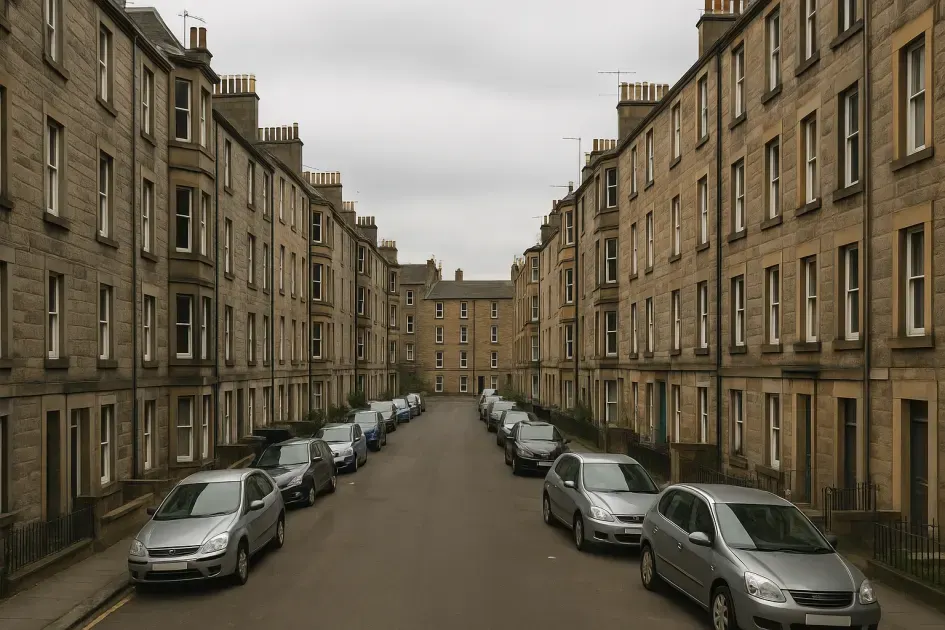
Access and property constraints in Edinburgh
Many addresses sit on narrow streets with permit parking and limited frontage. Tenement stairs, shared entrances, and tight hallways can slow loading. Flats may have concierge rules and set loading windows, while some modern blocks require lift bookings. Where frontage is tight, crews may stage items curbside and relay to the vehicle.
- Narrow streets and tight frontage access can limit vehicle size.
- Permit-only bays and controlled loading windows affect start times.
- Stairs increase carry time; bulky items may need partial dismantling.
- Flats and managed buildings often require prior approval and lift slots.
For broader planning context, see these related guides:
Street access and loading realities
Expect tight turns, bus routes, and busy junctions, especially near the centre. Where streets are narrow or parking is heavily controlled, a shuttle vehicle can move goods from the door to a larger truck parked legally nearby. Controlled loading windows mean crews must arrive ready to work immediately—items should be staged near the exit and dismantled in advance.
Where carry distance is unavoidable, plan an equipment-led approach: dollies for longer corridors, door and bannister protection, and a clear flow from property to vehicle. Confirm if any nearby streets have timed restrictions that might affect arrival or departure.
Building and property friction
Tenement stairs and shared entrances require careful traffic management to avoid blocking neighbours. Flats with concierge rules typically ask for proof of insurance, lift pads, and strict start/finish times. In walk-ups, crew rotation helps manage fatigue on upper floors. Terraces with steps to the pavement often need a relay from doorstep to curb, increasing handling time.
- Stairs: increase handling time; protect bannisters and corners.
- Lift bookings: confirm time, capacity, and any padding requirements.
- Concierge rules: share certificates and agree the loading path in advance.
- Long carries: stage goods, use trolleys, and keep exits clear.
Parking, permits, and managed access
Permit parking and bay suspensions should be arranged early, with exact locations agreed to minimise carry distance. If a bay cannot be suspended, identify the nearest legal alternative and plan for a shuttle or relay. Confirm any controlled loading windows with the building manager and align your arrival and departure around them. Keep a printed plan showing bays, vehicle positions, and the route from the door to the load point.