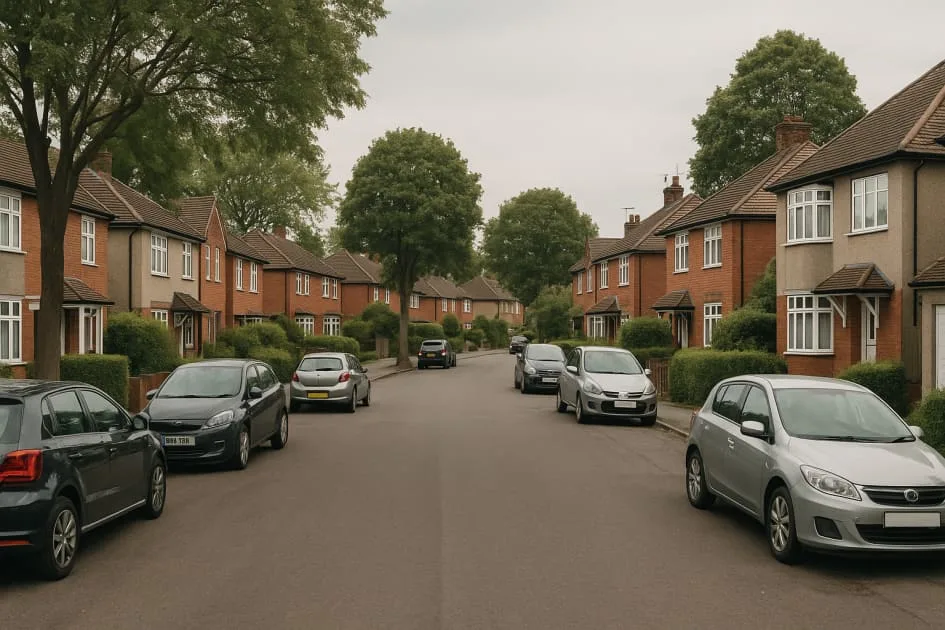
How moving conditions vary across Watford
Watford mixes Victorian terraces near the centre, 1930s semis on broader suburban roads, newer apartment blocks around key junctions, and cul-de-sacs off the A412 and A411. Where driveways exist, vans can park close to the entrance and loading runs are short. Terraced streets often have controlled zones that push vehicles further away. Apartment blocks may require lift access and bay booking. Short cross-town drives can still take longer when narrow streets or one-way systems restrict van positioning and extend carrying distance at either end. The pricing effect of those conditions is clearer in how these conditions affect moving costs.
Neighbourhood access patterns
Town-centre streets often have time-restricted bays and single yellows, creating tight loading windows. Managed apartment developments may provide loading bays but require gate codes or reservations. Terraced areas can be narrow, with residents’ permits limiting kerbside stops. Suburban semis typically offer driveways, making door-to-van transfers faster. Close to schools, short peak-time closures and crossing patrols slow approaches. These patterns mean identical move sizes take different time depending on whether you can stop near the door, turn the van easily, and keep a predictable route in and out. The route-planning side is covered in Watford route and loading access planning. A contrasting neighbourhood pattern appears in man and van services in Ruislip.
Property and loading differences
Property type determines carrying distance and lift availability. Ground-floor terraces may be quick if parking is close, but a 20–30 metre carry appears where kerb space is busy. Maisonettes with external stairs slow handling because larger items need careful turning. Mid-rise apartments concentrate moves into lifts and corridors, adding waits between trips. Suburban semis often have shorter carries but longer garden paths or steps can add delay. These building features directly change the number of loading cycles per hour and the flexibility to scale with larger vans or additional movers.
How to choose the right planning approach
Start with access geometry, not postcode: confirm where a van can stop, the carry distance, and any building rules. If permits are needed, secure them ahead of time. Pick a van size that fits street width and turning space rather than simply volume. Time your move to avoid school-run or stadium-adjacent peaks where possible. Reserve lifts and loading bays so loading cycles are predictable. When access is tight, plan for extra hands or shuttle loading from a legal bay to the entrance to keep the schedule moving.
City-wide baseline: time drives outcomes
Across Watford’s mix of terraces, apartment developments and suburban semis, parking availability, housing density, building access and route predictability govern total duration. Close kerb access shortens each carry; dense streets or managed blocks extend it with permit checks, lift waits and corridor transfers. Predictable routes via the ring roads help, but narrow residential roads and time-limited bays can still slow unloading. The result: loading and unloading efficiency, not distance, usually sets the clock. All of these neighbourhood differences feed into the wider city-wide pattern covered on Watford man and van services. One clearer neighbourhood example is man and van services in North London.
Eight variables that change moving time locally
1) How permit parking delays loading
Permit zones can prevent a van from stopping at the door. Without a visitor permit or dispensation, crews must park further away, turning a short carry into repeated long walks with furniture. That multiplies handling cycles and reduces hourly throughput, extending the overall schedule even if the drive between addresses is brief.
2) Why terrace streets limit van positioning
Narrow terrace streets restrict where a van can pull in, especially if cars are parked on both sides. Limited passing space forces careful manoeuvres or distant parking. That increases carry distance and complicates loading angles at the door, slowing each bulky-item transfer and reducing the effectiveness of larger vans.
3) How building layout alters carrying distance
Layouts with long garden paths, external stairs or internal corridors create extra metres per trip. Even a ground-floor flat can take longer if the entrance sits back from the kerb. More distance per item means more time per cycle, which compounds across boxes and furniture and reduces schedule flexibility.
4) Why managed buildings introduce booking rules
Apartment blocks often require booking a loading bay and a goods lift. If the slot is late or the lift is shared, crews wait between load cycles. These pauses fragment the workflow, preventing continuous loading and pushing the finish time later, particularly when high-floor access concentrates every item into the lift.
5) How street width affects van access
Where turning circles are tight, long vehicles may struggle to position near the entrance. Reversing from a wider junction or stopping short becomes necessary, adding walking distance and time for safe manoeuvres. Choosing a shorter van for tight streets can reduce positioning delays and keep load cycles faster.
6) Why route predictability changes travel time
Predictable routes via main arteries keep the travel segment steady. When one-way systems, school streets, or frequent temporary works force detours, arrival windows shrink. That compresses loading at the destination and increases idle time if crews reach the area before legal stopping becomes available.
7) How loading bay rules affect unloading speed
Time-limited bays require fast, organised drops. If documents or keys aren’t ready, the window can expire mid-unload, forcing a re-park and a restart. Each interruption adds walking, re-securing items, and traffic exposure, all of which slow the final stages of the move.
8) Why neighbourhood traffic patterns delay moves
School-run and commuter peaks add variability to short trips. Queues at junctions and pedestrian crossing holds reduce average speed and make timing less reliable. When arrival shifts later, lifts, bays or permit windows may no longer align, producing additional waits and pushing completion into busier kerbside periods.
Practical planning checklist
- If permit parking restricts kerb access, arrange a visitor permit or dispensation and display it before the van arrives.
- If a building requires bay or lift booking, confirm slot times in writing and share access codes with the crew lead.
- If road width is tight, select a shorter van or pre-arrange a turning point to avoid time-consuming repositions.
- If school-run traffic is heavy on your route, schedule arrival outside peak windows to protect loading time at each end.
- If the kerb-to-door carry exceeds a short walk, stage items near the entrance in advance to shorten each loading cycle.
Scenario examples
Example 1: Studio move from a suburban semi with driveway to another semi. Small van with one mover. Direct door access and wide street allow quick cycles; minimal manoeuvring keeps the schedule tight.
Example 2: One-bedroom terrace to terrace on a narrow Cpz street. Medium van with two movers. Permit parking places the van down the street, creating a longer carry that adds handling time despite a short drive.
Example 3: Two-bedroom flat in a mid-rise block to a semi. Medium van with two movers. Goods lift booking and a shared loading bay create waits between trips, extending unloading even though road access is reasonable.
Example 4: Three-bedroom semi across town via A412 during school-run. Long wheelbase van with three movers. Congested approaches and crossing patrol delays reduce route predictability and compress unloading windows, extending the schedule.
Example 5: Three-bedroom apartment in a managed block to a terrace on a narrow street. Luton van with three movers. Bay reservation, goods lift sharing, and permit parking at the destination combine into longer carries and staged unloading, increasing total time.
Apply neighbourhood context
Different parts of Watford create different planning conditions. Permit parking zones near terraces restrict kerb space, apartment blocks introduce lift and bay rules, while suburban semis often allow driveway access. Parking layouts, housing density and building access rules vary across different parts of Watford. The guides below explain the practical moving considerations for each neighbourhood.