Identify the lawful loading position, authorised goods door and complete route at each end. Confirm the prepared items, sufficient people and who can keep entry available throughout the work.
On this page
Identify the goods door and complete route
Start from the full address and the exact place where goods are held. Confirm which entrance serves the household, flat or seller’s premises and who can authorise release. A shop frontage, nearby gate or neighbouring side passage does not establish the route your goods may use.
Walk from each selected starting room to the proposed vehicle position. Include doors, turns, stairs, outside levels and the prepared furniture. Have the recipient make the same independent check into the intended rooms; a clear collection route does not prove that delivery will fit.
Apply the named local setting to the current address
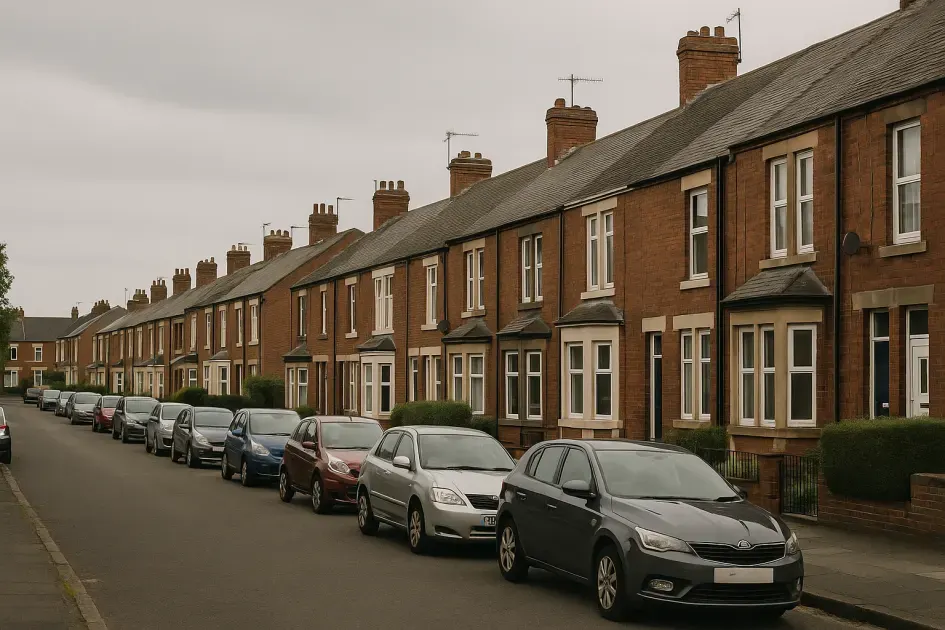
The South Jesmond statement, updated March 2007, describes substantial garden setbacks on Osborne Avenue and angled front paths at Chester Crescent. At a relevant property, check the current gate, offset doorway and turning space rather than treating the street edge as the goods door. A garden or hardstanding area is not automatically available to the moving vehicle.
The Lower Ouseburn Valley statement, revised September 2004 and printed April 2005, describes a deep valley and the steep Stepney Bank approach. If that setting is relevant, describe the actual goods entrance and outside rise or drop alongside indoor floors. Do not assume a route visible on a map is a permitted, suitable furniture path or vehicle approach.
Confirm street and private access separately
Newcastle’s suspension process concerns particular parking bays; its dispensation process is a separate request concerning restrictions. Ask which arrangement applies to the actual vehicle, location and activity, then obtain the relevant outcome and conditions. A transport booking does not reserve a street space.
For North Shields, South Shields or another endpoint outside Newcastle, confirm the responsible authority for that position and use its current process. Ask the property or site controller separately about private vehicle admission, loading areas and the goods route. An emissions result for the journey does not grant any of these permissions.
Agree preparation and enough carrying people
Check furniture in the form that will travel, including packaging, rigid sections and loose parts. Explain unreliable weight information or unresolved suitability to support before booking. Arrange preparation outside the booked services, and complete remaining agreed preparation before carrying the items that need it.
Choose enough assistance for every item through both complete carries and all agreed stops. With customer loading and unloading, arrange sufficient capable people independently; driver carrying help is excluded. The keyholder or seller may only be available to admit the team. Confirm any usable lift, and have a proposed stair alternative assessed separately.
Packing/unpacking, disassembly and assembly may be agreed at any declared stop, subject to eligible provider availability. Packing and unpacking share one selection, allowance and rate. Optional work is separate elapsed team time in 30-minute blocks at the booking rate, apart from ordinary loading and unloading. Supply materials unless otherwise agreed in writing.
Keep access usable through the receiving finish
Give support seller appointments, keyholder availability and handover deadlines, checkout requirements, street loading periods, building or facility appointments and receiving completion requirements before booking. Confirm an authorised way to regain entry during repeated carries while respecting security and other occupiers.
Plan time to gain entry and check the complete goods and parts. Finish remaining agreed preparation before moving the pieces concerned. Carry the goods to the vehicle and load them at each collection, allowing for the journey and all agreed work at every stop. At delivery, arrange entry, unload and carry everything into agreed rooms, then place the goods and complete selected finishing. Tell support promptly if the route or people change, and clarify changed work, additional time and outside charges separately.
Newcastle property and loading-access questions
Check the actual positions, entrances and people needed for the two properties.
How does neighbourhood layout affect moving time in Newcastle?
The actual entrance, lawful position and property route can change carrying work and the people required. Describe them at both ends, with all goods and stops. Use local context to prompt checks, not as a substitute for the current property instructions.
Why does parking access change loading speed?
The permitted position determines the complete carry to the goods door. Check the path, openings and outside levels as well as the indoor route, then give support the details before booking. A nearby space is not automatically lawful or suitable for the work.
Why does distance matter less than access conditions?
Both the full journey and property access belong in the move assessment. A short route can still involve substantial carrying, while a longer journey remains work to include. Describe your actual addresses, goods, stops and both complete routes rather than using a general comparison to leave something out.
How does housing density influence van positioning?
Confirm the actual available position and restrictions rather than inferring them from housing density. Measure the full route from the lawful position, with the vehicle approach and enough help assessed for the complete load.
How do building rules alter scheduling?
Ask the actual controller about moving periods, entry, any lift or bay booking and how admission is maintained throughout the work. Give support those conditions and the required receiving finish before booking. Arrival inside a period does not establish completed delivery.
How do local traffic patterns impact move timing?
Check current restrictions, roadworks or event arrangements relevant to your actual journey and date. Give support any specific access period or completion conflict before booking, without assuming a universal quiet hour or traffic pattern across Newcastle.
Sources and further detail
Newcastle property-access planning. Named South Jesmond and Lower Ouseburn examples concern historical defined areas, not current permission or every home in those districts.
Plan your Newcastle move from both routes
Confirm both property routes, the lawful positions and enough people, then share any unresolved permission or completion requirement with support before booking.
Plan your Newcastle move from both routes