Check the actual street restriction and controller, then agree private admission separately. A shopfront, postal address or open business does not identify access to the flat.
On this page
Identify the goods entrance before choosing the stop
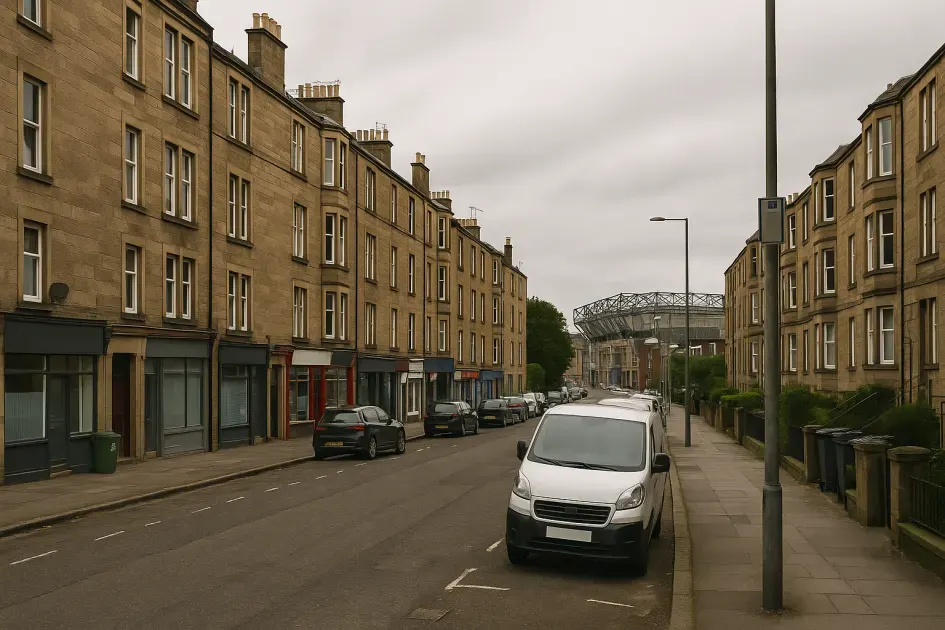
The HES record for 258–266 Gorgie Road describes an inset tenement stair door among ground-floor shops, plus a separate link to Smithfield Street. This is one named building, not a current access survey. For your property, ask the resident or manager which door serves the goods and whether it is the permitted furniture route.
Trace the full route back to the proposed van position, including steps, gates and distance. Agree private land and shared-door use with the responsible person, keeping access clear for others.
Check the exact position under current rules
Photograph the signs and markings and use Edinburgh’s current dispensations and suspensions guidance. Establish whether the proposed street arrangement concerns single-yellow-line loading, a bay suspension or another restriction. Confirm the activity, location, vehicle, date and working period through the relevant process.
Keep application status and actual conditions distinct. A permit, nearby car park or transport booking does not itself reserve a loading place, and waiting for admission is different from carrying out loading.
Prepare a lawful alternative and the complete carry
If the first position cannot be used, establish a lawful alternative and record the whole replacement route to the goods. Describe surfaces, steps, turns and distance to support before booking, with sufficient customer or booked help at both ends and any fixed access limit.
The furniture assessment helps check the prepared piece through that route. Confirm receiving admission and its street arrangement independently; a collection door key does not settle delivery.
Carry the access conditions into the whole move
In a hypothetical collection, the business below is open but the stair door uses a separate contact. Resolve that admission before relying on the loading position. Keep controller, outcome, conditions, door, entry contact and alternative carry in one record.
Allow time to get in and check all the goods and their parts. Finish any remaining agreed preparation before carrying the items that need it. Include the full collection carry and loading, the journey and every agreed stop. At each delivery, allow for access, unloading and carrying the goods into their agreed final rooms, followed by any selected finishing work. Give seller appointments, key-handover deadlines and building access periods to support before booking; arrival at the loading place is not completion. The timing guide helps match the street period to the complete work.
Common questions
Does a moving booking include parking permission?
No. Agree who arranges any necessary street permission and what its actual outcome and conditions cover. Reserve a usable lift or arrange private admission separately with the building controller; the transport booking does not grant either.
Where should I check the local arrangements?
Start with the exact signs and Edinburgh’s current guidance for a council-controlled position, then ask the building contact about the residential door and private route. Keep those separate outcomes in the access record, including the lawful alternative.
What information should I give the booking team?
Give support the actual stop, restriction and outcome, correct residential entrance, entry contact, conditions and full carry. Include the alternative position, sufficient help, receiving access and fixed periods or unresolved permission before booking.
Sources and further detail
Gorgie furniture-and-parts planning. The HES record concerns one named listed building and is not a survey of current Gorgie homes or permissions. Confirm your actual doorway and routes. Examples are hypothetical.
Quote with the correct access
Use the Gorgie service page once the position, door and full carries are clear.
Plan your Gorgie move