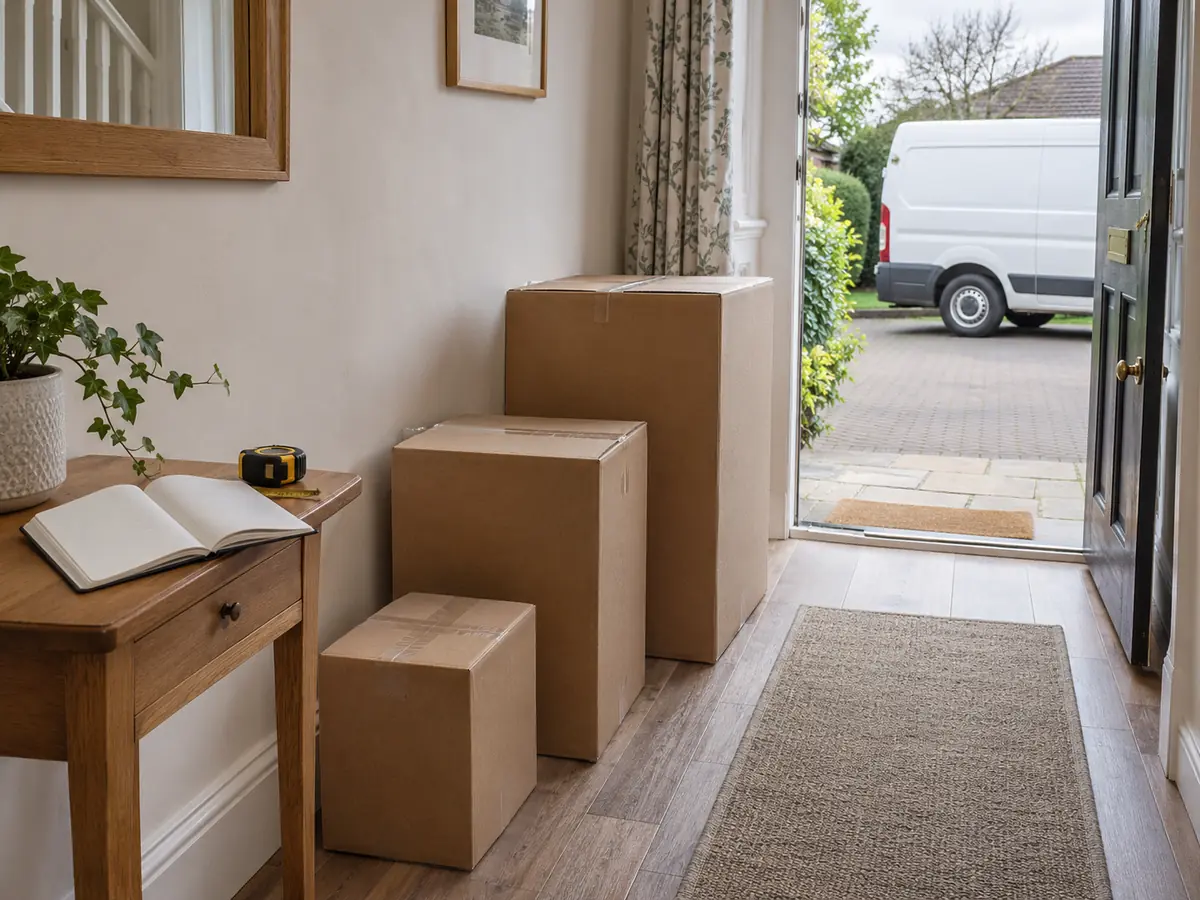
Packing boxes and planning a vehicle load are connected jobs, but they answer different questions. Packaging protects individual belongings; the loading plan must also account for vehicle limits, weight distribution, restraint and a safe handover at each stop.
Start by preparing an accurate inventory and agreeing who will pack, carry and load. If you book transport with a driver, share the complete job and let the driver confirm the vehicle and loading arrangements. Do not plan the move solely around filling every available gap.
Give the mover an inventory they can assess
List the boxes and individual pieces of furniture, including anything in a loft, shed or separate collection point. Give dimensions for bulky items and the packed sizes of anything travelling in a case or carton. Flag dense loads such as books and equipment, as well as fragile or unusually valuable items.
For dismantled furniture, identify the separate parts and fittings. Say what will be prepared before arrival and what work, if any, you want to book. Do not assume loading includes packing or dismantling that has not been agreed.
Use the general packing guide for preparing belongings. Give the booking team an updated inventory if the load changes, rather than leaving extra items for the driver to discover.
Check weight as well as available space
A vehicle can have room left inside and still be unsuitable for the weight of the load. Ask for the inventory to be assessed against the actual vehicle rather than using bedroom count or load-space volume as proof that everything can travel together.
DVSA's load-securing basics require attention to permitted vehicle and axle weights. They also explain that removing part of a load can change axle loading and stability. Tell the mover about every collection and delivery point when the plan is agreed.
The removal van sizes guide can help with the information to supply. The vehicle and its usable capacity still need to be confirmed for your actual job.
Have belongings ready for the agreed handling
Use suitable packaging for each item and follow relevant manufacturer instructions. Close cartons properly, identify fragile contents and keep loose fittings with the correct furniture record. A fragile label describes a concern; it does not provide physical protection.
Keep medicines, essential documents, keys and the items you need during the move separate from the load. Label destination rooms or stops so the people unloading know where each item belongs.
Check the carrying route at both properties. Explain stairs, lifts, awkward turns and the distance from a lawful loading position. Keep doorways and shared routes clear; do not build a waiting stack that blocks an exit or obstructs other people.
Agree who handles each part of the job
Confirm the carrying and loading help at collection and delivery, including whether any customer assistance is expected. If the required work changes, discuss the plan before handling begins rather than adding an unassessed task on the spot.
The HSE's manual-handling guidance explains the workplace approach of avoiding hazardous handling where practicable, assessing unavoidable tasks and reducing the risks. A short distance or a small item count does not by itself establish that the carrying task is suitable.
Tell the mover about difficult items early so the people, method and any necessary equipment can be considered. Do not treat a generic moving checklist as a lifting assessment or a promise that an item can be accepted.
Separate cushioning from load security
Wrapping and suitable packaging help protect surfaces, but the load also needs to remain secure during the journey. Avoid assuming that blankets, a closed rear door or nearby boxes are a complete restraint system.
DVSA's guidance for vans addresses vehicle barriers, grouping small items and securing large or heavy items. It also calls for checks between drops. The appropriate arrangement depends on the goods and the vehicle.
Agree the inventory, item instructions and unloading sequence with the driver, then allow the loading plan to be assessed for that combination. There is no universal “heavy items first, everything upright” recipe that suits every vehicle and household item.
If you are arranging self-drive transport separately, follow the relevant vehicle and load-securing guidance and obtain competent help where needed. Find My Man and Van's removals booking route is for transport with a driver, not self-drive rental.
Plan for each stop and any change to the load
Identify which items leave at each address and which remain on board. Include storage visits, extra collections and any key-collection stop in the agreed journey. Keep the receiving contact and access details available.
Allow the remaining load to be checked after goods are added or removed. A plan suitable for departure may need attention once a large piece has been unloaded. Do not take items out of the van independently without coordinating with the person responsible for the load.
If an item will not fit, access is different from the brief or something cannot be handled as expected, stop and agree the next step. An unplanned extra trip or changed scope needs discussion before proceeding.
Complete the handover before the vehicle leaves
Check the collection inventory and make clear which items are staying behind. Confirm the delivery address, receiving contact and any essential arrival instructions. Give the driver time to complete the load checks before departure.
At delivery, compare the items with the record and follow the agreed reporting process for any concern. Note missing components or visible damage without assuming that photographs replace the booking's terms or reporting requirements.
A useful loading plan begins before the van arrives: complete item information, suitable preparation, workable access and clear responsibilities give the driver the basis to assess the actual load.

Liz
Liz is a content creator and digital marketing consultant. Originally from Toronto, Ontario, Canada, she is now happily settled in the UK (after living in four different countries across 2 continents and moving house 10 times). Drawing on her experiences, Liz shares practical advice and insider tips to help others enjoy smoother, stress-free moves.

At Find My Man and Van, our Removals Guides are built to help you plan and manage every type of home or business removal across the UK. Drawing on real-world removals experience, we cover everything from choosing between a man and van or full removals service to preparing large items, access planning, and move-day logistics. Our goal is to provide clear, practical advice that helps you reduce stress, avoid common mistakes, and book the right removals solution with confidence.