An exhibition delivery has two destinations to understand: the venue's vehicle entrance and the place where your goods are actually handed over. A visitor postcode or the show's opening time will rarely describe the whole job. Your exhibitor timetable, receiving contact and return arrangements need to work together before transport is confirmed.
This guide is for exhibitors planning UK road transport of ordinary, declared goods to and from London events. It uses Excel London and Olympia as venue-specific examples. Ask the booking team whether your particular inventory and venue requirements can be accepted; an ordinary transport enquiry does not establish that stand construction, rigging, installation, event staffing or storage is included.
Start with the current exhibitor manual
Get the manual for your actual event and edition from the organiser. Record the event name, hall, stand reference, build-up access, delivery arrangements and breakdown timetable. Keep the organiser's operations contact and your on-site exhibitor contact with the transport brief.
Distinguish public opening hours from the time when contractors and goods can enter. Find out whether the vehicle needs a booking, a pass, a marshalling stage or another admission document. Ask which process applies to your chosen transport arrangement; a rule headed “couriers” may not describe an exhibitor vehicle unloading a furniture load.
At Olympia, the exhibitor FAQs direct exhibitors and contractors to arrange delivery logistics in advance through Voyage Control, with passes checked. At Excel London, the exhibitor vehicle-booking guidance describes loading-bay time bookings. Confirm the process for your show rather than transferring one venue's rules to another.
Define the handover beyond the loading bay
Ask where the collecting or delivering person is expected to take the goods. Establish whether the agreed service ends at a receiving point, includes a carry to your stand or uses a separate venue-appointed contractor. Give the actual distance, route, floor and any lift or handling restrictions to the booking team.
Excel's courier-delivery instructions explain that deliveries depend on the event's tenancy timetable and an exhibitor representative receiving the goods. They also explain that the venue and organiser do not receive goods on the exhibitor's behalf. Use the arrangements applicable to your delivery and have an authorised person ready; a parcel addressed to a stand is not its own receiving arrangement.
If the organiser requires an appointed contractor for a stage, arrange that stage through the appropriate contact before relying on the van booking. Record where the responsibility and physical handover change. A driving appointment cannot substitute for venue permission or someone to receive the load.
Describe the travelling load, not just the finished stand
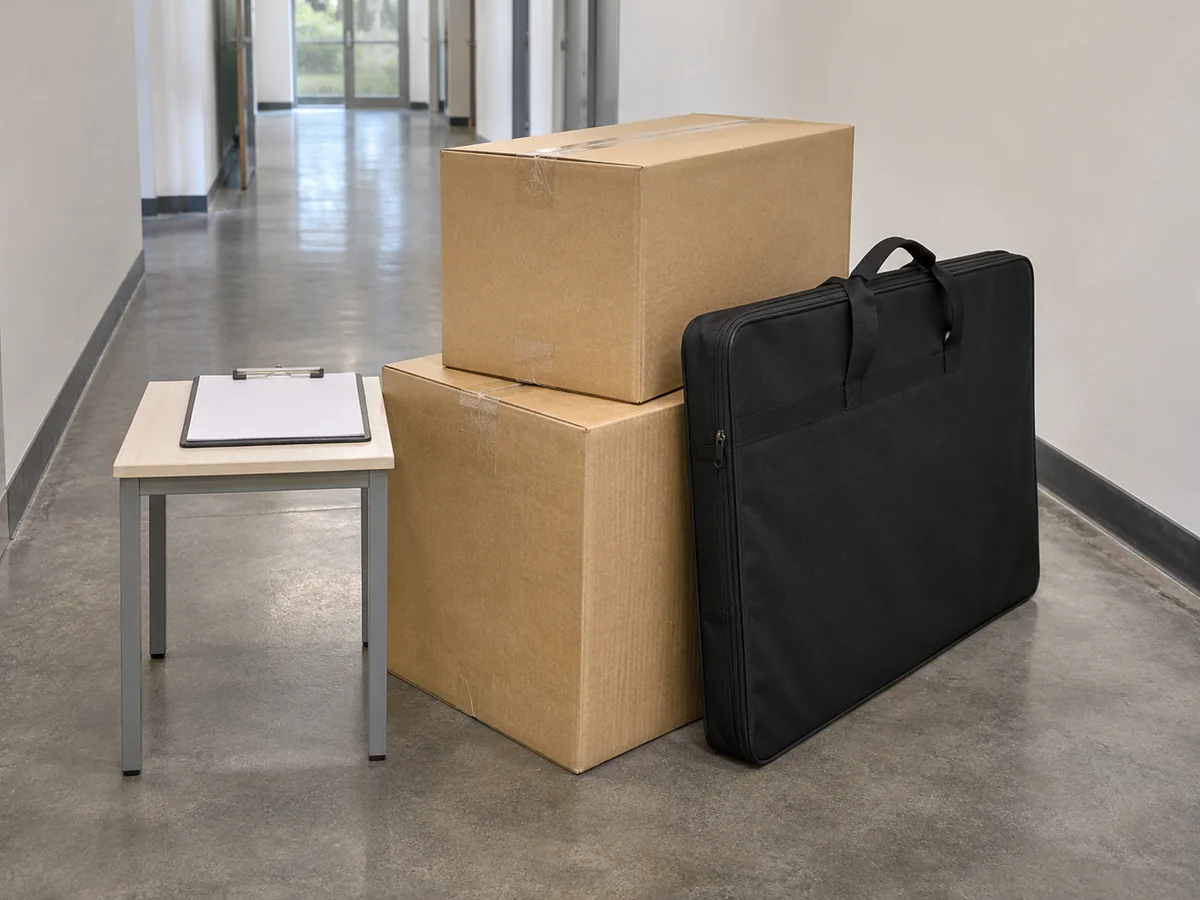
List the packages and items that will actually travel: cartons of printed material, packed display components, furniture and any other accepted goods. Include their dimensions, available weights, handling concerns and separate pieces. A photograph of the finished stand does not show how many packages will need loading.
Give each package a reference that matches your own list and the venue's required labels. Ask the organiser what needs to appear on external labels, such as event, hall, stand and receiving contact. Keep confidential business information off outward-facing labels.
Declare unusual, fragile, high-value or potentially restricted products before acceptance is assessed. Samples, batteries, liquids and demonstration equipment may raise different questions from empty display panels. Check the booking terms and the venue's rules; approval to exhibit something does not establish that the proposed transport can carry it.
Book access and transport as connected arrangements
Share the actual vehicle entrance, admission process, booked window, site contact and receiving point when enquiring. Explain who is responsible for the vehicle booking and what vehicle or driver details are needed once allocation is known. Keep the pass and current instructions available to the people making the journey.
A loading slot, a parking booking and admission to the hall serve different purposes. Ask the venue what happens after unloading and where the vehicle must go. Do not assume a loading-bay booking allows a van to remain while your team sets up the stand.
Discuss fixed venue windows with booking support before relying on a transport appointment. Driving time, marshalling, checks and the carry to the handover point all affect the work. Keep an organiser-approved contact available if the slot or vehicle changes. The London man and van page is the relevant local transport enquiry; it is not a venue reservation.
Give the return collection its own readiness time
Plan the return before the outward delivery. The show's closing time is not necessarily the time when visitors have cleared, dismantling can start or packages are ready to load. Check the organiser's breakdown instructions and agree a collection window that follows your actual preparation work.
Confirm who will dismantle and pack the display, supply materials, count the return goods and remain until handover. An exhibitor who leaves with the last visitor may leave no one authorised to release the load. Tell the booking team about the return scope rather than assuming the outward journey includes another visit.
List what is returning, staying with a contractor or following a separately arranged disposal route. Used materials and unwanted items should not silently become additional transport or waste tasks. Do not assume a mover will hold goods between the two journeys.
Keep changes visible to everyone involved
Send the current version of the brief to your exhibitor contact and booking support. A new hall, another entrance, extra cartons or a later packing finish can change the accepted vehicle, time and help needed. Agreement with the organiser alone does not update your transport booking.
For example, a hypothetical exhibitor may expect six display packages to be ready at closing, then discover that the hall's breakdown process starts later. The useful response is to revise readiness and the return appointment together, not send a van to wait without an agreed plan. This is a planning example, not a report of an FMMV job.
At each handover, check package references and quantities and record visible concerns through the agreed process. Keep the event reference and receiving acknowledgement with your inventory. For collections from several suppliers before the event, use the multi-stop collection guide, while retaining a separate admission and receipt plan for the venue.

Liz
Liz is a content creator and digital marketing consultant. Originally from Toronto, Ontario, Canada, she is now happily settled in the UK (after living in four different countries across 2 continents and moving house 10 times). Drawing on her experiences, Liz shares practical advice and insider tips to help others enjoy smoother, stress-free moves.

The Man and Van Guides from Find My Man and Van are designed to help you understand how man and van services work, when they’re the right option, and how to get the best value for your move. From van sizes and loading tips to short-notice bookings and single-item moves, our expert guides break down everything you need to know before hiring a man and van anywhere in the UK.