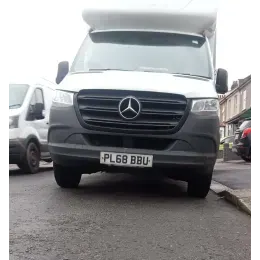
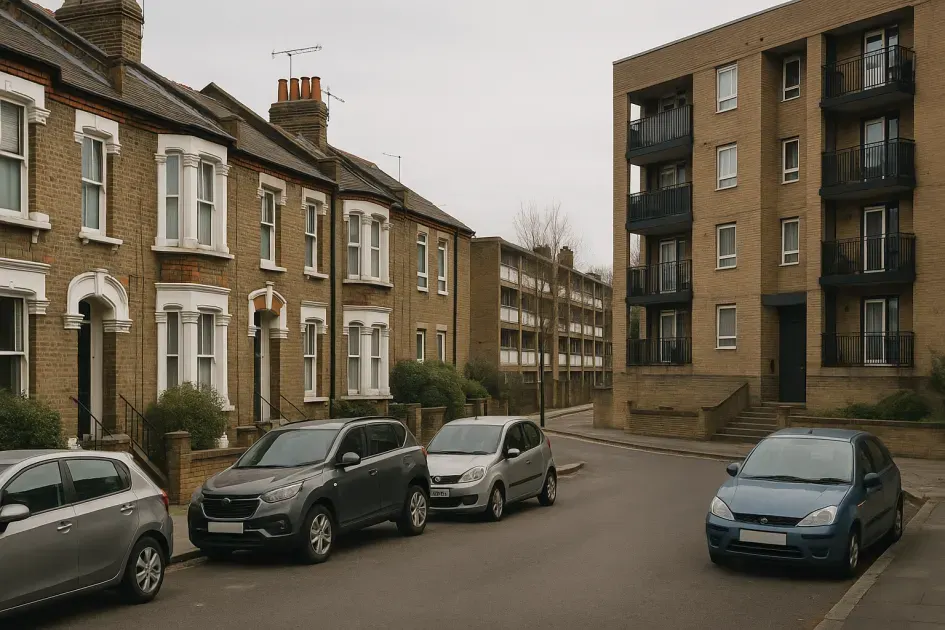
East London combines dense Victorian terraces, converted warehouses, gated new-build estates and suburban semi-detached streets within short distances. That mix produces varied, location-specific access and operational issues: narrow internal staircases in Hackney terraces, booked service lifts in Canary Wharf towers, market-day congestion on Brick Lane and controlled parking zones across Tower Hamlets and Newham. Practical planning must reflect these local realities rather than generic checklists.
Many terraces in areas such as Dalston, Clapton and Bethnal Green were built before the motor age. Typical constraints include shallow frontages with no off-street parking, narrow hallways and winding staircases. These features increase carry distance from kerb to front room and create awkward manoeuvres around tight landings. Real-world implications: moving crews spend more time padding and protecting surfaces, may need to dismantle large items on-site, and often require an extra pair of hands — all of which extend labour hours and therefore cost. In streets where parking is restricted, vehicles must often stop a road away, converting a short job into one with repeated shuttle carries down narrow pavements.
For a parent-area overview, use access and property guide for London.
You will often need to consider For the problems that tend to appear with awkward access, look at moving guide for East London and hidden moving costs in East London too. at the same time.
When you need the main move page rather than property detail alone, start with East London removals service.
East London has many flat types: converted Victorian houses (single-core staircases), postwar estates (long corridor carries), and modern developments near Canary Wharf and Stratford. Each presents different frictions. Converted flats frequently lack lifts and have narrow stairwells; the result is longer manual carries and a higher risk of damage without specialist packing. Newer developments often require booking a service lift and may impose time-slot, insurance or refundable damage-deposit requirements through concierge or estate management. These administrative steps add waiting time on moving day and can mean crews arrive on site but cannot start unloading until access is granted, which increases hourly charges and can disrupt scheduling of subsequent jobs. See the wider implications on access at /removals/london/access-and-property-guide and specific local considerations at /removals/london/east-london/moving-guide.
Inner-East neighbourhoods such as Shoreditch and Whitechapel feature narrow streets, loading restrictions and frequent street activity (markets, deliveries, trade vans). Controlled Parking Zones (CPZs) run on strict schedules in many boroughs — Tower Hamlets and Hackney in particular — so a van parked legally at 08:00 may be a parking violation an hour later. Councils also operate suspended bay procedures and some require advance notice for loading bay suspensions. Operationally, this results in longer vehicle manoeuvres, potential ticketing risk if not handled properly, and the need to arrange permitted spaces — all adding time and potential costs for permits or suspension fees.
East London’s geography changes quickly. Suburban pockets such as Wanstead and parts of Redbridge offer wider streets and front drives on semi-detached homes, reducing carry distances and parking friction. By contrast, dense inner wards around Shoreditch, Bethnal Green and parts of Newham are tightly packed with narrow streets and high footfall. Operationally this means suburban moves often finish faster with fewer handling risks, while inner-city moves require more complex staging: pre-booked parking suspensions, more labour for stair carries, and contingency time for congestion and pedestrian traffic.
New-build estates (common around Docklands and Stratford) typically advertise lifts and loading bays but introduce access controls: concierge sign-ins, fixed service-lift windows and strict rules about protective floor coverings. These administrative frictions can add waiting time and sometimes non-refundable administration charges from management companies. Older properties offer different challenges: narrow doorways, shallow stair treads and ornate banisters that require careful protection. In both cases, the choice impacts the type of equipment needed (trolleys, stair climbers, protective sheeting), the number of staff required and overall move duration.
On a typical East London move you may encounter multiple sources of delay: finding a legal parking spot, waiting for formal access to a service lift, negotiating tight internal geometry with bulky furniture, and longer-than-expected carries to a parking point. Each hour spent on these tasks is real cost. For example, a terrace with no nearby legal stopping place can turn a one-crew two-hour job into a two-crew four-hour job because of repeated shuttling. Similarly, a new-build block that requires a two-hour service-lift booking window may push the whole job into a longer, more expensive slot than initially planned.
Planning for an East London removal means factoring in local constraints early: check CPZ times for your street, ask building management about service-lift booking procedures, and identify potential shuttle points for vehicles if the road outside is unsuitable. For detailed guidance on access considerations across London consult /removals/london/access-and-property-guide, and for East London-specific timing and operational examples see /removals/london/east-london and /removals/london/east-london/moving-guide. Accounting for these realities before moving day reduces delays, lowers the risk of unexpected charges and helps create a practical schedule that reflects East London’s mix of narrow terraces, busy inner streets and tightly controlled modern developments.
Short answers to common practical questions movers face in East London, from parking suspensions to service-lift booking and stair carries.
Many streets across Hackney, Tower Hamlets and parts of Newham are Controlled Parking Zones with limited loading. If the removal vehicle cannot park right outside, a council parking suspension (loading bay or single yellow line suspension) will often be necessary to avoid long carries, tickets or being unable to load at set times. Plan and apply early — some boroughs require several days’ notice.
New build blocks around Canary Wharf and Stratford may have service lifts, but they are often booked through building management in fixed time slots and can be small. Booking windows, waiting for concierge access and using narrow service lifts can add one to three hours to a typical move compared with an unrestricted ground-floor load.
Victorian terraces in areas like Dalston and Bethnal Green commonly have narrow internal stairs, tight corners and sometimes no off-street parking. That increases carry distance, requires stair-protective materials and may need furniture disassembly — all of which add labour time and may increase the overall job by 20–40% compared with a ground-floor move.
It depends. Converted flats above shops or in former warehouses (common in Shoreditch and Whitechapel) often have narrow communal landings and no lift, increasing manual carries. Purpose-built apartments in Docklands or new estate developments may have lifts but stricter access controls and loading schedules. Both can be more time-consuming than a house with a driveway.
Many inner-East thoroughfares and backstreets are unsuitable for large removal vehicles due to parked cars, market activity (e.g. Brick Lane) or residential streets with tight turning circles. That often means shuttle-loading from a legal parking spot on a nearby main road, increasing loading time and labour.
Yes. Lofts, garages and secondary storage areas spread the inventory across more space, which lengthens the loading phase even when the property looks manageable from the front door.