
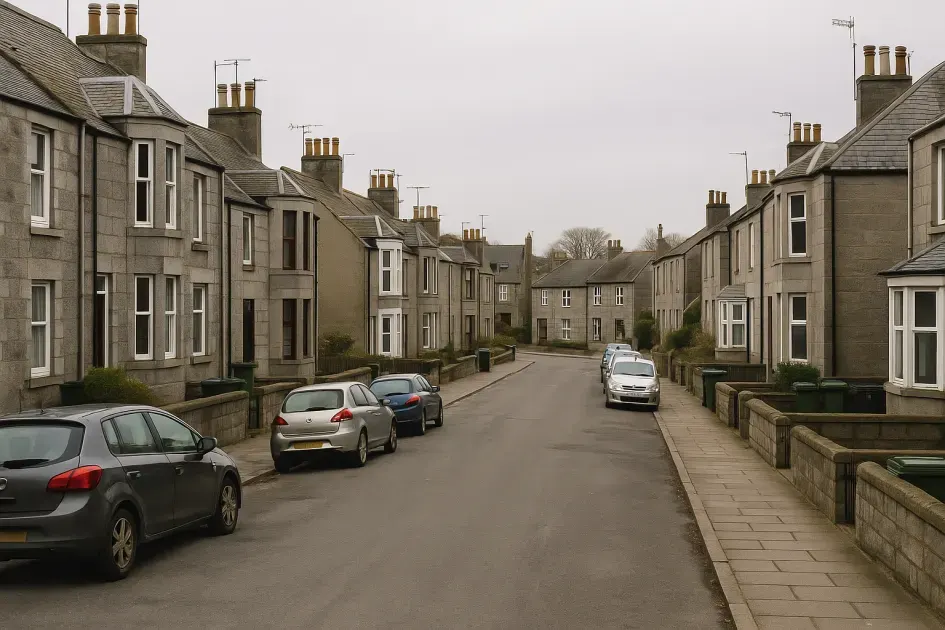
How removals conditions vary across Aberdeen
Street layouts, parking rules, and property types differ between areas such as Dyce, Bridge of Don, Torry, and Westhill. These differences change where the vehicle can load, how many crew members are productive at once, whether a shuttle is needed, and the length of the walking route from truck to door.
Neighbourhood access patterns
Suburban estates may have cul-de-sacs and driveways that enable closer loading; older streets can involve on-street bays and timed restrictions; some apartment blocks require lift bookings or concierge sign-in. In tighter streets, planning a legal, safe loading position often governs the whole schedule.
Property and loading differences
Flats with stair-only access increase manual handling and reduce lift-assist options. Townhouses may need multi-level carrying and item staging on landings. New-build homes can offer driveways with good access but still need floor protection and door guards. Garages, sheds, and lofts add extra trips to and from the vehicle.
How to plan for different move types
For flats, confirm lift dimensions or stairs, floor count, and any booking windows. For houses, note driveway length, doorway width, and any split-level layouts. For part-loads to storage, schedule inventory labelling and zone items at origin for faster unloading and retrieval.
City-wide baseline: where time is lost
Delays commonly arise from unreserved parking bays, long carry distances, underestimating packing time, missing lift bookings, and late key release. End-of-month peaks concentrate traffic and loading bay demand. Avoiding these issues preserves crew efficiency and reduces re-handling.
Eight local variables that change removals planning
1) Parking controls and bay suspensions
Check if the street needs a permit or suspension; apply early and print confirmations for display in the windscreen.
2) Carry distance and floor level
Measure from vehicle position to the door, then to rooms. Longer routes and upper floors slow loading and may require additional crew.
3) Lift size, booking windows, and reliability
Confirm lift access, internal dimensions, padding rules, and any time windows set by building management.
4) Street width and turning space
Narrow roads or tight turning circles can prevent larger vehicles reaching the door, triggering shuttle plans.
5) Property layout and protection needs
Spiral stairs, narrow hallways, and delicate finishes require extra protection materials and slower, staged moves.
6) Item profile and disassembly
Large wardrobes, American-style fridges, pianos, or gym equipment affect tool choice, wrapping time, and crew roles.
7) Timing pressure points
School runs, local works, and end-of-month completions compress loading windows—start earlier and confirm key handover timing.
8) Weather and surface conditions
Wet or icy paths slow handling; plan floor protection, extra mats, and safe walking routes.
Practical planning checklist
- Secure any required parking bay suspension and display documentation.
- Confirm lift bookings or stair access, including floor count and dimensions.
- Measure large items and doorways; plan disassembly and protection.
- Stage boxes by room and weight; label clearly for quick placement.
- Align key handover and cleaning so the crew can load and depart without idle time.
Scenario examples
Example 1: Third-floor flat, no lift. Two-person lift-and-carry for heavy items, bannister protection, and a shorter load plan using a closer legal parking position even if it requires a shuttle.
Example 2: Detached house with driveway. Direct truck access enables larger items first, then box lanes by room; driveway cones keep space clear for return trips.
Example 3: Split-load to storage then onward to a new-build. Inventory labels by room and priority, protect fresh flooring at the new address, and book the development’s access window.
Apply neighbourhood context
Use local guides for specific streets and property forms. Start with these focused pages:
- Dyce Moving Guide
- Bridge of Don Moving Guide
- Torry Moving Guide
- Westhill Moving Guide
- Dyce property access challenges
- Bridge of Don property access challenges
- Torry property access challenges
- Westhill property access challenges
Ready to firm up dates and inventory? Go to the core page: Aberdeen removals.