
Understanding Dyce’s built environment and why it matters for removals
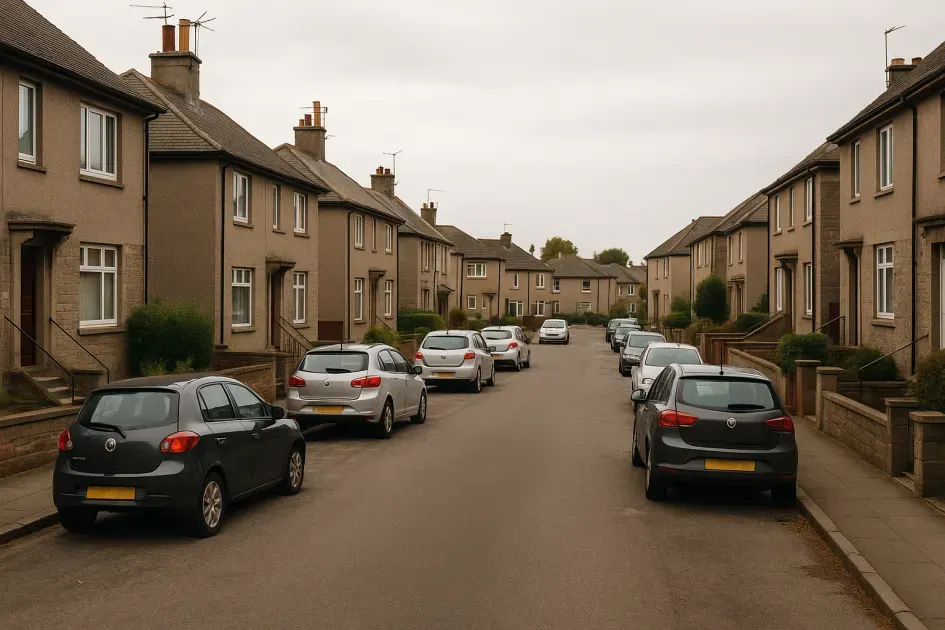
Dyce combines an old village core, mid‑20th‑century semis, low‑rise flats and pockets of recent housing development near the A96 and airport. Those different property types create distinct physical challenges for a full household or office move: door widths, stair design, parking and street layout all change the amount of handling required, the vehicle space needed and the overall time on site.
Terraced housing constraints in Dyce
The terraces and stone cottages in Dyce village are often built to compact proportions. Front doors can be narrower than modern standard sizes and internal hallways or turnpike stairs are tight. For removals this results in more furniture dismantling, careful manoeuvring over narrow staircases and slower handling rates. Expect longer carry times from pavement to front room and extra labour for safe passage of bulky pieces — a real effect on hourly costs and the length of the booking window.
removals in Dyce is the main booking page for checking availability, pricing and move details in one place, while Aberdeen access and property guide gives broader regional context on property and access conditions.
Access issues usually sit alongside other planning points, so this page with Aberdeen removals area guide and Aberdeen moving costs guide.
Flats and apartment access
Low‑rise blocks and maisonettes are common: some modern developments include passenger lifts but many older blocks rely on stair access. Lift interiors and communal corridors often restrict the largest sofas, wardrobes or appliances. Where lifts exist in Dyce flats they are sometimes too small for large white goods, and security doors or fob systems mean removals teams must coordinate access timing. If items cannot pass, a longer carry from street level or hiring specialist hoist/crane equipment may be required — both add to cost and require advance planning.
Narrow roads, parking limitations and industrial traffic
Several residential streets near the village centre and around the railway station are narrow with limited kerbside space. On‑street parking can be constrained by commuter and local traffic, and the proximity of the industrial estate and airport brings frequent commercial vehicle movements and shift changes. This creates operational friction: removal vehicles may be unable to park directly outside properties and crews face repeated short walks with heavy items, longer loading windows while a suitable bay is sought, or the need to arrange a temporary bay suspension through Aberdeen City Council. Each additional metre of carry distance and every minute spent waiting for a parking space has a measurable cost impact.
Suburban layouts alongside denser village centre
Dyce’s suburbs with semi‑detached houses usually offer driveways or off‑street parking, reducing carry distance and loading time. In contrast, the denser village centre around Station Road and Church Road has tighter pavements and more on‑street parking pressure. For removals this means planning must reflect the micro‑location: book longer loading times and allow staff for extra carries in the village core, while planning vehicle turning and placement in the suburban estates.
New build developments: different friction
New estates built on Dyce’s outskirts present their own constraints. Cul‑de‑sacs and designed parking bays can prevent large removal lorries from turning or stopping close to kerbside without blocking residents. Newly laid kerbs, narrow estate roads and visitor bays often mean a move will need smaller vehicles, shuttle loading or a longer team carry. Those adaptations change both time estimates and cost structure Set against a semidetached house with a drive.
Operational implications for time, cost and planning
Every physical constraint — a flight of stairs, a tight pavement, a blocked road or a small lift — converts directly into extra minutes per item and sometimes into specialist resource requirements. Practical implications when moving in Dyce include:
- Longer booked hours: tight access or long carries routinely increase the number of labour hours required on the day.
- Higher handling rates: dismantling, reassembly and protected routing inside older properties take additional crew time.
- Equipment needs: hoists, tail‑lift vehicles or extra trolleys may be necessary where lift sizes or door clearances are limiting.
- Traffic and parking management: arranging a temporary bay suspension or timing the move to avoid industrial shift peaks reduces on‑site waiting but requires pre‑move administration.
- Cost variance by location: moves in the village centre or in new cul‑de‑sac estates typically cost more in time and logistics than those at suburban semis with off‑street parking.
Practical planning steps specific to Dyce
Before moving, survey the property and immediate street to measure door widths, stair turns and lift dimensions; check whether the property sits on a narrow lane or close to the railway station where commuter parking is heavy; and note whether the address is near the airport/industrial estate, which affects traffic at specific times of day. For detailed guidance on local access issues, refer to the Dyce removals overview and the wider Aberdeen access guidance:
removals in Dyce · access and property guide for Aberdeen · moving guide for Dyce
Summary
Dyce’s mix of older terraced properties, low‑rise flats, suburban semis and new estates means one‑size‑fits‑all planning doesn’t work. Parking limitations, narrow access routes and varying vertical access inside buildings all increase handling time and can require specialist equipment. Effective moves in Dyce depend on pre‑move measurement, realistic time allowances for carries and loading, and early attention to parking or access permissions.