Quick summary
Moves between neighbourhoods in Woking can take very different amounts of time even when the addresses look close on a map. Parking access, building layout, street geometry and route predictability usually have more impact on the day than mileage alone.
Key facts
- Neighbourhood layout can change loading speed across Woking.
- Parking access and street geometry affect where the van can stop.
- Property type changes how much stair work, lift use or carrying time is involved.
- Different local conditions can make similar-size moves take very different amounts of time.
On this page
How moving conditions vary across Woking
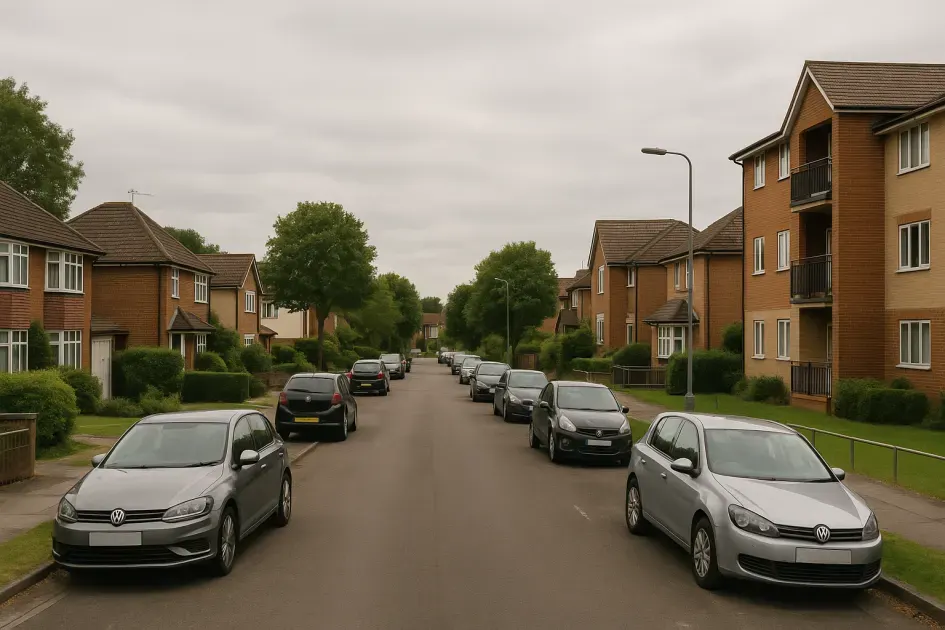
Woking combines town-centre apartments, older residential roads, suburban semis and newer estate layouts, and each one creates a different loading pattern. Around the station and central developments, controlled bays, lifts and shared entrances can slow progress even when the drive is short. In areas such as Horsell or St John’s, tighter streets and parked cars can make kerb access inconsistent. In places like Knaphill or Goldsworth Park, driveways often help, but cul-de-sacs and tighter turning circles can still limit how easily a larger van can position.
Neighbourhood access patterns
Some parts of Woking offer generous stopping space but longer internal carries, while others give you the opposite: short kerb-to-door distance in theory, but tighter loading windows and more restrictions in practice. Near schools and busier through-routes, short periods of congestion can wipe out the best space on the street. Managed developments may have a marked bay, yet access can still depend on codes, concierge approval or a reserved lift slot. Most delays come from access constraints rather than distance, which is why the same size move can run very differently from one neighbourhood to the next. The pricing effect of those conditions is clearer in how these conditions affect moving costs. The route-planning side is covered in Woking route and loading access planning.
Property and loading differences
Property type changes the pace of every trip between room and van. Flats often add lift dependence, shared corridors and lobby rules. Terraces can be quick when the van gets close, but frustratingly slow when residents’ cars take the only workable gap. Semis with driveways are usually easier, though long garden paths, side gates, loft ladders and detached garages still add handling time. Older conversions can also bring tighter stairwells and awkward corners that force wardrobes, sofas and white goods to be turned more carefully.
How to choose the right planning approach
Start by identifying the slowest part of the job. If parking is the issue, sort permits, visitor bays or legal space-holding early. If the problem is building access, pin down lift slots, loading-bay rules and arrival contacts before the day. If you are planning a move, this is what usually matters most: get the van as close as legally possible, stage items near the exit, and avoid arrival times when traffic or school-run pressure makes the best stopping point least available.
City-wide baseline: time drives outcomes
Across Woking’s mix of terraces, flats and suburban housing, the main driver of move length is how efficiently items can be carried from property to van and back again. Close kerb access shortens each cycle. Managed blocks add pauses through bays, fobs and lifts. Narrower residential streets reduce positioning options and can force repeated shuttling. Predictable routes help, but loading time usually outweighs driving time once the move starts. All of these neighbourhood differences feed into the wider city-wide pattern covered on Woking man and van services. One clearer neighbourhood example is man and van services in Addlestone.
Eight variables that change moving time locally
1) How permit parking delays loading
Permit streets can turn a simple move into a slower shuttle job. If the van cannot wait outside, crews lose time on every carry. Organising visitor permits or a bay suspension can save more time than shaving minutes off the driving route.
2) Why terrace streets limit van positioning
Terraced roads with cars parked on both sides often leave only one workable loading angle. When that space has gone, the van may need to stop several houses away, increasing walking distance and making bulky-item handling slower.
3) How building layout alters carrying distance
Long corridors, split levels, outside staircases and tight corners all add friction. Even when the front door is close, awkward internal layout can reduce how much each trip achieves and force more careful manoeuvring.
4) Why managed buildings introduce lift booking delays
Apartment blocks often create the clearest example of fixed-time moving. If the bay or lift is shared, crews may pause between trips or wait for access to restart. That lost rhythm quickly lengthens the job.
5) How street width affects van access
Narrower estate roads and speed-calming features can make larger vans slower to place. Sometimes a smaller van with better access is faster overall than a bigger vehicle that spends too long manoeuvring.
6) Why route predictability changes travel time
Roadworks, commuter traffic and school pressure around key links can push arrival later than planned. When that happens, the best bay may already be gone or a booked slot may be tighter to recover.
7) How loading bay rules affect unloading speed
Short dwell times, vehicle-size limits and pre-booked bays reward good sequencing. Heavier items, dismantled furniture and anything for the lift should be ready to come off first, not buried in the van.
8) Why neighbourhood traffic patterns delay moves
Local traffic does not just slow the drive. It also changes who reaches the street first, whether a gap stays open, and how easy it is to reposition once unloading begins. This helps you avoid delays on the day.
Practical planning checklist
- If permit parking restricts kerb access, arrange a visitor permit or bay suspension and mark the space in advance where allowed.
- If lifts or bays need booking, confirm slot times, vehicle limits and protection rules before move day.
- If road width is tight, choose a van size that can actually position well rather than just the biggest option.
- If school-run congestion affects the route, schedule outside peak periods and hold an alternate approach road.
- If the kerb-to-door carry is long, stage items at the exit and use dollies to keep each loading cycle efficient.
Scenario examples
Example 1: Studio move from a suburban semi with driveway to a similar property. Small van, one mover. Direct access keeps loading steady and avoids wasted walking.
Example 2: One-bedroom flat on a terrace street to a ground-floor maisonette. Medium van, two movers. Permit parking places the van 20–30 metres away, which slows every trip and stretches the schedule.
Example 3: Two-bedroom apartment to semi-detached home. Medium van, two movers. Lift booking and school-run traffic reduce flexibility, so timing matters more than the short drive.
Example 4: Three-bedroom semi across town. Long wheelbase van, three movers. Narrow access and parked cars make positioning harder, adding short delays before unloading can settle into a rhythm.
Example 5: Four-bedroom house to managed apartment block. Luton van, three movers. Bay timing, height limits and a long lobby carry create a more staged unload and a longer working day.
Apply neighbourhood context
Different Woking neighbourhoods impose different planning conditions: some streets are permit-controlled with tighter terraced parking, while others offer driveways; apartments may require lift bookings and bay slots. Parking layouts, housing density and building access rules vary across different parts of Woking. The guides below explain the practical moving considerations for each neighbourhood. All of these neighbourhood differences feed into the wider city-wide pattern covered on Woking man and van services.
What to do next
Use this guide to check how different Woking areas affect loading time, access and parking.
- Check whether your street has permit parking or narrow frontage access.
- Check your property layout with the linked area pages below.
- Flag stairs, tight corridors or long carries before booking.
- Use the main city page to get a quote based on the real move conditions.
Woking moving FAQs
Practical answers on how layout, access and timing mechanics change moving time across Woking.
How does neighbourhood layout affect moving time in Woking?
It changes loading speed and scheduling. Street geometry, parking access and building layout control how close a van can stop and how quickly items move between door and vehicle.
How do parking access rules change loading time?
They can lengthen carries and slow cycles. Permit zones or restricted bays may push the van further from the entrance, adding repeated walking distance and reducing loading efficiency.
Why does distance matter less than access for moves across Woking?
Access determines handling speed. Even short trips can take longer if kerbside space is limited, entrances are awkward, or routes involve school-run congestion and tight residential streets.
How does housing density influence scheduling?
Higher density compresses loading windows. Busier streets, fewer driveways and shared entrances increase waiting, constrain van positioning and create queueing for lifts or bays, extending total handling time.
How do building rules affect move timing?
Rules introduce set windows and extra steps. Managed blocks may require lift reservations, loading bay slots and protective materials, which add coordination tasks and reduce on-the-day flexibility.
How do local traffic patterns affect planning?
They change arrival reliability. School-run peaks, commuter routes and construction works create unpredictable delays, tightening loading windows and shifting when a van can safely position near entrances.
Plan your move in Woking
Check the price and availability for your addresses, moving date and loading requirements. Book through Find My Man and Van; we allocate a suitable provider after booking.
Small local collection: £48.00 total — example for Woking.
1 × small van; Customer Loading/Unloading; 5 miles, 1.5 hours, ground-floor access. Modelled for 26 November 2026. Your quote depends on your actual move details and date.
Providers covering the Woking area
Local coverage is a guide, not a reservation of these providers. Explore local providers.