Build an access brief from the room to the van at collection, then from the van to the receiving room. Check public-road permission and private building arrangements separately so the moving team has a usable route at both ends.
On this page
Establish the loading location first
Identify the precise address and the proposed place for the van. Reading Borough Council’s red-route guidance and maps distinguish double-red no-stopping controls from signed single-red restrictions. Check the relevant location and signs before planning loading. Where an exceptional dispensation is needed, use the council’s application process and share the confirmed arrangement.
For a collection from town-centre premises, ask where goods will actually be released. A shopfront address, goods entrance and lawful loading bay can be three different places. Record the walk between them, any steps and who will open the collection entrance. This gives the team a practical starting point rather than just a postcode.
Ask the building team about your entrance
Ebb & Flow’s published information identifies apartments and concierge facilities at Station Hill. That provides a useful reason to contact the building team about a move; it does not establish a universal lift-booking rule. Ask which entrance serves your flat, how the team signs in and whether a lift, bay or appointment needs arranging.
Measure the largest assembled piece against the actual doorway, lift and turns on that route. Include the walk from the loading position through communal areas to the flat. If a piece needs dismantling, make that a planned task and keep its fixings together. The city-building moving checklist helps structure questions for the manager.
Walk the route through a house or flat
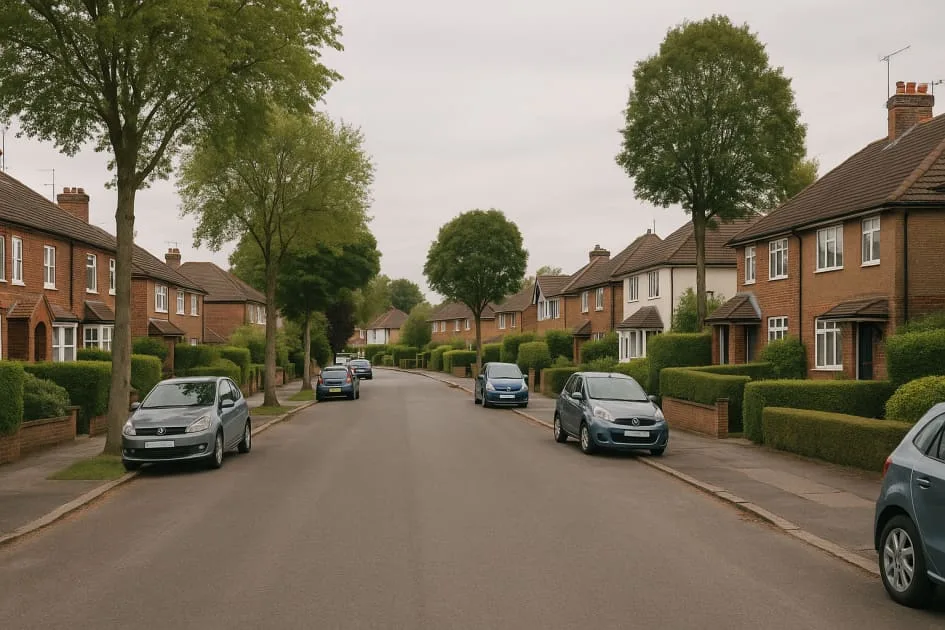
At a house collection, begin in the room containing the largest item and follow its path to the chosen exit. Note internal stairs, entrance steps, tight turns and any gate along the route. Describe the conditions you find at that home rather than relying on a general description of the neighbourhood’s housing.
At delivery, decide which room will receive each larger item and check that route too. Clear loose belongings from halls and stairs, secure doors safely and keep the loading path available. Select carrying help for the complete route. For a sofa, wardrobe or other awkward piece, use the heavy-furniture preparation guide when measuring and describing it.
Use the authority for the actual street
A move booked in the Reading service area can start or finish in Earley or Woodley. Wokingham Borough Council handles its own parking arrangements; its dispensation process is tied to a specified vehicle, location and purpose. Start with the council responsible for the street and use the confirmed permission for that location.
For a private driveway or parking court, ask the occupier or manager which space can be used and how it connects to the entrance. Keep that agreement alongside any public-road arrangement. The Earley and Woodley pages help prepare those local collections and deliveries.
An access brief that connects both ends
Illustrative example: a chest of drawers and packed boxes leave a Reading house for a Station Hill flat. At collection, the customer records the upstairs stair turn and the distance to the agreed loading location. At delivery, they confirm the moving entrance, recipient’s key access and the route into the flat with the building team.
The resulting brief links the items, carrying help and entrances. If the chest will be dismantled, say when and by whom; if it remains assembled, provide its dimensions and the narrowest points along the route. Keep any building appointment with the access record so the arrival can be coordinated.
Complete a two-address access record
| Record for each address | Useful detail to supply |
|---|---|
| Loading position | Exact location, applicable signs and confirmed permission if required. |
| Entry and contact | Moving entrance, who opens it and how the team gains access. |
| Carry | Distance, steps, floor, stairs or lift and awkward turns. |
| Items | Dimensions of larger pieces and agreed preparation or furniture work. |
| Appointment | Any confirmed bay, lift or manager attendance window. |
Once the loading location is established, use the vehicle and route guide to check the approach. Put time-dependent arrangements into the scheduling plan.
Reading neighbourhood moving FAQs
Does a visitor permit reserve the space outside my door?
Check what the specific permit or permission provides and record a lawful loading position. If space needs reserving or a restriction needs an exemption, ask the responsible council which process applies to that exact location.
What should I send if the flat entrance is hard to find?
Give the full postal address and a clear description of the moving entrance, its contact and the route from the loading position. Add useful access photographs or measurements when discussing the booking, including any steps or narrow turns.
Sources and further detail
Practical planning for the actual addresses and journey. Council and building information has its stated geographic scope; examples are illustrative. Check current instructions before moving.
Ready to plan your Reading move?
Bring your items, access notes and confirmed appointments together to check pricing and availability for your move.
Plan and price your Reading move