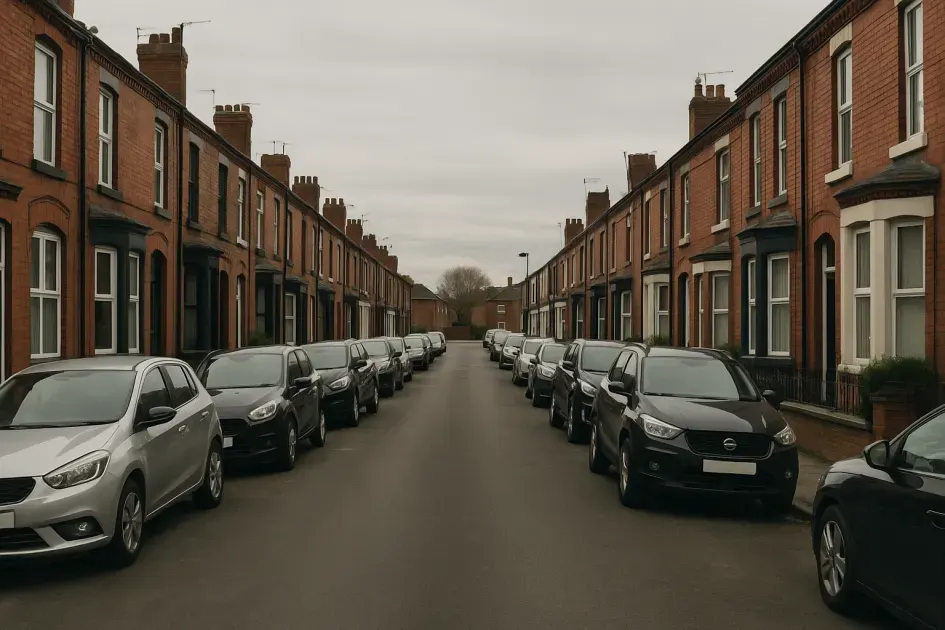
Why route planning matters in Liverpool
Moving routes in Liverpool are shaped by more than the map distance between addresses. A route that looks short can still cause delays if the arrival street has permit controls, no-stopping stretches, school-run congestion or limited space for a van to hold near the entrance. The final few minutes of approach often matter more than the bulk of the drive because they decide whether loading begins immediately or after a search for a compliant bay. The timing side of that is explored further in when Liverpool moves tend to take longer. Comparable route constraints also appear in man and van services in Toxteth.
Central locations and mixed-density neighbourhoods can also create timing pressure through managed buildings and narrower streets. If the property uses a loading bay, a concierge check-in or a shared lift, the route has to support a realistic arrival window rather than an optimistic one. Good planning therefore means coordinating the drive with access rules at both ends. Those access constraints feed directly into how moving costs are shaped by access and time. That is visible in areas such as man and van services in Baltic Triangle.
What route planning has to account for
| Route factor | What changes the plan | Why it affects moving time |
|---|---|---|
| Legal loading access | Permit controls, bays, no-stopping streets and restricted frontage | If the van cannot hold close to the entrance, carry distance and waiting time increase |
| Traffic timing | Commuter peaks, school-run congestion, events and roadworks | Unpredictable travel makes booked access windows harder to hit |
| Street geometry | Narrow roads, one-way grids and limited turning space | Approach speed drops and the van may need a less direct stopping position |
| Building rules | Loading-bay reservations, concierge check-in and shared lifts | Arrival timing becomes more rigid and missed windows can add waiting or rebooking |
Typical Liverpool route-planning friction points
1) Why the final approach matters more than the map distance
Short journeys can still run slowly if the destination street offers poor legal stopping options. When a van cannot pull close to the door, repeated carries replace continuous loading and even a modest move can take noticeably longer.
2) How permit-controlled streets change loading strategy
Permit rules reduce flexibility if visitor arrangements are not made in advance. Crews may need to park further away or work within a tighter time window, which affects both loading rhythm and unloading speed.
3) Why traffic peaks create knock-on delay risk
Peak traffic does more than slow the drive. It narrows the margin for lift bookings, loading-bay reservations and managed entry windows, making small route delays far more expensive operationally.
4) How narrow streets alter van positioning
On tighter residential roads, a legal space may not line up neatly with the entrance. That means longer carries, more pavement manoeuvring and less efficient load cycles, especially with heavier items.
5) Why managed buildings need route-aware scheduling
If a building requires a booked bay or lift slot, the route has to be planned around a realistic arrival time rather than a best-case estimate. Buffer time is usually what keeps the whole schedule workable.
6) How fallback loading options reduce risk
Knowing the nearest alternative legal stopping point gives the crew a recovery plan if the preferred space is unavailable. That is often the difference between a controlled delay and a full loss of momentum on the day.
Planning checklist for smoother route timing
- Check the legal stopping position at both addresses rather than relying only on postcode routing.
- Confirm permit, bay or concierge requirements in advance and match them to a realistic arrival window.
- Avoid school-run, commuter and event peaks where practical so loading can begin closer to schedule.
- Measure likely carry distance from the legal bay to the entrance so labour time reflects real handling conditions.
- Keep a fallback legal loading option in mind in case the preferred stopping point is occupied on arrival.
Liverpool’s route conditions vary between denser central areas, permit-controlled terraces and easier-access suburban streets. Those differences affect how reliably a van can reach the entrance, hold a legal position and maintain a steady loading rhythm.
We provide man and van services across the wider area, including man and van services in Sefton Park, man and van services in Wavertree, and man and van services in Aigburth, with bookings managed through one system coordinating bookings with pre-checked drivers.