What affects cost planning for moves in Liverpool
Moves cost more when loading and unloading take longer. Short journeys can still run long if the van cannot park close, if stairs slow handling or if building rules introduce waits for lift or bay access. Distance affects the driving segment, but in Liverpool’s terraces and apartment blocks the handling time at each end often dominates the total.
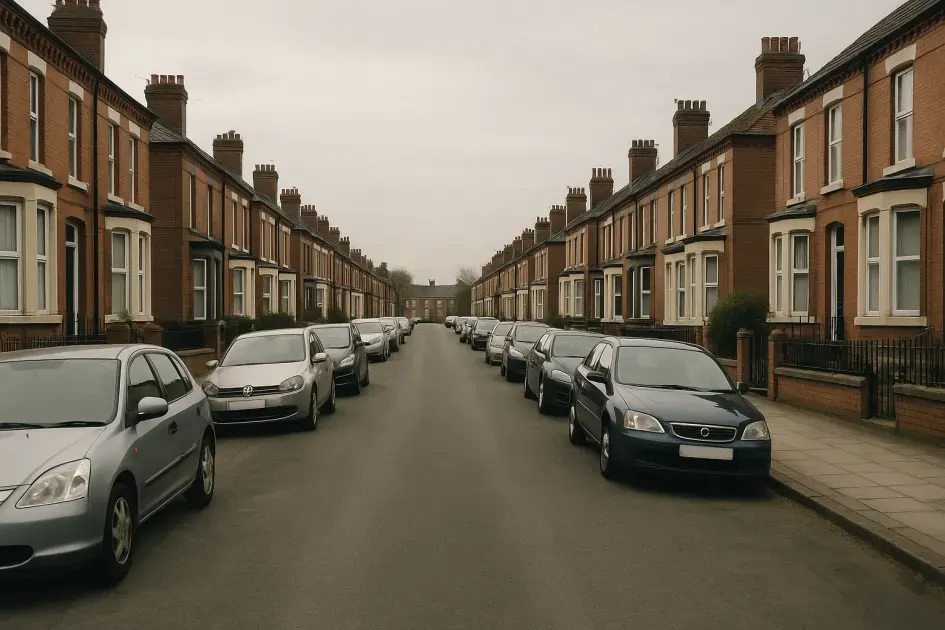
Stairs, narrow corridors and tight turns slow each item’s movement from door to van. Permit or time-limited parking forces the crew to search for a legal bay or park farther away, increasing the carry distance. Managed buildings may require lift bookings or dock access at set times, which can create idle time if the window is missed. Traffic at commuter peaks or near schools reduces route predictability and compresses loading windows on busy streets. Scheduling pressure becomes clearer when viewed alongside Liverpool demand patterns at different times.
Loading time usually outweighs driving time.
What affects cost planning for moves in Liverpool
| Cost driver | What changes the time | Why it affects total cost |
|---|---|---|
| Parking access | Searching for a legal bay or parking far from the door | Longer kerb-to-door carries and waiting increase labour hours |
| Building layout | Stairs, narrow halls, tight turns or lift queues | Slower handling rate per item adds loading and unloading time |
| Van size / movers | Capacity limits, number of trips and crew strength for heavier items | Right van and crew reduce trips and handling delays |
| Route timing | School-run or commuter congestion and roadworks | Unpredictable travel and tighter loading windows extend the schedule |
Typical move price patterns in Liverpool
Pricing scales with duration because crews are billed for labour time. Two similar addresses can produce very different totals if one has permit parking and stairs while the other has a near-door bay and a booked lift. Shorter handling windows and longer carries extend time even on short routes.
| Move type | Typical time range | What affects duration |
|---|---|---|
| Few items or single room | Brief window | Proximity of parking, pre-packed items and minimal dismantling |
| Studio or 1-bed flat (local) | Short half-day | Lift access versus stairs, carry distance and loading-bay timing |
| 2-bed terrace (local) | Half-day to longer | Permit parking, narrow streets and dismantling larger furniture |
| 3-bed house or city flat to suburb | Full-day or staged | Traffic timing, multiple trips and building rules at either end |
Cost examples by move type
Example 1: Small van, few items, easy terrace access
A handful of boxes and a desk moved between terraces with clear kerbside parking at both addresses. Short carries and no dismantling keep handling quick, so total time stays low.
Example 2: Small flat move with permit parking
A studio move where the destination street needs a visitor permit and legal spaces fill quickly. Time is added while finding a compliant bay or walking a longer carry, which increases labour hours.
Example 3: 1-bed apartment with lift booking
The origin has a managed lift booked for a set window. If loading overruns or the slot is shared with another move, the crew may wait for access, extending handling time and total cost.
Example 4: 2-bed terrace with long carry from rear alley
Parking is on the main road but items exit via a rear alley with a longer kerb-to-door route. More trips and careful manoeuvring of larger pieces extend the schedule.
Example 5: City-centre flat to suburban house with height limits
The building’s underground car park has height restrictions, so the van cannot enter. The crew stages items via a loading bay and shuttles to a street bay, adding transfers and waiting. School-run traffic at the destination then compresses unloading time, lengthening the day.
How to keep the move efficient
- Permit-only streets → Arrange visitor permits or building authorisation in advance and share the details so the van can park legally near the door.
- Risk of a long carry → Secure the nearest feasible spot and stage items by the exit to shorten each trip.
- Lift or loading-bay rules → Book the lift or loading bay and confirm the time window in writing; have someone ready to meet security so access starts on time.
- Stairs and tight turns → Dismantle large furniture and remove loose fittings; measure routes to avoid rework mid-move.
- Traffic timing → Avoid commuter and school-run periods where possible; where not possible, build in buffer and align keys or entry carefully.
- Inventory and packing → Group and label boxes by room, unplug appliances and clear hallways so the crew can keep a steady pace.
Liverpool’s neighbourhoods vary: dense city blocks use loading bays and managed lifts, while terraces often need permit parking and careful positioning on narrower streets. Conditions like these change loading distance and timing, which alters the hours required.
We provide man and van services across the wider area, including man and van services in Georgian Quarter, man and van services in Sefton Park, man and van services in Toxteth, and man and van services in Woolton, with bookings managed through one system coordinating bookings with pre-checked drivers.
Plan your move in Liverpool
Check the price and availability for your addresses, moving date and loading requirements. Book through Find My Man and Van; we allocate a suitable provider after booking.
Small local collection: £53.00 total — example for Liverpool.
1 × small van; Customer Loading/Unloading; 5 miles, 1.5 hours, ground-floor access. Modelled for 28 October 2026. Your quote depends on your actual move details and date.
Providers covering the Liverpool area

Local coverage is a guide, not a reservation of these providers. Explore local providers.