Choosing the best time to move in Sutton Coldfield is about controlling variability. Travel reliability on commuter approaches and the duration of larger-home unloading cycles are the two factors that most influence how smoothly a move runs.
When you book man and van services in Sutton Coldfield through our platform, your move is managed through one system, with vetted and approved drivers and customer support from booking to completion. Pricing is clear and time-based — so the objective is simple: reduce avoidable delay.
For wider city context, see man and van in Birmingham.
Tuesday to Thursday typically offers the most stable conditions. Commuter-route patterns are easier to anticipate and residential streets are less affected by weekend leisure flow. In a predominantly suburban area, predictability of approach is often more important than raw traffic volume.
Weekend moves are common and entirely workable, particularly where driveway access is available. However, approach routes can fluctuate more than midweek mornings, and small travel delays matter more when unloading larger properties.
A weekday arrival between approximately 8:00 and 10:30am is usually the most efficient window. This avoids the densest outbound commuter phase and allows unloading to progress before afternoon inbound traffic builds.
Sutton Coldfield moves are often duration-sensitive because properties are larger. Multi-room layouts, loft spaces, garages and garden storage increase the number of internal carry cycles. If travel delay pushes unloading later into the day, fatigue and repeated floor transitions compound the total duration.
The main timing risk in Sutton Coldfield is not dense street congestion but variability on approach routes into and out of Birmingham. Morning outbound and late-afternoon inbound peaks can extend short journeys unexpectedly. Completing the travel leg before peak build-up materially reduces total duration risk.
Short school-run windows can create temporary stop-start conditions on otherwise calm residential streets. A slightly earlier arrival or a mid-morning start usually avoids this concentrated movement and improves positioning efficiency.
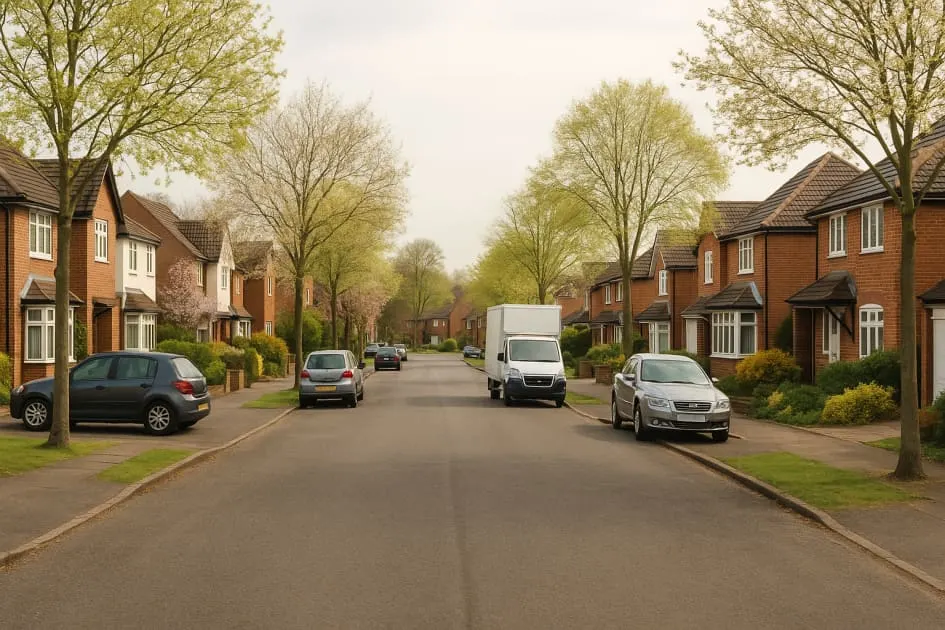
Many Sutton Coldfield homes include multi-car driveways and longer approach paths. While this often simplifies kerbside positioning, it shifts the time variable indoors. Repeated trips from van to entrance, garage-to-house transfers and stair transitions become the dominant time multipliers.
Some estates include tighter turning areas or shared access drives. If a vehicle cannot hold position optimally, carry distance increases and repositioning may be required. Confirming primary and fallback positioning before moving day prevents mid-job time loss.
Although less common than in central Birmingham, apartment blocks and retirement complexes introduce coordination variables: entry systems, allocated bays and lift etiquette. Choosing a window when management access is available reduces waiting cycles.
Late spring and summer typically represent the highest demand period. In Sutton Coldfield, this aligns more with family relocation cycles and school-holiday planning than student turnover. End-of-month completion clustering can further compress availability.
Booking earlier and selecting a midweek morning window materially improves predictability during busier months.
In Sutton Coldfield, cost variation is usually duration-driven. The most common escalation pattern is delay stacking: commuter-route variability followed by a larger-home unload with multiple internal transitions.
Controlling start time reduces compounded delay risk and keeps the move within the planned booking window. For related planning detail, see hidden moving costs in Sutton Coldfield and the Sutton Coldfield moving guide.
Once your preferred window is identified, confirm access details and begin your booking here: man and van in Sutton Coldfield.
Common questions about choosing the right moving date and time in Sutton Coldfield.
Yes, in most cases. Tuesday to Thursday generally offers the most stable conditions on commuter approaches into and out of Sutton Coldfield. Residential streets, including cul-de-sacs and suburban estates, are typically quieter midweek than on Fridays or Saturdays.
Weekend moves remain common, particularly where driveway access is available, but leisure traffic and shopping flows can make approach routes less predictable.
A weekday start between 8:00am and 10:30am is usually the most efficient window. This avoids the main outbound commuter peak and allows unloading to begin before mid-afternoon return traffic builds.
Because many Sutton Coldfield homes are larger and involve multi-room unloading, earlier starts help reduce the risk of travel delay stacking with longer internal carry cycles.
Yes, indirectly. Man and van bookings are time-based. When travel is steady and unloading progresses without interruption, the move is more likely to stay within the booked hours.
Delays on commuter routes combined with longer internal routes — such as garage clearances, loft access or multi-storey layouts — increase total duration, which affects final cost.
They often do. As a predominantly family area, booking demand tends to increase toward the end of school terms and during holiday periods. Completion dates commonly cluster in late spring and summer.
Booking earlier and selecting a midweek slot during higher-demand months improves availability and reduces timing pressure.
Driveways generally make positioning easier than in denser city areas, but longer paths from van to entrance, side access routes, and garden storage can extend carry distance.
Even with good parking, repeated trips between van, ground floor, upper floors and loft rooms can make duration more sensitive to start time and crew pacing.
Late spring and summer are typically the busiest periods, particularly for family relocations. Higher demand can limit preferred booking slots.
Planning several weeks ahead and choosing a midweek start time helps secure more predictable scheduling during peak months.