Sutton Coldfield Moving Guide: Planning a Smooth Local Move

Moving within Sutton Coldfield is rarely about postcode distance. It is about property scale, internal carry distance and unloading rhythm. Two addresses five minutes apart can produce very different durations depending on driveway access, floor transitions and stored volume.

Find My Man and Van is a trusted platform for booking reliable man and van services, managed through one platform, working with vetted and approved drivers and providing customer support from booking to completion. Pricing is clear and time-based — so predictability depends on accurate access planning.


1. Plan early — confirm physical constraints

Once your date is fixed, shift attention from calendar logistics to property reality. In Sutton Coldfield, duration is most influenced by:

  • Driveway width, slope and turning space
  • Distance from vehicle to entrance
  • Number of floors (including loft rooms)
  • Garage, conservatory and garden storage volume

Clear answers prevent “stacked friction” — where small inefficiencies compound.


2. Driveway positioning and approach distance

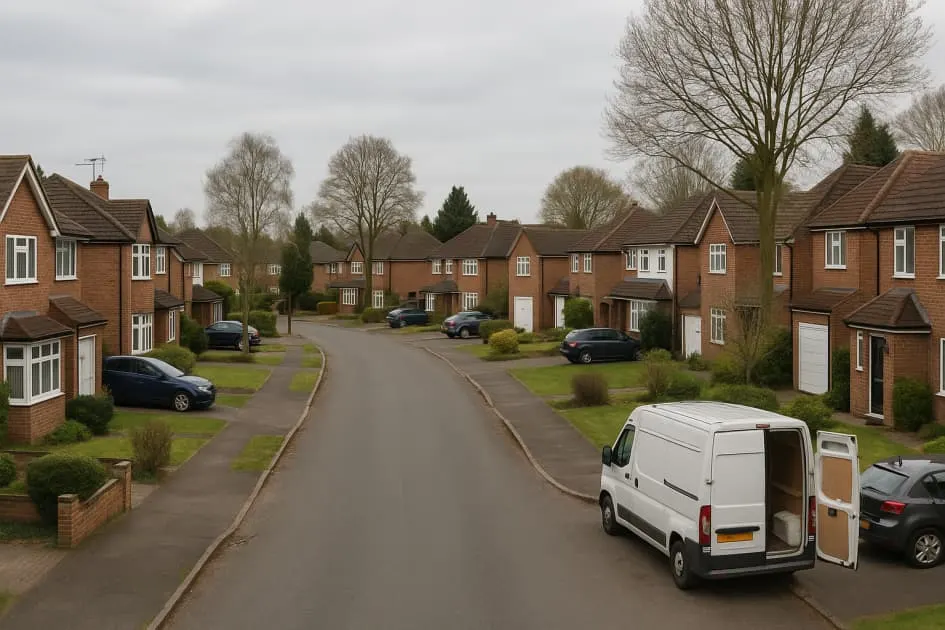
Detached and semi-detached homes commonly sit behind deeper frontage. While parking is usually available, the walking route from van to door often becomes the multiplier.

Even with driveway access, slope, shared use or limited turning clearance can prevent the vehicle from holding the optimal position. Add 60–90 seconds per carry cycle and repeat it across 40–60 cycles in a family home — that is where duration shifts.

Repositioning mid-job breaks unloading rhythm and adds dead time. Confirming a stable loading position in advance removes one of the most common escalation triggers.


3. Internal layout and floor transitions

Internal distance often outweighs travel distance. Sutton Coldfield homes frequently involve:

  • Ground-to-first and loft transitions
  • Long hallways before reaching stair cores
  • Tight landing turns for wardrobes and sofas
  • Split-level layouts that repeat floor changes

Handling time increases through repetition, not single obstacles.


4. Garages, lofts and stored volume

Stored volume is the most common hidden multiplier in Sutton Coldfield moves. Garage contents, loft boxes and outdoor equipment expand effective inventory beyond visible room counts.

Disassembly, sorting and internal transfers add measurable cycles. The cost impact is not a new fee — it is extended booked time.


5. Commuter-route timing and delay stacking

Sutton Coldfield is sensitive to approach-route variability into and out of Birmingham. Morning outbound and late-afternoon inbound peaks can extend short journeys by 10–15 minutes.

Delay becomes significant when it stacks with a multi-floor unload. Slower travel followed by 50+ carry cycles amplifies duration.

Weekday morning starts tend to offer the most predictable sequencing.


6. Booking notes that materially change duration

  • Exact driveway position and turning constraints
  • Carry distance from van to entrance
  • Total floor transitions (including loft)
  • Garage, loft and garden storage inclusion
  • Bulky items requiring controlled handling

Precision in booking notes reduces assumption gaps and protects the planned time window.


How this differs from central Birmingham

Central Birmingham typically presents density friction — tighter kerb access and compressed traffic. Sutton Coldfield more commonly presents scale friction — deeper footprints, longer carries and higher storage volume.

In a detached family home, 40–60 internal carry cycles are normal. That repetition — not congestion — usually defines duration.


Next step

Accurate access details and realistic inventory notes create predictable outcomes. Begin your booking here: man and van in Sutton Coldfield.


Sutton Coldfield Moving Guide FAQs

Common questions about planning and preparing for a move in Sutton Coldfield.

Begin planning as soon as your date is confirmed. In Sutton Coldfield, duration is usually defined by driveway positioning, internal carry distance and stored volume, not postcode distance.

Two to three weeks allows time to confirm turning clearance on the drive, measure tight stair turns, and account for loft or garage contents that may not be visible in main room counts.

Usually yes — not because of permit density, but because of positioning reality. The important question is whether the van can hold the closest practical loading point for the full duration.

Even with driveway access, slope, width or shared frontage can shift the true loading position. An extra metre per trip repeated 40–60 times materially changes duration.

Provide full addresses, floor transitions (including loft rooms), and any internal constraints such as tight stair turns or long hallways. Specify driveway layout, turning space and the realistic kerb-to-door distance.

List garage, loft and garden storage separately if included. Clear inventory and access notes remove assumption gaps and protect the booked time window.

Yes. Sutton Coldfield housing is predominantly detached and semi-detached, which means larger footprints and repeated floor transitions. Internal distance often outweighs travel distance.

A multi-floor family home with storage areas can involve 50+ carry cycles. Duration expands through repetition rather than single obstacles.

It does. Weekday morning starts tend to offer the most predictable sequencing for loading and transfer legs. Late afternoon travel into or out of Birmingham introduces more variability.

Timing matters most when delay stacks with multi-floor unloading. A slower transfer leg followed by 40–60 carry cycles compounds quickly.

Confirm the loading position, clear driveway access, and stage items so internal carry cycles remain efficient. Pre-sort garage and loft contents so they load in a single sequence rather than repeated returns.

Provide accurate floor and access notes at booking. In Sutton Coldfield, clarity of geometry and volume is what keeps the move inside the planned timeframe.