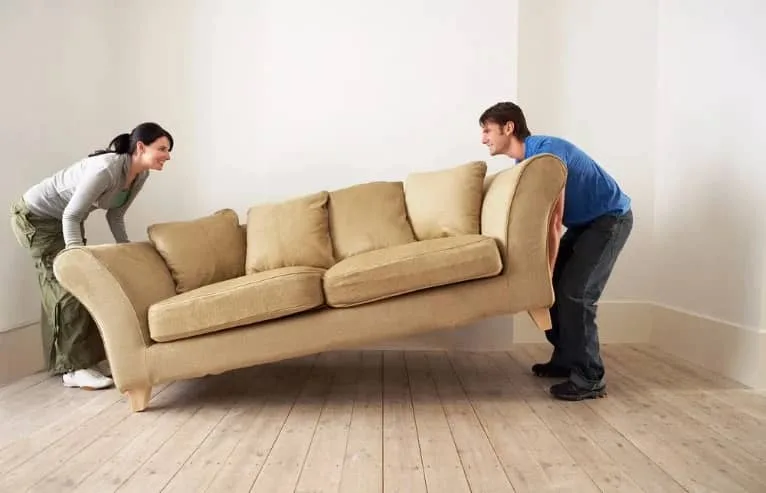
Moving a sofa, wardrobe or other heavy furniture starts with checking the item and the route out of the property. The quote needs to reflect its size, the access at both addresses and the loading help required, rather than just the driving distance.
What to include in a furniture moving quote
- List every item and give its height, width and depth. Include a known weight or manufacturer details where available; do not guess a weight you cannot check.
- Describe the collection and delivery floors, stairs, lift dimensions, narrow turns and distance from the entrance to the loading position.
- Explain whether the item can be dismantled and who will prepare it. Include photos of awkward access when discussing the booking.
- Give the collection date, seller or building access window and any delivery restrictions.
- State who can help with loading and unloading so the required assistance can be agreed before the move.
Use our furniture moving service for a furniture load, or single-item transport for one sofa, wardrobe or similar item. A single item can still need substantial loading help; the item count alone does not determine the crew or vehicle required.
Check the route before collection
Measure door openings and tight turns as well as the furniture. Check the route at the delivery address too. If a lift is needed, confirm its dimensions, permitted use and availability with the building manager. Tell the booking team about any uncertainty before the collection day.
Arrange a suitable loading position at each address and check any building or parking requirements. A long carry, restricted loading window or several flights of stairs can change the time and help needed.
Describe basement, outside-step and split-level access separately
A floor number can hide several parts of the carrying route. A basement flat may use a narrow external stair before its own entrance; a ground-floor home may have steps from the pavement and another change of level inside. Record those stages rather than writing only “basement” or “ground floor”.
Walk the proposed route without carrying the item. From a safe position, note the street-to-door distance, steps and landings, slopes, clear openings, low overhead points, turns and the receiving room. Include the same information at delivery. Do not enter an unsafe, unlit or inaccessible area to obtain a photograph.
For an outside stair, show the top approach, the stair enclosure, the landing and the doorway beyond it. Give available measurements and explain fixed rails, gates, door swings or turns. Ask the property owner or manager about a lock, shared access or any restriction on using that entrance. An ordinary front-door photograph may miss the route the furniture actually needs.
Show the item in its planned travelling condition
Give the item’s dimensions and a verified weight where available. Say whether it will remain assembled or whether particular parts will be removed appropriately before collection. Keep component measurements and packing in the record, since protection can change the space needed.
Measurements reveal questions; they do not prove an item can turn through a landing or be handled on that stair. Ask the provider whether the information is sufficient, whether further assessment is needed and what handling arrangement it can accept. Do not choose a crew count or lifting technique from the number of steps alone.
The HSE manual-handling guidance sets out avoiding hazardous handling, assessing what cannot be avoided and reducing risk at work in Great Britain. Its carrying-task guidance includes obstacles and changes of level. These sources support assessment, not a household instruction to attempt a particular lift.
Agree a workable route before fixing the collection
Tell the provider about lighting, exposed surfaces and anything that may change before arrival. Ask the manager to make the agreed route available, and keep stored belongings out of shared access and escape routes. Do not remove a handrail, door, gate or part of the building to create an assumed fit.
If the route is not accepted, discuss another assessed arrangement before the move. External lifting, structural alterations or uncertain support need the appropriate specialist and permissions; the heavy-and-valuable-item guide explains that separate acceptance decision. An extra helper or a different van is not, by itself, confirmation that the route works.
Put the agreed entrance and route in the booking notes, with any remaining questions clearly marked. If the item, route, weather exposure or access arrangement changes materially, tell the provider so it can review what was agreed.
Agree dismantling and loading help
Declare any dismantling or assembly when booking. It may be possible if agreed and enough time is allocated, but it is not automatically included. Your driver brings standard tools; agree specialist tools beforehand and supply available manufacturer instructions and fixings; the allocated driver may decline work that is unsafe, impractical or outside the confirmed booking.
Keep labelled fixings together and explain which pieces will be ready for collection. Confirm the loading assistance and any equipment needed for the specific item rather than assuming that one driver can handle it. If the item or access is unsuitable, agree another arrangement before the move.
Compare the full service scope
Compare quotes using the same inventory, addresses, access details and loading requirements. Check the allocated time, how additional time is charged, and whether agreed dismantling or assembly is covered. Confirm the applicable cover, limits and exclusions for your items rather than assuming every type of damage is covered.
For a marketplace purchase, agree payment and collection readiness with the seller separately. Make sure someone can provide access at collection and receive the item at delivery. Tell the booking team if either time window changes.
Specialist items and larger moves
Declare pianos, antiques, exceptionally heavy pieces and unusual access before booking. Their requirements need to be assessed; a standard furniture booking does not establish that specialist handling is available.
If the furniture is part of a complete household move, include the boxes and other belongings in the inventory and consider house removals. This helps the quote reflect the full job.
Get a furniture moving quote
Have your item dimensions, addresses, access details and loading requirements ready.
Arrange furniture moving helpBooking packing help or furniture dismantling
Book optional packing and unpacking, item disassembly or item assembly at any agreed stop, subject to eligible provider availability. Supply boxes and packing materials unless otherwise agreed in writing; drivers bring standard tools.
Describe the items and tasks at each stop, provide available item instructions and agree specialist tools before moving day. Book optional services in 30-minute blocks of elapsed team time at your booking rate. Packing and unpacking share one service selection, time allowance and rate. This is separate from loading and unloading; it does not add a duplicate travel charge. Agree additional work, time and charges before work begins, subject to availability.
Prepare anything outside the booked scope yourself. Check packing and furniture service pricing, then include your requirements in a house removals quote or furniture moving booking.

Liz
Liz is a content creator and digital marketing consultant. Originally from Toronto, Ontario, Canada, she is now happily settled in the UK (after living in four different countries across 2 continents and moving house 10 times). Drawing on her experiences, Liz shares practical advice and insider tips to help others enjoy smoother, stress-free moves.

The Man and Van Guides from Find My Man and Van are designed to help you understand how man and van services work, when they’re the right option, and how to get the best value for your move. From van sizes and loading tips to short-notice bookings and single-item moves, our expert guides break down everything you need to know before hiring a man and van anywhere in the UK.