
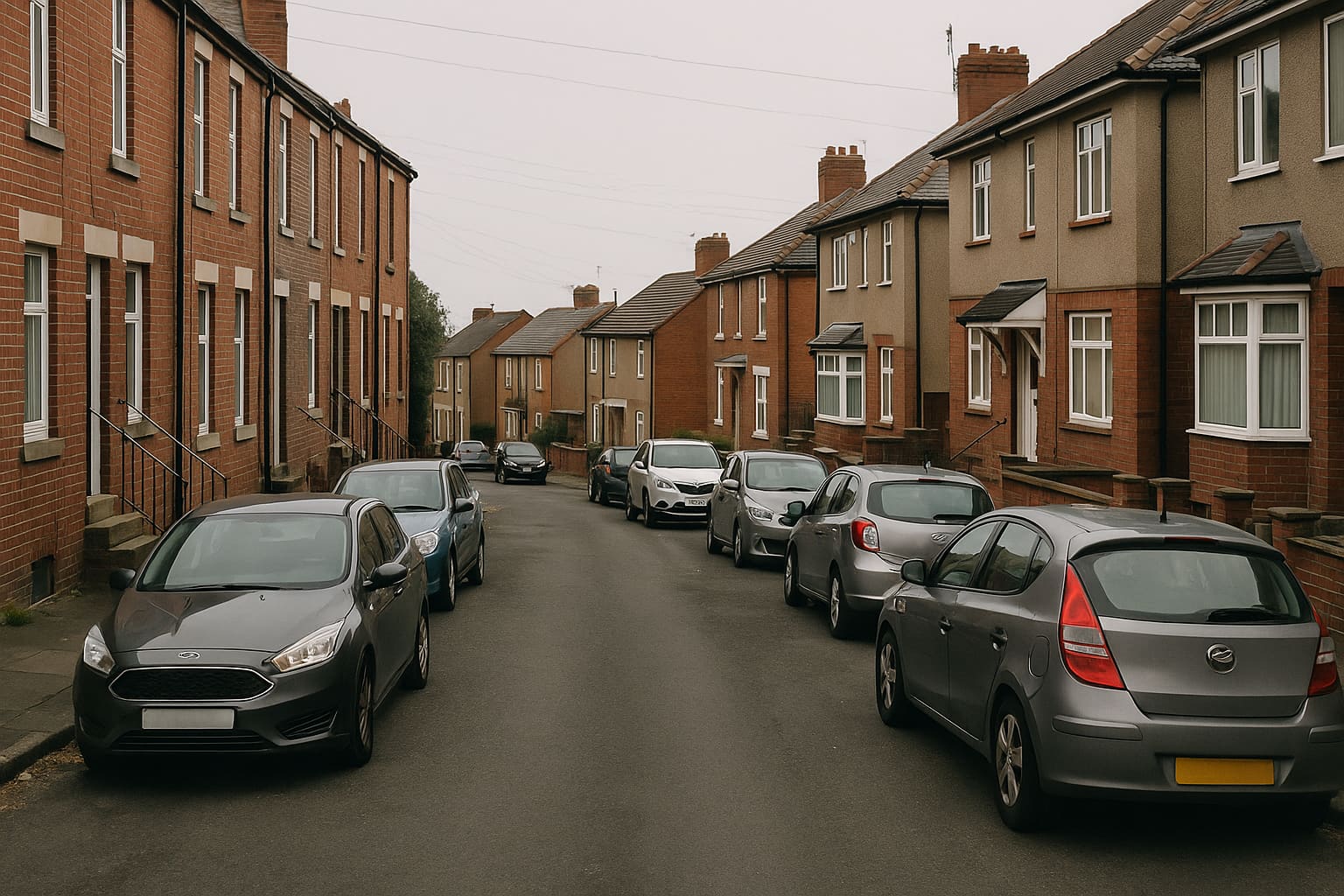
Moving in Gateshead is shaped by the town’s mix of Victorian terraces, riverside flats, suburban semis and newer housing estates. Each housing type interacts with local roads, parking controls and pedestrianised areas differently; those interactions create predictable operational frictions that add time and money to a removal unless planned for.
removals in Gateshead is the main booking page for checking availability, pricing and move details in one place, while moving costs in Newcastle explains the wider regional context behind cost differences.
Central Gateshead streets and residential pockets such as Bensham, Saltwell and parts of Low Fell often have on-street parking, permit zones and narrow kerbs. For a large removals vehicle to park legally right outside a property it sometimes requires a temporary suspension of a parking bay or an agreed loading slot with Gateshead Council. If that paperwork isn’t arranged in advance the crew may be delayed while council officers or traffic enforcement attend — delays that become waiting-time charges on the final invoice. When moves coincide with events at Gateshead Quays or weekend shopping hours near the town centre, drivers can spend extra time circling for legal parking, increasing both loading time and the chance of fines for illegal stops.
Waiting-time fees arise when removal vehicles are stuck idle. In Gateshead these delays often stem from three local realities: bottlenecks across the Tyne bridges, morning or evening congestion on A167/A184 approaches, and scheduled events at venues on the Quays that alter traffic flow or impose temporary road closures. A loading window booked for 09:00 can easily be pushed back if a gate closure or bridge restriction appears, and the time the crew spends waiting or queueing is typically billed per hour because it prevents them moving on to other work.
Victorian terraces in Gateshead often have steep steps, narrow front doors and no rear access for large furniture, which increases carry distance from the vehicle to the door. Converted riverside mills and some town-centre flats may lack goods lifts or have lifts with restricted size, forcing manual stair carries. Conversely, many new-build estates have cul-de-sacs and narrow turning areas that stop large vehicles getting close. All of these scenarios mean more staff time per item, extra handling risk and possibly specialised equipment — each adding cost.
Unexpected charges are easier to avoid when you this page with moving costs in Gateshead and property access challenges in Gateshead.
Gateshead Quays and older inner-suburban streets can present tight turning circles and loading restrictions. A large articulated or 18-tonne vehicle cannot always enter riverside service roads; turning limitations may require the vehicle to set down on a main road and use trolleys, increasing carry distance and loading time. Pedestrianised sections and weekend market setups near the town centre may force last-minute parking moves or the need for temporary traffic management — a predictable but often overlooked cost when moving in these specific neighbourhoods.
Each additional crew member and each extra hour on site converts directly into cost. In Gateshead, steep terraced streets and narrow staircases in older flats make teams take longer per piece of furniture and increase fatigue and safety precautions. The operational consequence is more manpower billed or longer hours charged — not an abstract fee but a measurable uplift to the overall move price driven by the local building stock.
When a move overruns in Gateshead the knock-on effects are concrete: the crew may need to reschedule other jobs, hire storage if the destination is not ready, or return on another day when councils require fresh parking suspensions. Events and riverfront activities on certain dates make rebooking more likely during peak season — replacing a single-day move with a multi-day logistical problem that increases fees for labour, vehicle time and any third-party approvals.
Practical checks reduce surprises: inspect the property type and approach (terrace, flat with stair-only access, semi with driveway, or new-build estate with narrow roads); review likely parking near the property and whether a bay suspension will be necessary; check local traffic patterns on the planned day (Tyne bridge crossings and A167/A184 congestion) and look for scheduled events at Gateshead Quays. For local area details see removals in Gateshead. For how these access issues translate into price, consult moving costs in Newcastle and the Gateshead-specific guidance at moving costs in Gateshead.
Understanding these Gateshead-specific access and traffic realities helps anticipate the operational risks that drive hidden costs: extra waiting hours, permit fees, additional crew and shuttle runs when large vehicles can’t get close. Planning around those constraints is what prevents a routine move becoming a costly disruption.
Answers below focus on real-world causes of extra charges when moving in Gateshead — from terraced streets to riverside developments and local traffic patterns.
Gateshead has resident permit zones and busy town-centre streets where parking suspension (bay suspension) or short-term loading permission may be needed for a removal vehicle. If a large van blocks a pay-and-display bay or needs a suspended space, councils charge for suspensions and enforcement can issue fines if paperwork isn’t in place. Late arrangements or unexpected refusal to suspend a bay increase waiting time and can push up the final bill.
Many Gateshead homes are Victorian terraces and converted loft flats with narrow staircases and long approaches from the kerb. Each flight of stairs or a carry beyond 20–30 metres typically adds staff time and risk assessments; that extra labour is often billed either as stair-carriage surcharges or as additional crew-hours when moves take longer than planned.
Waiting charges kick in when a removal vehicle must sit idle because of parking hold-ups, access disputes, or traffic delays around key routes (A167/A184) and river crossings. Events at Gateshead Quays or rush-hour congestion over the Tyne can turn a half-hour loading window into a multi-hour delay — and removals teams commonly pass those extra hours through as waiting time.
Many modern Gateshead estates and riverside developments have narrow estate roads or turning restrictions that prevent large wagons from entering. The practical response is shuttle-loading from a legal parking spot on a nearby street, using dollies or smaller vans — but that adds labour, time and sometimes an additional vehicle charge.
If access problems, traffic or unexpected stairs force an overrun, the move may spill into a second day or clash with another booking. That creates extra charges: additional crew-hours, storage if the destination isn’t ready, and potential fees for changed appointment slots. In Gateshead, local events (Quays performances, market days) and bridge congestion are common triggers for these cascading costs.
Surface the awkward details early. The more honestly the access route, loading position and timing pressure are described, the fewer surprises show up later as overrun.