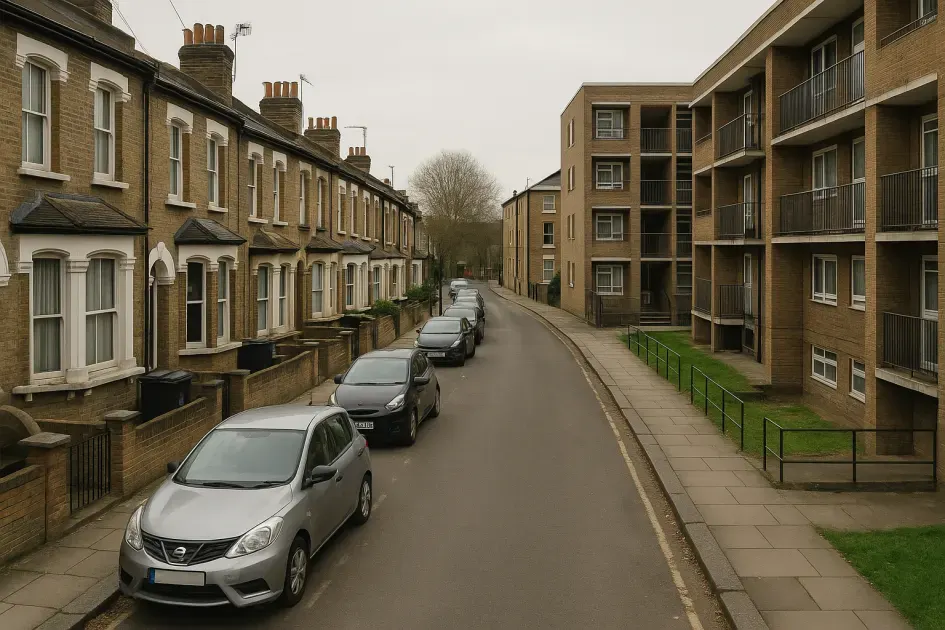
East London’s mix of Victorian terraces, converted flats above shops, large post-war estates, riverside developments and new-build towers creates a wide range of access scenarios. Practical planning for a move in East London must account for constrained kerb space, council-controlled parking zones, frequent roadworks and building-specific rules — all of which translate directly into extra carrying time, potential permit costs and booking requirements.
Identify whether you are moving from or into a terraced house (common across Hackney and Bethnal Green), a flat above a shop (Bethnal Green, Mile End), a semi-detached in outer East London suburbs, or a new-build block (Canary Wharf area, Stratford developments). Terraced houses often have narrow internal staircases and front doors that restrict furniture sizes; flats above shops commonly have long carry distances from legal parking points; new builds tend to have concierge rules and service lift booking requirements.
When you want the main move page rather than general guidance alone, start with removals in East London and use London area guide for the broader regional picture.
Measure narrow doorways, internal stair widths and lift car dimensions, and photograph the external street layout showing parking bays, nearby loading bays and any street furniture. These measurements directly determine whether large items require disassembly, specialist equipment, or longer handling time on moving day.
Contact building management or concierge for move-in windows, lift protection rules and insurance requirements. Check the local borough (Tower Hamlets, Hackney, Newham, Redbridge etc.) for Controlled Parking Zone rules and whether a bay suspension or temporary loading permit is required; these permissions often take days to process and incur fees.
You will often need to consider To turn the general guide into a tighter move plan, connect it with moving costs in East London and property access challenges in East London. at the same time.
For a standard East London residential removal, allow 4–6 weeks to secure a removal team and to arrange any council or building approvals. If you require parking suspensions, concierge approvals, large office moves in Canary Wharf or Stratford, or are moving at the end of a month or on bank holidays, extend this to 6–8+ weeks. Late bookings frequently result in smaller vehicle allocations or extra carry distances from legal parking points.
Securing parking suspensions and lift bookings in advance shortens carry distances and reduces on-the-day loading/unloading time. Unplanned arrivals can mean crews must park meters away on busy streets (e.g. around Columbia Road or Broadway Market) and make multiple trips, which increases labour hours and therefore cost.
In older terraced properties, large sofas, wardrobes and beds often need partial disassembly to navigate tight stairwells and landings. Pack and label disassembled components together and prepare basic tools. Protect narrow timber stair treads and delicate plaster walls common in period properties to avoid damage delays and remedial costs.
Flats above shops or with no immediate legal kerbside parking will incur longer carry times from a safe loading point. Use smaller, well-packed boxes for long carries: dense, heavy items should be split into multiple boxes to reduce strain, time and the risk of accidental damage during long internal carries.
New-builds often require packed items to be moved through communal corridors and service lobbies. Boxes and furniture should be wrapped to protect new finishes; clear labelling and room-by-room organisation speeds the set-down inside a flat when service lifts are on a booked timetable.
Plan vehicle arrival time to coincide with any pre-booked bay suspension or service lift slot. In streets where removal vehicles cannot park directly outside — common in narrow east London terraces or around market streets — allow extra client time for offloading to a smaller vehicle or handcarry to a legal loading space.
Set up floor and stair protection immediately when entering older houses and communal corridors to prevent damage. For blocks with service lifts, ensure the lift is booked and protected; delays here can idle crews for an hour or more, which increases total move time and cost.
Estimate realistic carry times: a single large sofa in a terraced house or a piano on narrow, winding stairs can take 30–90 minutes. Account for crew rest and safety checks, traffic enforcement visits, and potential resident objections in tight streets. These real-world frictions affect how many hours the move will require and therefore your budget.
Allow time for reassembly, placing furniture in rooms, and removal of packaging. Many East London estates and developments prohibit leaving debris in communal areas; arrange a clear plan for immediate removal or temporary storage to avoid fines or refused access.
Expect cobbled streets, narrow lanes and frequent market activity. These areas often have short-term loading bays and tight parking enforcement. Book mid-week mornings where possible and confirm whether bay suspension is needed — otherwise expect longer carry distances and slower handling times.
High-rise offices and apartments here demand strict delivery protocols: security passes, goods lift bookings and strict time windows. Failure to secure a delivery slot can mean waiting until the next available window, adding hours to an office or apartment move. Factor in concierge and security lead times when planning.
Ongoing construction and periodic road closures around Stratford can cause unpredictable delays. Check for temporary traffic orders or planned works before moving and allow extra travel time for the vehicle and longer arrival windows for crews.
Some outer East London locations provide easier kerb access and fewer restrictions, but commuter routes can be congested during peak times. Schedule moves outside weekday rush hours where possible to reduce driving time and avoid additional labour charges from late arrivals.
For a broader look at removals across London’s neighbourhoods see the area guide at London area guide. For a deeper dive into property-specific challenges in East London, including landlord and block manager rules, consult property access challenges in East London. The main East London removals overview is available at removals in East London.
Answers to common operational questions specific to East London moves — parking, lifts, stair carries, and council restrictions.
Possibly. Many East London streets are Controlled Parking Zones (CPZ). For long loading or a larger removal vehicle you may need a bay suspension or temporary loading permission from the local borough (Tower Hamlets, Hackney, Newham, etc.). These approvals can take several working days to process and usually carry a fee — plan ahead to avoid long carries from distant pay-and-display bays.
Stair carries in terraced Victorian houses and split-level flats often add 30–90 minutes or more per crew, depending on furniture size and flights of stairs. Narrow turns and low ceilings slow the operation and may require partial disassembly. Include this in your moving day schedule and cost estimates.
New-build developments frequently require bookings with building management or concierge, fixed move-in slots, and sometimes deposits for lift protection. Service lifts may need advance booking and time-limited windows (often weekday daytime). Failure to book these can cause delays or denial of access on arrival.
East London streets are subject to London-wide traffic controls including low-emission policies. Larger removal lorries may be restricted in certain narrow or residential streets, and non-compliant vehicles could face charges. Check vehicle access and plan for potential detours to a legal loading point that increases carry distance and time.
Aim to book a full-service removal team at least 4–6 weeks ahead for typical dates, and 6–8+ weeks for end-of-month, bank holidays, or if you need parking suspensions, concierge approvals, or large office moves that require additional permits.
Return to the main service page once the logistics are clear and you are ready to progress the actual booking path. Planning pages should support that step, not compete with it.