
Property challenges for removals in West Leeds

Understanding West Leeds: why local property types matter

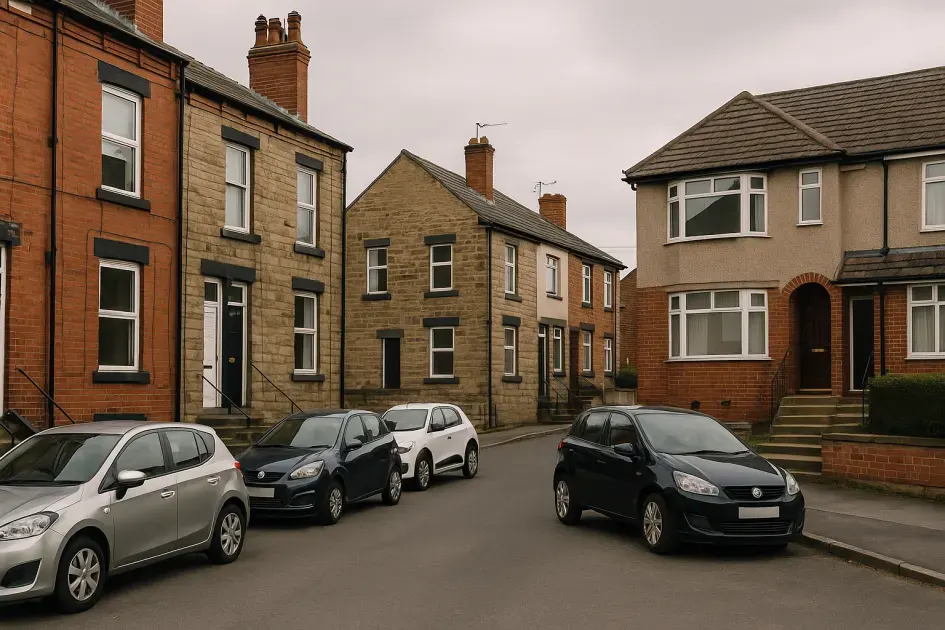
West Leeds is a patchwork of Victorian terraces, former mill conversions, inter-war semis and pockets of recent new-build estates. Each property type creates different physical challenges for a removal team: narrow frontages and steep steps in Armley terraces; compact lift cars in Kirkstall mill flats; estate roads with limited turning in Stanningley and Bramley new developments; and short-stay bays or resident parking around Wortley. These local realities determine the vehicle that can access the street, the crew size needed, and the time taken to load and unload.

Terraced housing constraints (Armley, Bramley, Wortley)

Typical West Leeds terraces are stone-built, with narrow hallways, external steps up from the pavement and tight internal doorways. Many properties have front gardens separated by low walls and pavements only 1.2–1.8 metres wide. For removals that means:

West Leeds removals service is the main booking page for checking availability, pricing and move details in one place, while access and property guide for Leeds gives broader regional context on property and access conditions.

  • Inability to park a large removal truck directly outside — parked cars and narrow carriageways force longer trolley carries (commonly 20–50 metres).
  • Steep or uneven doorstep steps which slow handling and increase the need for protective boards and manual lifting — adding to labour time.
  • Smaller internal doors that require sofas and wardrobes to be dismantled or carried vertically, increasing turnaround time.

Operational implication: moves from these terraces typically add 30–120 minutes to the job and frequently require extra handlers to manage stair carries safely.

Access issues usually sit alongside other planning points, so compare this page with moving guide for West Leeds and hidden moving costs in West Leeds.

Flats and apartment access (mill conversions, low-rise blocks)

Kirkstall and parts of Bramley contain many mill conversions and low-rise apartment blocks. These buildings share common issues:

  • Lift car dimensions often restrict what can be transported whole — some lifts are less than 1.1m wide and 1.6m deep, forcing stair carries for bulky items.
  • Ground-floor flats may open onto communal courtyards with restricted vehicle access or gated entrances that require prior arrangement for vehicle entry.
  • Upper-floor walk-ups in older blocks mean carrying through multiple narrow flights; long carries via communal corridors slow crews and increase the risk of scuffs to walls and doors.

Real-world consequence: where lifts are too small or absent, expect packing and dismantling time for large pieces and additional handling charges or labour time on the day.

Narrow roads, parking limitations and official controls

West Leeds has sections of single-lane streets and many residential parking controls. Key points to consider:

  • Resident permit zones and short-stay bays near local centres can prevent legal kerbside loading without a suspension from Leeds City Council.
  • Double-parking or blocking driveways is not an option; enforcement in busy streets (especially near Bramley and Wortley centres) can delay a move if an authorised bay hasn’t been reserved.
  • Some estate roads have poor turning circles: a large box vehicle may not be able to enter without reversing a long way or using neighbouring streets.

Planning implication: booking a temporary loading bay or arranging off-street parking in advance reduces time spent searching for legal stops and the risk of on-the-day delays.

Suburban versus dense layouts: different frictions

Suburban parts of West Leeds (outer Bramley and Stanningley) typically have semi-detached properties with driveways and on-site parking, which reduces carry distance but can introduce other constraints: estate roads with parking bays and traffic-calming islands limit vehicle placement and require careful route planning. By contrast, dense inner areas (central Armley, Wortley) present tight streets, continuous terraces and limited loading space.

Operational difference: suburban moves often need more time to manoeuvre large vehicles into narrower estate roads, while dense moves need more manual handling and time for stair carries. Both scenarios can affect total time and crew requirements in different ways.

New builds vs older properties: contrasting handling issues

New-build developments on former industrial land around west Leeds have modern internal layouts but present problems of their own: narrow estate roads, restrictions on overnight or long-term parking, and landscaped approaches that cannot take heavy vehicle loads. Older properties bring tight stairs, uneven thresholds and sometimes restricted access through small passageways.

Practical effects:

  • New builds: easier internal manoeuvre but potentially longer external carry distances and restrictions on placing protective boards across lawns or shared surfaces.
  • Older homes: easier vehicle access on occasion (if the road allows) but slower internal handling due to narrow doors and fragile fittings that need extra wrapping and care.

How these physical realities change time, cost and planning

Every local physical constraint in West Leeds translates into measurable operational friction. Typical knock-on effects include:

  • Longer total job durations: additional carry distance and stair work commonly add 30–180 minutes depending on property type and parking.
  • Higher crew requirements: extended carries or heavy stair work often require extra personnel, increasing labour hours.
  • Vehicle choice impact: inability to access the street with a large truck may require a smaller vehicle plus shuttle trips, increasing loading and driving time.
  • Administrative lead time: arranging parking suspensions or gated-entry access with Leeds City Council or management companies can add days to pre-move planning.

Next steps for West Leeds moves

Assess the property type and street layout early. For specifics on road and kerbside rules in Leeds see the access guide at /removals/leeds/access-and-property-guide. For practical neighbourhood-level notes and checklists tailored to West Leeds, consult the area overview at /removals/leeds/west-leeds and the local moving guide at /removals/leeds/west-leeds/moving-guide.


Frequently asked questions about West Leeds property access

Short answers to the most common access and property questions for removals in West Leeds, including parking suspensions, lift limits, carry distances and new-build restrictions.

Many streets in West Leeds — particularly around Bramley shopping centre, Armley Mills and parts of Wortley — have resident bays, limited waiting or pay-and-display. If a large removal vehicle needs to stop on single yellow lines or outside marked bays, a temporary parking suspension (bay suspension) from Leeds City Council is often required. Arranging this ahead of the move avoids time lost while crews hunt for legal parking and can save two or more hours on moving day in tight streets.

A number of conversions next to the River Aire and old mills in Kirkstall and Bramley are walk-up flats or have compact lifts. Small lift cars and narrow stair landings mean items may need dismantling or longer carries via stairs, increasing handling time. Expect an extra 30–90 minutes per large item when lifts are too small or there are three or more flights of stairs.

Many terraced streets in Armley and Wortley are barely wide enough when cars are parked on both sides. Large 26ft trucks may be unable to access certain streets; removals operators will substitute a smaller vehicle and increase the carry distance from vehicle to home — often 20–60 metres — which raises labour time and cost. In estates with tight turning circles in Stanningley and newer developments, a tail-lift van or local offloading spot may be necessary.

New-build estates around Bramley and Stanningley often have wider hallways but limited kerbside parking and tight estate layouts designed for domestic traffic only. That can mean longer walking routes from parking to the door and complicated turning for larger vehicles. Older Victorians and stone terraces in Armley have narrow internal doors, steep staircases and external steps — each presents different handling challenges that affect time and risk of damage.

In West Leeds, realistic planning factors: add time for an extra crew member for long carries, anticipate 20–60m trolley distances when vans cannot park at the door, and plan for slower loading in pedestrianised or conservation areas (Kirkstall approaches near the abbey and canal towpaths). These real-world frictions commonly add one to three hours to local moves and can influence the choice of vehicle size and crew on the day.

Yes. Lofts, garages and secondary storage areas spread the inventory across more space, which lengthens the loading phase even when the property looks manageable from the front door.