
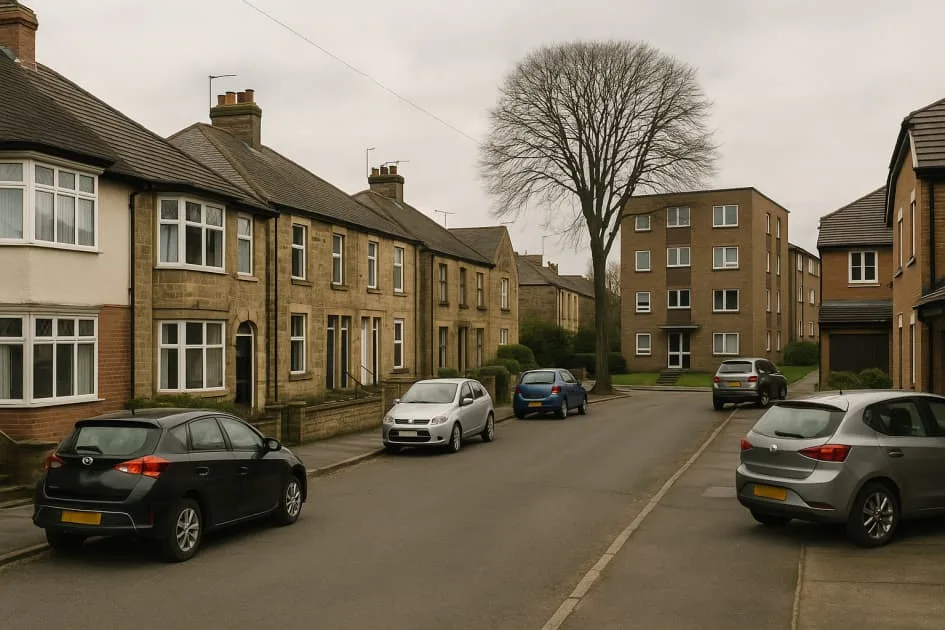
North Leeds is a patchwork of Victorian terraces, converted stone houses, inter-war semis and pockets of modern developments. That variety is a strength for residents but creates very location-specific logistical friction for removal operations: where a semi in Moortown might allow kerbside loading, a terrace in Headingley or a walk-up flat in Chapel Allerton forces long carries and careful handling.
Victorian and Edwardian terraces dominate many North Leeds streets. Typical physical realities include narrow front doors and hallways, tight dog-leg staircases and sometimes split-level basements. Those features produce several direct operational impacts:
For a broader regional view, see access and property guide for Leeds.
Access issues usually sit alongside other planning points, so compare this page with moving guide for North Leeds and hidden moving costs in North Leeds.
removals in North Leeds is the main booking page for checking availability, pricing and move details in one place.
North Leeds has a mix of converted houses and purpose-built blocks. The physical differences matter:
Before moving day it is essential to confirm lift sizes, communal door widths and whether the building has narrow fire doors that will impede bulky items. For general guidance on how access types affect removals across Leeds, see /removals/leeds/access-and-property-guide.
Streets in Headingley, Chapel Allerton and parts of Meanwood are often narrow, with resident permit schemes and sections of double yellow lines or restricted bays. Real-world implications:
North Leeds'character shifts over short distances. Inner neighbourhoods (Headingley, Chapel Allerton) are dense: terraces, conversions and tight streets. Further out (Roundhay, Alwoodley, Moortown) properties are more suburban: semi‑detached houses, larger gardens and estate roads. The practical differences are:
New-build apartments and houses on the northern fringe tend to have wider hallways and dedicated parking, so internal manoeuvres are usually easier. However, they bring other logistical twists:
Every one of the access and property constraints described here converts directly into time and hence cost:
For detailed neighbourhood-level planning, property checklists and what photos to supply to planners, see /removals/leeds/north-leeds and the more general access guide at /removals/leeds/access-and-property-guide. If you want step-by-step guidance tailored to your street layout or flat type in North Leeds, the moving guide at /removals/leeds/north-leeds/moving-guide covers typical examples and timing expectations by neighbourhood.
Practical answers to the most frequent access and property layout questions that change how removals are planned and charged across North Leeds.
Many streets in Headingley, Chapel Allerton and parts of Moortown operate resident permit zones or have narrow kerbside space. A temporary suspension of parking bays or a council dispensation is often required for a large removals wagon to sit close to the property. Arranging this in advance reduces time spent shuttling items from legal parking further away; unscheduled suspensions can add both extra cost and waiting time on moving day.
Victorian terraces common across North Leeds typically have narrow hallways, tight dog-leg stairs and original door frames. These constraints increase carry time and often mean furniture needs partial dismantling or specialist tilting techniques — each of which adds labour and time. Movers will allow extra time per large item compared with modern house layouts.
Converted Victorian houses and some maisonettes around Meanwood and Chapel Allerton frequently have no lift or very narrow communal stairwells. Carried distances can be 20–60 metres plus multiple flights of stairs; this lengthens loading/unloading windows and increases the number of staff needed. Where lifts exist in newer blocks, check internal lift dimensions — many lifts are too small for sofas, tall wardrobes or unwrapped mattresses.
New-builds on the northern fringe (outskirts of Alwoodley and near Roundhay) often have wider internal layouts and parking courts, but estate roads can be narrow, with no turning head for large vehicles. Shared drives and private planting can restrict where a removal van can park, creating long carry distances from agreed parking to front doors and extra handling time.
A terraced house with narrow stairs or a third-floor walk-up flat in North Leeds commonly requires an additional 30–90 minutes of labour compared with a ground-floor semi or a modern bungalow. If multiple flights, lifts that are too small, or long carry distances are present, factor in extra crew or staged loads which will increase both time and cost.
Measure doorway widths, stair turns, lift dimensions where relevant, and the real path from the furthest loaded room to the van position.