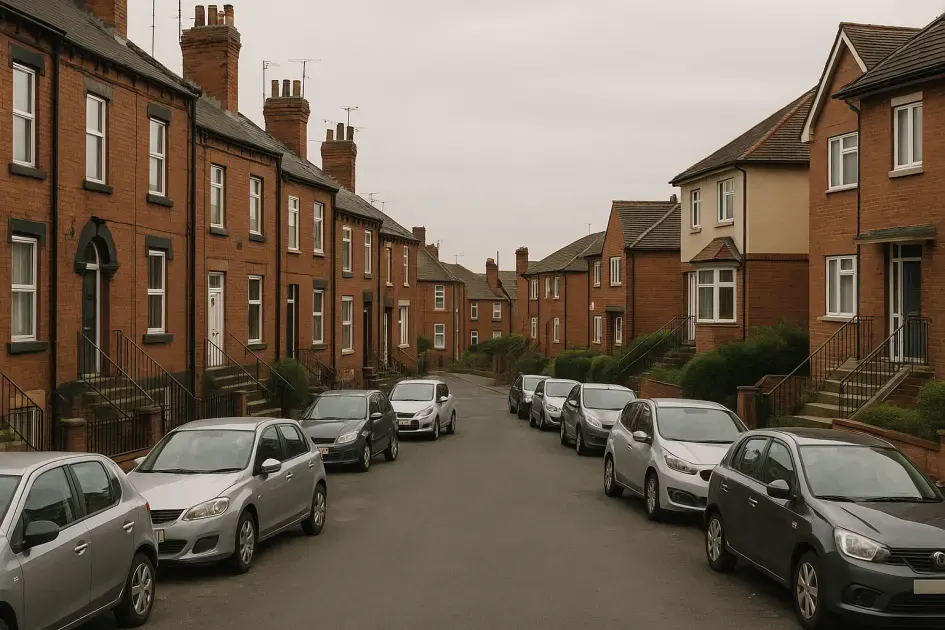
East Leeds is a varied patchwork: inter-war and post-war terraces, semi-detached suburban streets, clusters of purpose-built flats and newer housing estates around business parks. That variety shapes how removals work on the ground — access and layout in one neighbourhood can look nothing like the next, and planning must reflect those differences rather than rely on generic assumptions.
removals in East Leeds is the main booking page for checking availability, pricing and move details in one place.
For a broader regional view, see access and property guide for Leeds.
Older terraced rows in parts of East Leeds (for example the more densely built estates around Seacroft and Gipton) commonly present the following physical challenges:
Access issues usually sit alongside other planning points, so this page with moving guide for East Leeds and hidden moving costs in East Leeds.
Real-world implication: moves from terraced properties in East Leeds commonly add 30–90 minutes to the job for extra carries and dismantling. If multiple large pieces are present, crews and equipment requirements increase, which raises cost.
Flats across East Leeds range from small converted houses to modern mid-rise blocks. Practical issues that affect removals include:
Real-world implication: each flight of stairs or lift transfer typically adds 10–30 minutes of handling time per bulk item and may necessitate additional crew members to maintain safety and speed. Where carry distances exceed 20–30 metres from legal parking to the block entrance, expect the move duration and labour costs to rise accordingly.
Several parts of East Leeds have constrained highway geometry and controlled parking that directly affect removals logistics:
Real-world implication: inability to park close to a property increases carry distance and number of trips, affecting both time and price. When a large truck cannot access a street, moving with smaller vehicles adds complexity and labour, and hiring a suspended bay can add cost and several days' planning.
East Leeds contains both suburban semi-detached streets with private drives (Cross Gates and parts of Garforth) and dense estates with back-to-back terraces. The contrast creates different operational frictions:
Real-world implication: a move from a suburban semi with a usable driveway can often be completed faster and with fewer crew than the same volume from a dense terrace, even if the property sizes are comparable. Budgeting should account for whether a property has direct vehicle access or requires extended carries.
New-build developments in East Leeds (those on the edges near business parks and newer estates) have different removal realities compared with older homes:
Real-world implication: new-builds can be deceptively time-consuming despite a seemingly easy exterior — the need to remove integrated items and protect delicate finishes can add to the labour and materials bill and demand specialist handling.
Across East Leeds the principal sources of friction for removals teams are measurable in additional labour minutes and logistical steps:
Successful moves in East Leeds depend on property-specific planning rather than generic checklists. Useful practical steps include arranging vehicle parking that minimises carry distance, confirming lift dimensions and access gates in advance, and checking local parking controls with Leeds City Council. For detailed guidance on access planning across Leeds refer to the broader access guide at access and property guide for Leeds.
For local context and neighbourhood-specific issues in East Leeds see the area overview at removals in East Leeds and practical moving steps at moving guide for East Leeds.
East Leeds presents a mix of tight terraces, varied flat access, suburban semis and new-build estates — each with its own physical constraints. The real-world implications are straightforward: parking and access shape carry distance, which in turn drives labour time and cost. Planning moves around the specific street, property type and estate rules will give the most accurate picture of effort and expense on moving day.
Practical answers to the common access and property-specific issues that add time and cost to removals in East Leeds.
Yes. Many streets in East Leeds — especially around Seacroft, Gipton and parts of Cross Gates — have permit bays, residents-only bays or limited single yellow areas near shops and schools. Securing a loading bay suspension from Leeds City Council or arranging short-term parking can add days of lead time and a small fee, and on busy streets overnight or weekend parking may be the only option, increasing labour time on moving day.
Purpose-built and converted flats in East Leeds frequently have narrow communal corridors, tight staircases or lifts with small cabs. When a lift is present, its internal dimensions or weight limits often force large sofas and wardrobes to be carried up stairs or dismantled. Where parking courts are separated from blocks, carry distances of 20–60 metres are common, which increases loading time and crew requirements.
Yes. Older terraced properties — common in pockets of East Leeds — often have narrow front doors, steep, winding stairs and limited space to stage furniture on the pavement. That raises the likelihood of multiple short carries and may require additional protective equipment, more crew members and longer turnaround times than a semi-detached house with an accessible driveway.
No. Several residential pockets and cul-de-sacs across East Leeds have narrow access roads, parked cars on both sides and tight turning circles that prevent 18-tonne trucks from entering. In those cases smaller rigids or single-deckers are used, increasing the number of trips and loading/unloading time.
New-build estates around the east of Leeds and near business parks often have parking courts, gated entrances or private drives that look convenient but are designed for domestic cars, not large removal vehicles. Internal layouts sometimes include minimalist, fixed storage and integrated appliances that need careful removal; fragile finishes (porcelain tiles, thin stair nosing) require extra protection, and estate management rules can restrict loading to certain areas or times.
Yes. Lofts, garages and secondary storage areas spread the inventory across more space, which lengthens the loading phase even when the property looks manageable from the front door.