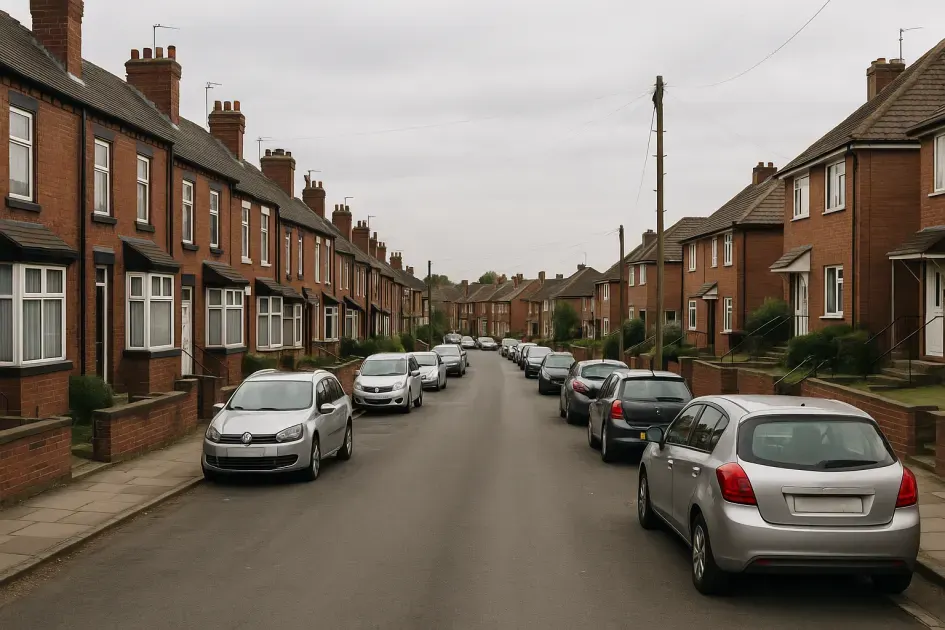
East Leeds covers a mix of housing stock — inner terraces and walk-up flats in Gipton and Seacroft, post‑war semi‑detached houses in Killingbeck and Colton, and new‑build estates around Thorpe Park and Cross Gates. That variety means your first step is a local reconnaissance: walk the route from kerb to your front door at the time of day you plan to move. Note on-street parking, loading bay positions, any residents’ permit signs, and the width of pavements and road humps.
Real-world implication: if your terrace or walk-up flat has no off-street parking, expect a longer carry — every 10–15 metres of extra carry between vehicle and door adds labour time and cost. If a nearby pay-and-display bay is the only legal option, factor in bay suspensions or officer permissions.
removals in East Leeds is the main booking page for checking availability, pricing and move details in one place, while Leeds area guide gives the wider regional context that supports this guide.
East Leeds moves require coordinating three groups: the removals team, local authority parking controls or estate management, and — for flats — building managers who control lift use. Start this sequence as follows:
For the supporting detail behind the move itself, compare this guide with moving costs in East Leeds and property access challenges in East Leeds.
Real-world implication: failing to secure a parking suspension or lift booking often forces additional crew time for long carries, multiple trips, or waiting on site, which increases the total bill and can delay other moves scheduled on the same day.
Packed volume and how you pack determine whether furniture can be taken through tight Victorian doorways or small lift cars. Practical checks for East Leeds:
Real-world implication: incomplete disassembly or oversized pieces that don’t fit through staircases can add unexpected labour for on-the-day dismantling or require hiring specialised equipment, adding cost and time.
Start with the loading point. In inner East Leeds terraces you may have to load from the street rather than the property forecourt. Plan the following:
Real-world implication: tight access and lift limitations usually translate to higher labour charges and longer booking slots. Avoid attempting to compress the move into a shorter window — extra trips back and forth cost more than pre-booking a longer slot.
- Cross Gates and the retail centre: busy streets and short-term parking mean you should reserve a loading bay or arrange loading early in the morning to avoid shoppers and delivery traffic. A midday move here often means more double-parking and delays.
- Seacroft and Gipton terraces: narrow roads and terraced layouts frequently require unloading on the pavement. Bring protection for pavements and agree a clear path with neighbours to avoid obstruction fines or complaints.
- New-builds around Thorpe Park and Colton: estate rules often restrict access times and vehicle sizes. Contact the site management to confirm delivery routes and any requirement for banksmen to be present when vehicles reverse on narrow estate roads.
- High-rise or walk-up flats: schedule a lift reservation or ask about furniture lift alternatives; if no lift is available, plan for smaller box sizes to keep the crew efficient and safe.
Read more about removals in East Leeds and the specific neighbourhoods covered on the parent page: removals in East Leeds. For broader context on Leeds access and parking issues across other parts of the city, see the area guide: Leeds area guide. For detailed property-type challenges common in East Leeds (tight terraces, walk-up flats and new-build estates), consult: property access challenges in East Leeds.
Each of these points is driven by the physical reality of East Leeds housing and streets: anticipate carrying distances, parking and lift limitations and build them into time and cost estimates rather than treating the move as a simple point-to-point vehicle job.
Answers to common, practical questions about access, parking, stairs and timing specific to East Leeds neighbourhoods like Cross Gates, Seacroft and Colton.
Many streets in East Leeds have permit bays, pay-and-display or narrow parking that will block a removal vehicle. Around Cross Gates and parts of Seacroft you’ll often need a temporary bay suspension for a hired removal vehicle to park directly outside — arrange this with Leeds City Council or your estate manager as early as possible to avoid long carries from the nearest legal parking.
Several purpose-built flats in East Leeds (Gipton, Seacroft walk-ups and some newer blocks) have small lifts or no lifts at all. Small lift cabs limit how many boxes or flat-packed furniture sections can go at once, doubling carry time; no-lift buildings add physical labour. These factors increase labour hours on the invoice and require planning for disassembly and protective gear for stair runs.
Measure front gates, narrow terraced doorways, internal stair widths and lift car dimensions. East Leeds terraces and older semi-detached houses often have tighter Victorian door frames or angled staircase landings; measuring avoids late surprises that force off-site storage or last-minute dismantling.
For weekend moves in popular months book 4–8 weeks ahead; for weekday moves or smaller off-peak dates 2–4 weeks is often enough. If you need bay suspensions, estate manager sign-off, or a specific lift booking in a block, allow extra lead time — those permissions can take several working days to arrange and will affect the final schedule.
New developments around Thorpe Park and parts of Colton have narrow estate roads, temporary kerbs and site management rules. Even with allocated parking you may still be restricted to set loading points or times, and tight turning circles can prevent large vehicles getting close, increasing carry distance and time.
Return to the main service page once the logistics are clear and you are ready to progress the actual booking path. Planning pages should support that step, not compete with it.