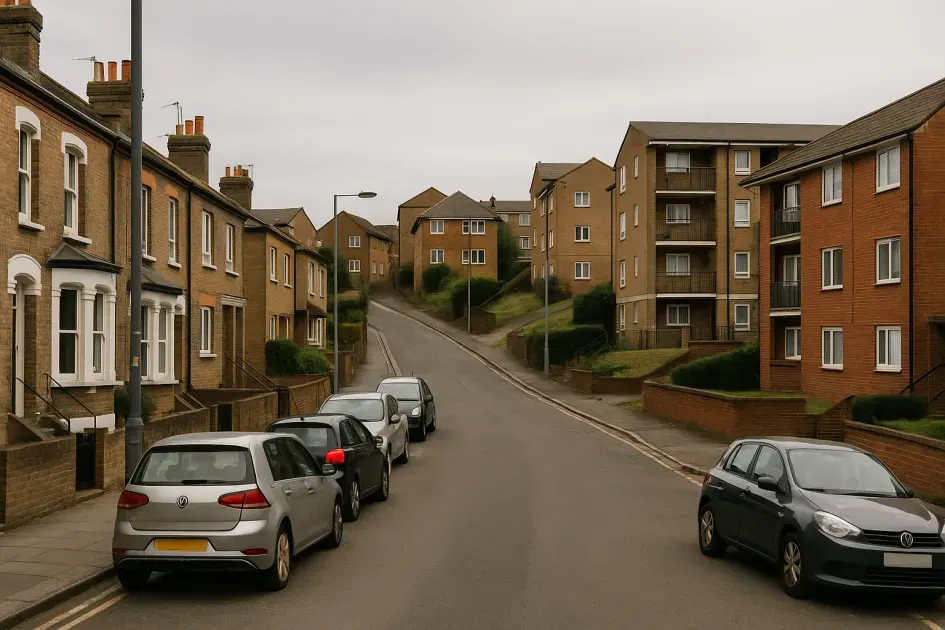
What affects loading access here
- Most important check: where the van can legally and practically stop close enough to work efficiently.
- Local pressure: older terraces, shared entrances and tighter kerbside loading near busy through-streets.
- What helps most: having a fallback loading point if the first stretch of kerb is blocked or unsuitable.
Key facts
- Check first: the exact stopping point and any backup option.
- What slows the job: longer walks from the van to the entrance.
- Worth confirming early: any managed building rules, bays or loading windows.
- Why it matters: extra carrying distance repeats on every trip.
On this page
Why parking plans matter in Devonport
For a smaller man-and-van move, the key question is whether the van can work in one clean loading sequence. In Devonport, older terraces, shared entrances and tighter kerbside loading near busy through-streets, so the practical stopping point matters more than whether the address is easy to find on a satnav.
Even a short extra walk can slow the job once it is repeated across boxes, bags and furniture.
What to confirm before the van arrives
Check the likely loading spot, how long it can be used for, whether private or managed spaces need permission and whether the route from van to door includes gates, stairs or shared entrances.
If the best place to stop is unreliable, a backup plan is usually the simplest way to avoid delays.
Plan your move in Devonport
Check the price and availability for your addresses, moving date and loading requirements. Book through Find My Man and Van; we allocate a suitable provider after booking.
Small local collection: £58.00 total — example for Plymouth.
1 × small van; Customer Loading/Unloading; 5 miles, 1.5 hours, ground-floor access. Modelled for 29 November 2026. Your quote depends on your actual move details and date.
Providers covering the Plymouth area

Local coverage is a guide, not a reservation of these providers. Explore local providers.