What affects cost planning for moves in Leeds
Moves become more expensive when loading and unloading slow down. Long carries from the kerb, stairs in older terraces, awkward apartment corridors and delayed bay access all add minutes that keep the crew on site longer. Because labour is time-based, those added minutes are what change the final total.
Distance matters less than many people assume. A short move between two nearby flats can cost more than a longer trip if the van cannot stop close, furniture has to be manoeuvred through tight turns, or a lift is shared with other residents. In practice, loading time usually outweighs driving time.
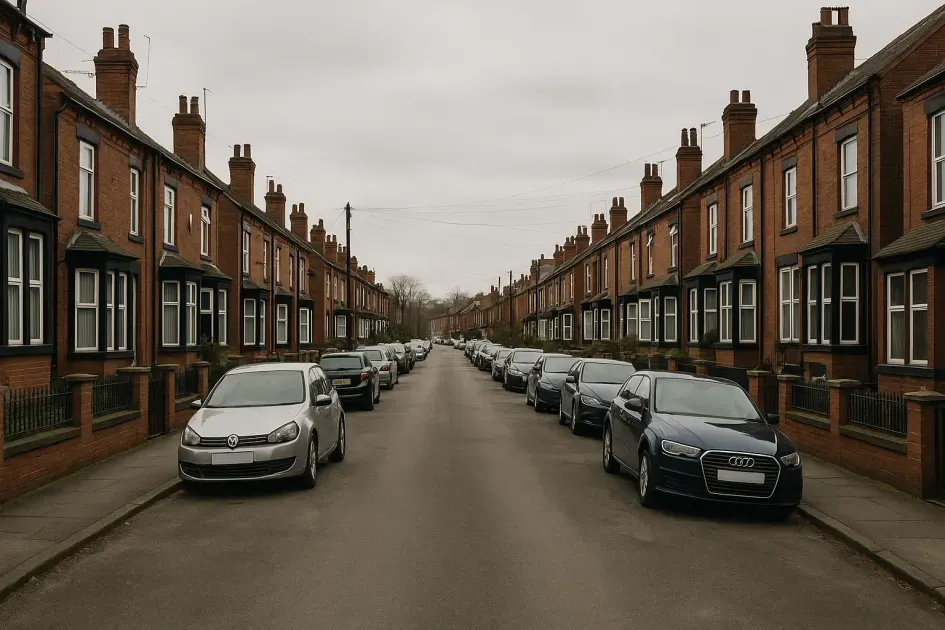
Parking restrictions are one of the main cost drivers in Leeds. Permit zones, narrow residential roads and short-stay bays can force the van to work from further away or move mid-job. Traffic timing also matters: school-run peaks and commuter flows make arrivals less predictable and can shorten the useful loading window at both ends. Part of that broader picture comes from how route planning affects Leeds moves. Scheduling pressure becomes clearer when viewed alongside Leeds demand patterns at different times. Similar time pressures can also appear in man and van services in Headingley.
What affects cost planning for moves in Leeds
| Cost driver | What changes the time | Why it affects total cost |
|---|---|---|
| Parking access | Distance from van to door; need to re-park; permit time limits | Longer carries and interruptions add handling and waiting, increasing billed labour time |
| Building layout | Stairs, tight corridors, lift size/availability, loading bay rules | Restricted routes slow each item movement, extending loading and unloading windows |
| Van size / movers | Larger van capacity; one vs. two movers; item weight/bulk | Right-sized vehicle and crew reduce trips and handling cycles; undersizing increases cycles |
| Route timing | School-run peaks, roadworks, predictable bottlenecks | Slower roads compress loading windows and extend the overall job duration |
Typical move price patterns in Leeds
Because labour time drives cost, prices tend to scale with how long loading, travel and unloading actually take. Two jobs with similar volume can end very differently once parking, stairs, access controls and timing are factored in.
| Move type | Typical time range | What affects duration |
|---|---|---|
| Single large item or light studio | Short window | Close parking and ground-floor access keep handling fast; stairs or distant parking extend it |
| 1-bed flat, local | Half-day window | Lift availability, corridor width, and permit parking shape loading speed |
| 2-bed terrace, across the city | Most of the day | Narrow streets, parallel parking, and stairs add carry distance and handling cycles |
| 3-bed house with partial packing | Extended day | Disassembly/reassembly, volume, and route timing increase total labour time |
Cost examples by move type
Example 1: Small flat, easy kerbside
Ground-floor studio with the van parked outside the door. Short carry and a clear internal route keep handling straightforward, so the total stays relatively low.
Example 2: Small flat with permit parking
Similar volume to Example 1, but the van has to stop a short walk away on a permit-controlled street. Every load takes longer, and the extra carrying time lifts the total cost.
Example 3: 1-bed upstairs in a terrace
Stairs and tight turns slow furniture movement. Items need to be staged carefully on landings and corners protected, so the extra handling time increases the hours billed.
Example 4: 2-bed flat with lift booking
A larger load with a booked lift and a medium van. If the lift slot is strict, crews may have to batch items and wait between runs, which adds non-loading time into the job.
Example 5: 3-bed house to managed block with loading bay
Higher volume, school-run traffic at departure and a fixed loading bay at arrival. Delays on either side can turn a well-planned schedule into a longer, more expensive working day.
How to keep the move efficient
- Permit or time-limited parking → Arrange visitor permits or a temporary dispensation so the van can park close and stay put.
- Long kerb-to-door carry → Stage items near the exit and clear corridors to shorten walking distance per load.
- Stairs or narrow routes → Break down bulky furniture and protect corners to reduce slow manoeuvres.
- Lift or loading bay rules → Pre-book lift/bay slots and notify building management to avoid waits.
- Peak traffic or school-run → Aim for mid-morning or mid-afternoon loading to keep route times predictable.
- Volume and item detail → Share accurate inventories and any heavy or fragile items in advance so van size and crew are right first time.
Leeds includes permit-controlled terraces, newer apartment blocks and quieter suburban streets, and each setting changes how efficiently a move can run. If you want to keep costs under control, the key is to reduce wasted handling time before the van arrives.
We provide man and van services across the wider area, including man and van services in Roundhay, with bookings managed through one system coordinating bookings with pre-checked drivers.
Plan your move in Leeds
Check the price and availability for your addresses, moving date and loading requirements. Book through Find My Man and Van; we allocate a suitable provider after booking.
Small local collection: £53.00 total — example for Leeds.
1 × small van; Customer Loading/Unloading; 5 miles, 1.5 hours, ground-floor access. Modelled for 17 October 2026. Your quote depends on your actual move details and date.
Providers covering the Leeds area

Local coverage is a guide, not a reservation of these providers. Explore local providers.