
What affects cost planning for moves in Harlow
Moves cost more when handling takes longer than expected. The biggest drivers are loading distance, stairs or lift capacity, and where the van can legally and safely stop. Short journeys can still total higher costs if the carry is long or the team must re-park.
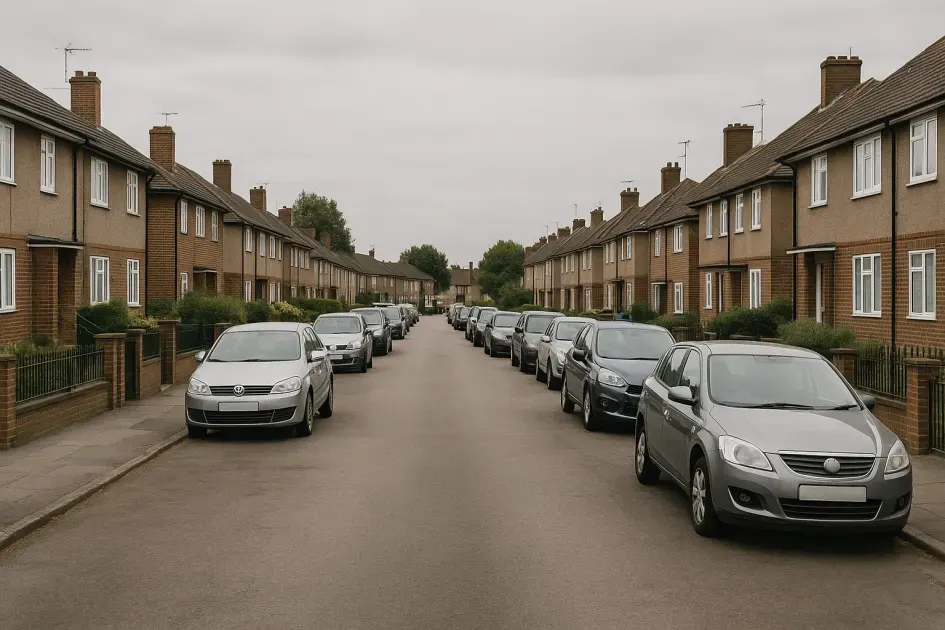
Distance across town matters less than throughput. If a ground-floor flat allows the van to park outside the door, items flow quickly. If parking is in a permit zone a street away, the extra walking and shuttling extend the schedule. Managed buildings can add time through lift bookings, loading-bay slots and security check-in. Traffic timing around school-run or peak periods can compress loading windows and delay travel. It also reflects how neighbourhood layout changes moving time. Scheduling pressure becomes clearer in Harlow demand patterns at different times.
Loading time usually outweighs driving time. If you are budgeting a move, this is usually what matters most.
What affects cost planning for moves in Harlow
| Cost driver | What changes the time | Why it affects total cost |
|---|---|---|
| Parking access | Distance from van to door, permit setup, time to secure a legal space, need to re-park | Longer carries and waiting add labour minutes to each load, increasing billed hours |
| Building layout | Stairs, narrow turns, corridor length, lift size and availability | Slow movement and extra trips reduce throughput, extending loading and unloading time |
| Van size / movers | Too small a van requires extra trips; too few movers slow handling; right-sizing increases throughput | Labour is time-based, so matching van and team to the load reduces repeated journeys |
| Route timing | School-run congestion, peak-hour junctions, roadworks, restricted delivery windows | Unpredictable travel or compressed loading slots extend the overall schedule |
Typical move price patterns in Harlow
Prices scale with duration because labour is charged by time. Two moves with similar distance can differ sharply when one has close parking and a lift while the other involves a long carry or stairs. Plan around throughput, not mileage.
| Move type | Typical time range | What affects duration |
|---|---|---|
| Light van: storage or single room | Short window | Ground-floor access, close parking, items boxed and ready |
| Studio or 1-bed flat | Half-day window | Stairs versus lift, carry distance to van, permit or parking restrictions |
| 2-bed home | Most of a day | Volume of large items, corridor and doorway constraints, disassembly needs |
| 3-bed house | Full day | Narrow streets, long kerb-to-door carry, multiple re-parks, route timing |
| Small office or workshop | Half to full day | Loading-bay bookings, lift capacity, security sign-in, IT equipment handling |
Cost examples by move type
Example 1: Small storage to ground-floor flat with doorstep parking
A few bulky items and boxes, with the van directly outside and a short, straight carry. High throughput keeps labour time tight, so cost remains contained despite any cross-town distance.
Example 2: Studio flat with permit parking one street away
Same volume as Example 1, but the van must park further away in a permit bay. The longer shuttle and possible re-parking add handling minutes to each load, increasing total hours and cost.
Example 3: 1-bed apartment, lift available but unbooked
Moderate volume with an internal lift shared by residents. Waiting for the lift and fitting larger items into a smaller car adds delay. Booking the lift would usually reduce idle time and cost.
Example 4: 3-bed house on a tight residential road
Higher volume requiring a larger van and team. Narrow street geometry may force the van to stop short, creating a long kerb-to-door carry and occasional traffic pauses that lengthen the schedule.
Example 5: Flat-to-flat with loading bay window and school-run traffic
Managed blocks at both ends with loading-bay slots and security sign-in. Arrival must align with bay access, and school-run congestion slows travel. The combined waiting, timed access and careful handling of large items extend labour hours.
How to keep the move efficient
- Permit or controlled parking zone → Arrange a visitor permit or pre-paid session and send the details to the team to avoid circling or fines.
- Long kerb-to-door carry → Reserve the closest legal space and stage items near the exit to reduce walking per trip.
- Shared or small lift → Book an exclusive slot and notify building management so the lift is ready and protected.
- Stairs-only access → Dismantle large furniture and box loose items so each trip is lighter and quicker.
- Narrow street or cul-de-sac → Schedule outside school-run and peak hours so van positioning is easier.
- Mixed fragile and bulky items → Group and label by room and fragility to cut sorting time at both ends.
- Uncertain route timing → Share full addresses, access notes and entrance photos so the driver can plan the stop precisely.
- Multiple pick-ups or drop-offs → Sequence addresses in map order to reduce backtracking and idle time.
- Tight doorways or corridors → Measure key items and door widths, and remove legs or doors in advance to prevent slow re-handling.
Local context matters in Harlow: tighter streets in older areas, newer estates with allocated bays, and managed apartments with loading bays each create different loading distances and timing windows. Planning for the exact street and building conditions keeps labour hours controlled.
Plan your move in Harlow
Check the price and availability for your addresses, moving date and loading requirements. Book through Find My Man and Van; we allocate a suitable provider after booking.
Small local collection: £53.00 total — example for Harlow.
1 × small van; Customer Loading/Unloading; 5 miles, 1.5 hours, ground-floor access. Modelled for 3 November 2026. Your quote depends on your actual move details and date.
Providers covering the Harlow area
Local coverage is a guide, not a reservation of these providers. Explore local providers.