
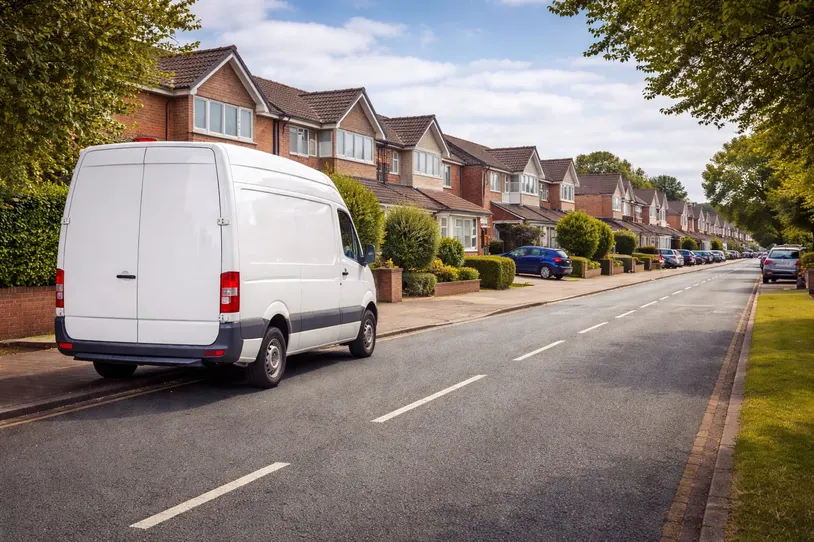
How moving conditions vary across Harlow
Harlow mixes tighter streets in Old Harlow, town-centre apartments, and suburban estates like Church Langley and Newhall where cul-de-sacs and parking courts are more common. Terrace rows and mews-style lanes can reduce turning space, while newer blocks may centralise parking away from the entrance, creating a longer kerb-to-door carry even when spaces are available. These patterns change how close a van can get, whether items travel up stairs or through lifts, and how continuous the loading cycle can stay. In practice, two moves with similar mileage can take very different lengths of time because the access route between the van and the front door is rarely the same.
Neighbourhood access patterns
Town-centre streets and areas near major amenities can feature controlled or short-stay parking, which creates tighter loading windows and less flexibility if a van arrives late. Historic Old Harlow has narrower stretches where stopping positions are limited and parked cars reduce clear working space. Outer estates rely more on cul-de-sacs and parking courts; space often exists, but the walk from bay to doorway can be longer than expected. Roundabouts concentrate local flows, and school-run peaks near primary routes slow approaches just enough to push loading later into the day. Each pattern affects whether the van can stop at the entrance, how long the carry becomes, and when loading can realistically begin. Most delays come from access constraints rather than distance.
Property and loading differences
Period terraces in Old Harlow may have small forecourts, steps and tighter hallways, which slow the handling of sofas, wardrobes and appliances. Semis and modern townhouses often offer driveways or clearer front access, which keeps the loading rhythm steadier. Low-rise maisonettes can lack lifts, while central apartments frequently depend on lift and loading-bay coordination. Long internal corridors or external stair towers add walking time, and courtyard or undercroft parking can mean secure but remote bays. These details determine carry distance, trolley suitability and whether a smaller shuttle van might actually improve flow. The property’s access design usually has a stronger effect on duration than the road distance between addresses. The pricing effect is clearer in how these conditions affect moving costs. The route-planning side is covered in Harlow route and loading access planning. A more suburban pattern appears in man and van services in Old Harlow.
How to choose the right planning approach
Start with access, not mileage. Identify the likely stopping point, check permit needs, and work out the door-to-van carry at both addresses before deciding on van size. If a lift or loading bay needs booking, line the journey up with that slot rather than treating it as an afterthought. For cul-de-sacs or terrace rows, a medium van or staged shuttle can sometimes keep handling smoother than forcing a larger vehicle into a poor position. Where routes cross busy roundabouts or school-run corridors, move the schedule away from those peaks so the van arrives when the access window is still usable. A smaller van in the right place is often faster than a larger one parked badly. This helps you avoid delays on the day.
City-wide baseline: time drives outcomes
Harlow blends terraces in Old Harlow, suburban semis with driveways and apartment developments near the centre. Moving time hinges on four factors: parking availability at the door, housing density limiting kerb space, building access via lifts or stairs, and route predictability through roundabouts and peak flows. Efficient loading and unloading, not mileage, sets the pace, so access geometry should lead all planning. A denser neighbourhood example is man and van services in Broxbourne.
Eight variables that change moving time locally
1) How permit parking delays loading
When streets use resident or time-limited bays, the van may stop farther from the entrance or require a visitor permit. Longer carries slow each loading cycle and increase the number of trips. Securing a dispensation or timed visitor permit near the door reduces walking distance and keeps handling more continuous.
2) Why housing density affects van positioning
High-density blocks and terrace rows concentrate parked cars and shrink usable kerb space. If the van cannot align with the entrance, crews shuttle items around vehicles or from side streets, adding carry time. Planning for an earlier arrival or a smaller van often improves the chance of holding the closest practical space.
3) How building layout alters carrying distance
Walk-up stairwells, long corridors and external walkways add repeated steps per item. Lifted moves flow faster but only when the lift is available and large enough. Mapping the route from kerb to door, measuring bottlenecks and pre-positioning trolleys shortens each cycle and improves the overall pace.
4) Why managed buildings introduce booking rules
Central apartments often require lift and loading-bay bookings. Fixed windows dictate when unloading may start, so arriving early can still create idle time and arriving late compresses the job into a narrower slot.
5) How street width affects van access
Narrow lanes and tight mews-style turns can limit larger vans. A bigger vehicle may block traffic or fail to turn cleanly, forcing distant parking. Choosing a medium van or a short shuttle approach often preserves flow and avoids repeated manoeuvring delays.
6) Why route predictability changes travel time
Roundabouts, school zones and bus-priority sections create variable approach times. Uncertain arrivals disrupt lift bookings and reduce usable loading windows, so the job starts under pressure instead of in sequence.
7) How loading bay rules affect unloading speed
Some blocks restrict bay use to booked slots with time-limited unloading. Without pre-arranged access, crews may have to hand-carry from public bays or return later. Confirming bay location, height limits and paperwork in advance keeps unloading close and efficient.
8) Why neighbourhood traffic patterns delay moves
School-run queues near primaries and commuter flows on main corridors slow short cross-town hops. These delays push back arrival at the door, shrinking lift windows or daylight for loading. Loading time usually outweighs driving time, especially when the destination access is tightly managed.
Practical planning checklist
- If permit parking restricts kerb access, arrange a visitor permit or dispensation for the closest bay to the entrance.
- If a building requires lift or bay booking, reserve both and bring door pads or floor protection to avoid last-minute delays.
- If street width is tight for large vans, choose a medium van or run a short shuttle from a wider junction.
- If school-run traffic slows approaches, schedule departures outside peak times and add a buffer before any booked slot.
- If the carry from a parking court is long, pre-stage items near the exit and use dollies to increase load size per trip.
Scenario examples
Example 1: Studio from a suburban semi with driveway to a cul-de-sac semi with driveway. Small van, one to two movers. Doorstep loading and no permits keep cycles short, so handling flows with minimal repositioning.
Example 2: One-bedroom flat to a terrace street near Old Harlow High Street. Medium van, two movers. Permit parking leaves the nearest non-resident bay part of the street away, creating a longer carry and extending loading.
Example 3: Two-bedroom terrace to a suburban semi. Medium van, two to three movers. Narrow terrace street limits positioning; the crew stages items at the nearest gap and shuttles by trolley, which adds handling time but keeps the move moving.
Example 4: Three-bedroom semi to a town-centre apartment. Long wheelbase van, three movers. Lift and loading bay are booked; school-run congestion risks a later arrival, so tighter unloading windows extend the schedule.
Example 5: Three-bedroom townhouse in Old Harlow to a new-build block with concierge. Luton van, three to four movers. Permit parking, a narrow approach and a long carry from a parking court require a shuttle setup, increasing trips and stretching loading duration.
Apply neighbourhood context
Each Harlow neighbourhood shapes access differently: permit zones near the centre, terrace street width in Old Harlow, apartment lift control in newer blocks, and driveway access in outer estates. Parking layouts, housing density and building access rules vary across different parts of Harlow. The guides below explain the practical moving considerations for each neighbourhood. All of these neighbourhood differences sit within the wider pattern on Harlow man and van services.