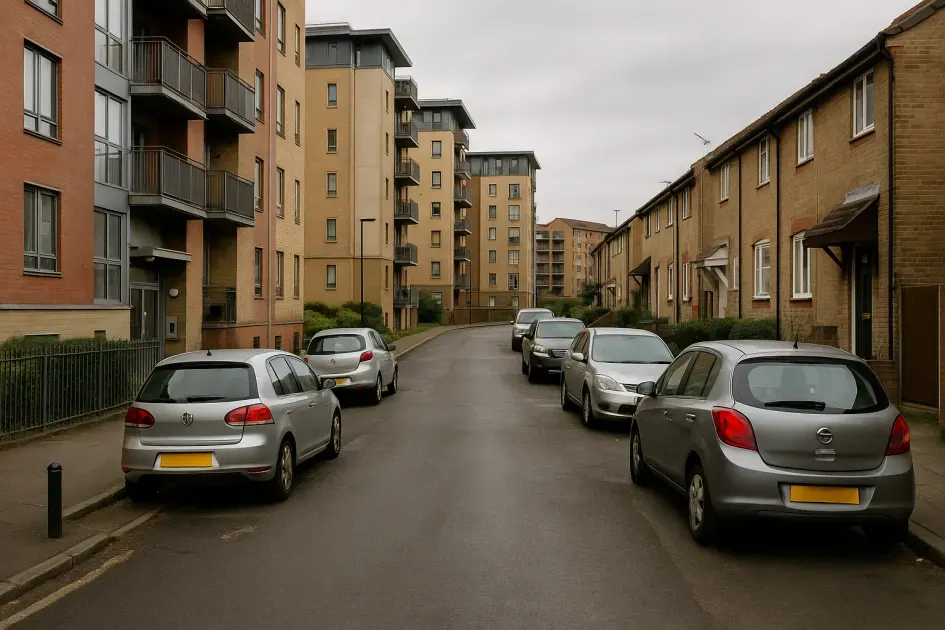
Where the overrun usually starts
On a short local move, the quiet cost creep is almost always operational. Lifts, entry systems, internal walking distance and staged loading through communal areas often slow the job more than mileage. Loading depends heavily on bay rules, barrier access and whether the driver can hold a practical stopping point near the entrance.
Key facts
- Most common overrun: the van cannot work from the stopping point first assumed.
- Other risk: shared access, stairs, entry delays or repeated furniture turns.
- Local pattern: Modern apartment buildings, concierge-managed blocks and mixed-use developments.
- Best prevention: spell out access friction before the move is priced.
On this page
What quietly pushes jobs over in Cardiff Bay
The hidden cost is usually not an extra charge appearing from nowhere; it is extra time building trip by trip. In Cardiff Bay, the overrun often starts when the stop is less practical than expected, bulky items slow on a turn, or the route through the building is more awkward than it looked on paper.
Those small pauses multiply very quickly on a man and van booking.
Plan your move in Cardiff Bay
Check the price and availability for your addresses, moving date and loading requirements. Book through Find My Man and Van; we allocate a suitable provider after booking.
Small local collection: £53.00 total — example for Cardiff.
1 × small van; Customer Loading/Unloading; 5 miles, 1.5 hours, ground-floor access. Modelled for 24 November 2026. Your quote depends on your actual move details and date.
Providers covering the Cardiff area
Local coverage is a guide, not a reservation of these providers. Explore local providers.
How to stop the job drifting
Call out any long front path, stair stage, entry system, rear access route or awkward item before booking. If you already know the likely slow point, the job can be planned around it instead of discovering it on arrival.
That is usually how you keep a tidy local move from turning into a stop-start day.