Plants need a separate place in your moving plan. They cannot all be packed or cared for in the same way, and a transport booking should not be treated as confirmation that living plants are accepted.
Start with an inventory: which plants are coming, how large they are and whether they are already in portable pots. An established garden shrub needs a different decision from a small houseplant on a windowsill.
Check which plants can travel
Confirm plant acceptance with your mover before booking. Describe the number of pots, the largest dimensions and any heavy containers, trailing foliage or spines. Ask what preparation is required and whether any restrictions or exclusions apply. If the mover cannot accept them, arrange suitable separate transport in advance.
Consider the complete journey, including any overnight stop or delay in getting keys. Avoid an arrangement that depends on leaving plants packed in a vehicle for an uncertain period. Keep the plants’ care requirements available alongside the move details.
For a move across a border, check current official plant-health requirements for the precise origin, destination and plants before making arrangements. This guide covers practical preparation for a household move; it does not establish permission to move plants or soil internationally.
Match preparation to the plant
Identify unfamiliar plants before deciding how to prepare them. The RHS houseplant growing guide explains that suitable light, temperature, water and humidity depend on the plant. Use the label or species-specific guidance as the starting point.
Do not water every pot to the same moving-day timetable. Check the growing medium and the plant’s normal needs instead. If watering is due, allow excess water to drain before packing and avoid a load of leaking pots. A succulent and a moisture-loving plant should not automatically receive identical treatment.
Check plants for signs of pests or disease ahead of the move. Identify the problem before choosing a response; a move is not a reason to spray every plant with a general treatment. Keep affected plants apart where appropriate and seek plant-specific advice if you are unsure.
Nor does every plant need pruning before transport. Ask for advice before cutting back a plant simply to make it fit. Give your mover accurate dimensions and plan protection around the plant where possible.
Protect pots without crushing foliage
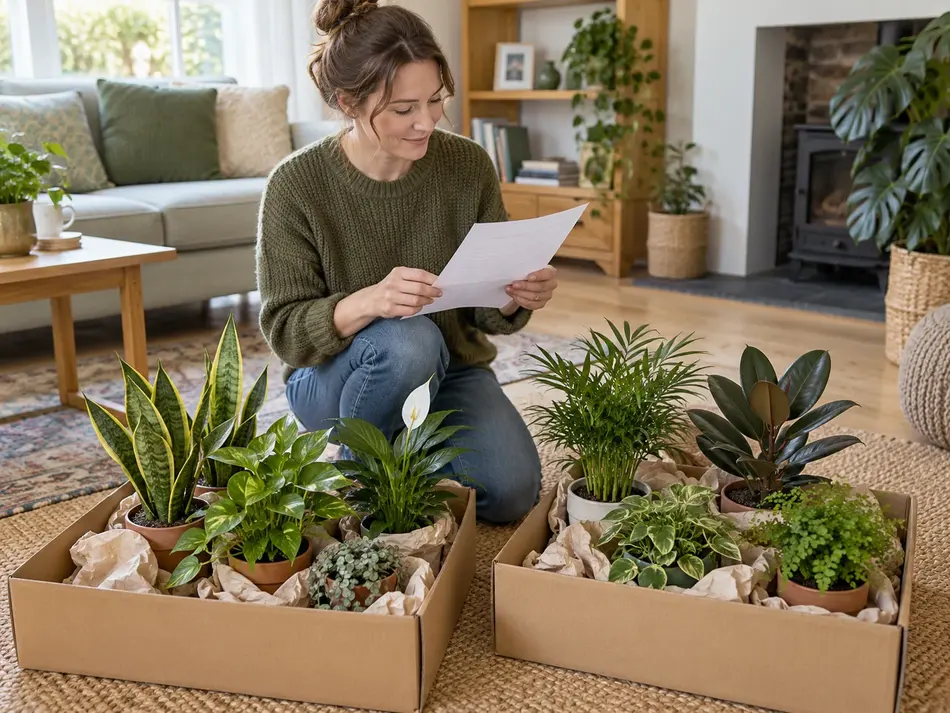
Discuss suitable containers and restraints with whoever is transporting the plants. Small pots may be grouped upright in a sturdy open box, with packing around the pots to limit movement. Check that the container can carry their combined weight and that it does not force leaves or stems against one another.
Keep water contained without leaving the plant standing in it. Label containers so the people handling them know they contain living plants and need to stay upright. Labels support the agreed handling plan; they cannot make an unsuitable container secure.
Tall, top-heavy plants and heavy ceramic pots need individual assessment. Do not use foliage or stems as lifting handles. Tell the mover about awkward or sharp features rather than disguising them inside opaque wrapping.
Protect plants from the weather during handover. The RHS advises covering houseplants for journeys in cold weather. The protection should suit the plant and the conditions; keep packaging from pressing against delicate growth, and arrange unloading so protection can be removed promptly indoors.
Plan loading and arrival together
Agree where the plants will travel, how they will be kept upright and how they will be accessed on arrival. A convenient empty space between furniture is not automatically suitable. Avoid leaving the decision until the vehicle is already full.
Keep plants away from other items that could fall onto them. Make sure everyone knows which containers need attention when unloading, particularly if another person is receiving the delivery.
At the new home, remove transit packaging and inspect the pots and foliage. Check care needs before watering, misting or feeding: none is an automatic recovery treatment for every plant. Choose an initial position appropriate to the species rather than putting all plants on the sunniest windowsill.
The RHS highlights the risks of cold draughts, strong sun through glass and unsuitable temperatures. Look at the conditions in the new room, not just how closely the spot resembles the old one. Continue to monitor the plant and seek specific advice if damage or persistent decline appears.
Treat established garden plants separately
Decide early whether a tree or shrub should move at all. Confirm that you are entitled to take it and that any agreement about what stays at the property is clear.
The RHS guide to moving trees and shrubs warns that established plants can fail after transplanting even with care. Timing and preparation vary, and mature specimens may need specialist contractors. A house completion date is not necessarily a suitable transplanting date.
Get horticultural advice before committing to lifting an established specimen. Discuss the destination site and how lifting, transport and replanting would be coordinated. Root protection and preventing roots from drying matter; an ordinary furniture collection does not provide that whole service.
Do not apply tree-and-shrub transplanting advice indiscriminately to houseplants or all garden plants. If the move cannot be planned appropriately, leaving an established plant in place may be the better decision.
Keep the plant plan with your move details
Before moving day, confirm acceptance, preparation, loading and the person receiving the plants. Keep any care notes with you so they can be used immediately at the new address.
Use our packing preparation guide for the rest of the household load. When arranging house removals, declare the plants and agree what is included. Clear information gives the people transporting them a chance to assess the request before the day arrives.

Liz
Liz is a content creator and digital marketing consultant. Originally from Toronto, Ontario, Canada, she is now happily settled in the UK (after living in four different countries across 2 continents and moving house 10 times). Drawing on her experiences, Liz shares practical advice and insider tips to help others enjoy smoother, stress-free moves.

The Packing Guides at Find My Man and Van focus on helping you protect your belongings and pack efficiently for any type of move. From fragile items and bulky furniture to room-by-room packing strategies, our guides share proven techniques used by professional movers. With clear instructions and practical tips, we help you save time, reduce damage risk, and stay fully prepared for moving day.