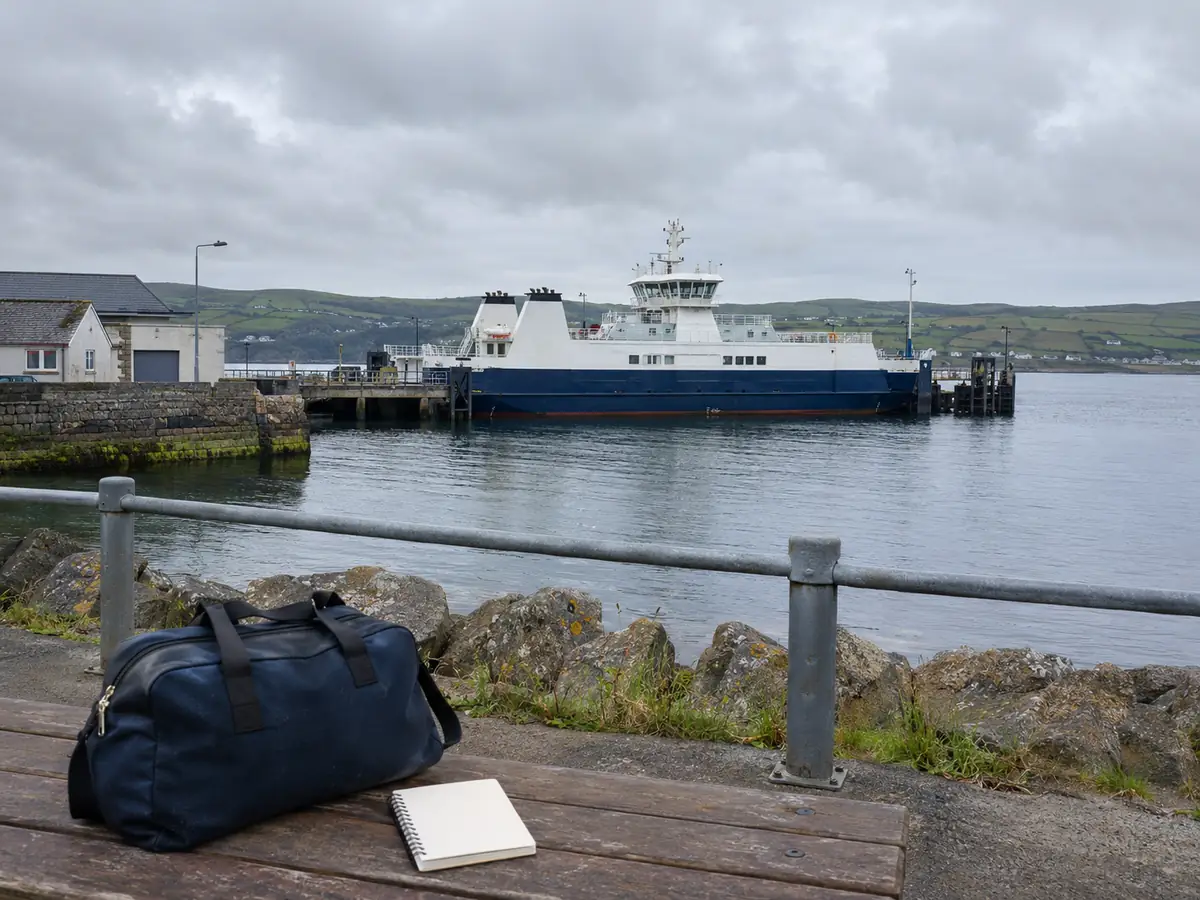
A ferry adds an appointment between collection and delivery. The goods need to be ready, the correct vehicle needs an accepted booking, and the driver needs to reach the right terminal before check-in closes. Delivery access must still work after the crossing.
Confirm that the provider can undertake the complete journey before buying a ticket around an assumed collection time. This guide concerns domestic UK belongings moves; a route through another country needs separate operator and relevant border guidance.
Agree the complete journey first
Send the collection and delivery addresses, inventory, moving entrances and any fixed access appointments. State the proposed ferry route and whether it is essential or an option still being considered. Do not describe an island or cross-sea delivery as an ordinary local van journey.
Ask the booking team to confirm acceptance, who will arrange each ticket, what information the operator needs and who can change the booking. Include any required driver-return crossing in that discussion. A preferred sailing and an accepted moving job are different stages.
If the date is not fixed, describe the flexibility available at both properties. Do not promise a landlord or recipient an arrival time that depends on a crossing the provider has not agreed.
Confirm the operator’s booking category
Give the ferry operator the vehicle type, actual external dimensions and the nature of the load and journey. Ask which booking channel and category apply to a paid removals service carrying household belongings. Do not select a passenger-car or private-van fare simply because the vehicle looks small enough.
CalMac’s vehicle-charge guidance distinguishes vehicle types and asks for accurate dimensions. Stena’s published business terms also distinguish van declarations and certain goods/category conditions. These are operator-specific examples, not interchangeable definitions.
Use the operator’s current booking or freight contact to settle an uncertain category. Explain whether the vehicle belongs to a moving provider, is hired or has attachments affecting dimensions. Ask about any goods documentation or acceptance conditions relevant to the actual route instead of assuming household contents settle every question.
Match the ticket to the allocated van
Obtain the registration and the measurements requested by the operator from the provider. Include a trailer or external fittings if relevant. Internal cargo dimensions from a van-size guide are not the same as the overall vehicle dimensions used for a crossing booking.
If allocation is still pending, ask how the operator handles that situation and when the details must be completed. Agree who updates the ticket if the vehicle changes. CalMac specifically asks travellers with an unknown hire-vehicle length to update the correct dimensions before travel; do not assume another operator uses the same process.
Retain the booking reference, vehicle details, category and accepted sailing together. The provider still needs to assess the load and the whole road route; a ferry ticket is not proof that either is suitable.
Work backwards from check-in closure
Use the terminal and route instructions for the booked sailing. Distinguish departure time from the time by which the vehicle must be checked in. CalMac’s check-in guidance explains that times vary by route; use the current timetable rather than a universal allowance.
Build the plan backwards: terminal arrival, road journey, loading completion, carrying work and access at collection. Include the actual port entrance and any instructions for a goods vehicle. A nearby passenger terminal or general harbour postcode may not be the right arrival point.
Check traffic and operator service updates nearer departure. Agree how an updated arrival estimate will reach the booking team and receiving contact. A tight lift slot after the crossing needs particular attention because delayed sailing and delayed unloading are different problems.
Keep people, essentials and the goods booking separate
Confirm each person’s own travel arrangements. Do not assume the customer can ride in the moving van or that a vehicle ticket includes every passenger, cabin, assistance request or personal requirement.
Keep tickets, identification required by the operator, keys, contact details and essentials accessible to the person who needs them. Follow the operator’s instructions for access to the vehicle during the crossing. If you need passenger assistance, arrange it through the operator’s own process; it is separate from moving the belongings.
Declare any unusual equipment or restricted goods to the relevant operator/provider before booking. This checklist is not a battery, gas, dangerous-goods or customs clearance procedure.
Make the costs and disruption plan explicit
FMMV’s external-costs FAQ says the customer is responsible for the van and driver ferry fares for the crossings needed to complete the move, including the driver’s return. Confirm the route, ticket arrangements and expected costs before finalising, and keep any different written agreement.
Ask what happens if the sailing is cancelled or missed: who contacts the operator, whether a change is possible, how the driver’s schedule is affected and what happens to destination access. Do not assume another sailing, storage or overnight accommodation is included. Resolve any price or scope change before proceeding.
Prepare the receiving handover
Confirm the destination contact, keys, loading place and carrying route. Explain how the arrival window will be updated after any disruption. For Belfast-specific access use the Belfast moving guide; another destination needs its own local checks.
Bring the final ferry record into the house-removals enquiry with the full load and access details: operator/route, accepted vehicle category, registration/dimensions, sailing and check-in, booking owner, outward/return costs, disruption contact and receiving arrangement. Agree the complete job before making the rest of the move depend on it.

Liz
Liz is a content creator and digital marketing consultant. Originally from Toronto, Ontario, Canada, she is now happily settled in the UK (after living in four different countries across 2 continents and moving house 10 times). Drawing on her experiences, Liz shares practical advice and insider tips to help others enjoy smoother, stress-free moves.

Our Moving House Guides support homeowners and renters through every stage of relocating to a new property. At Find My Man and Van, we provide step-by-step advice on planning timelines, organising utilities, preparing furniture, and coordinating your move day efficiently. Whether you’re moving locally or further afield, these guides are created to help make your house move smoother, more organised, and less stressful.