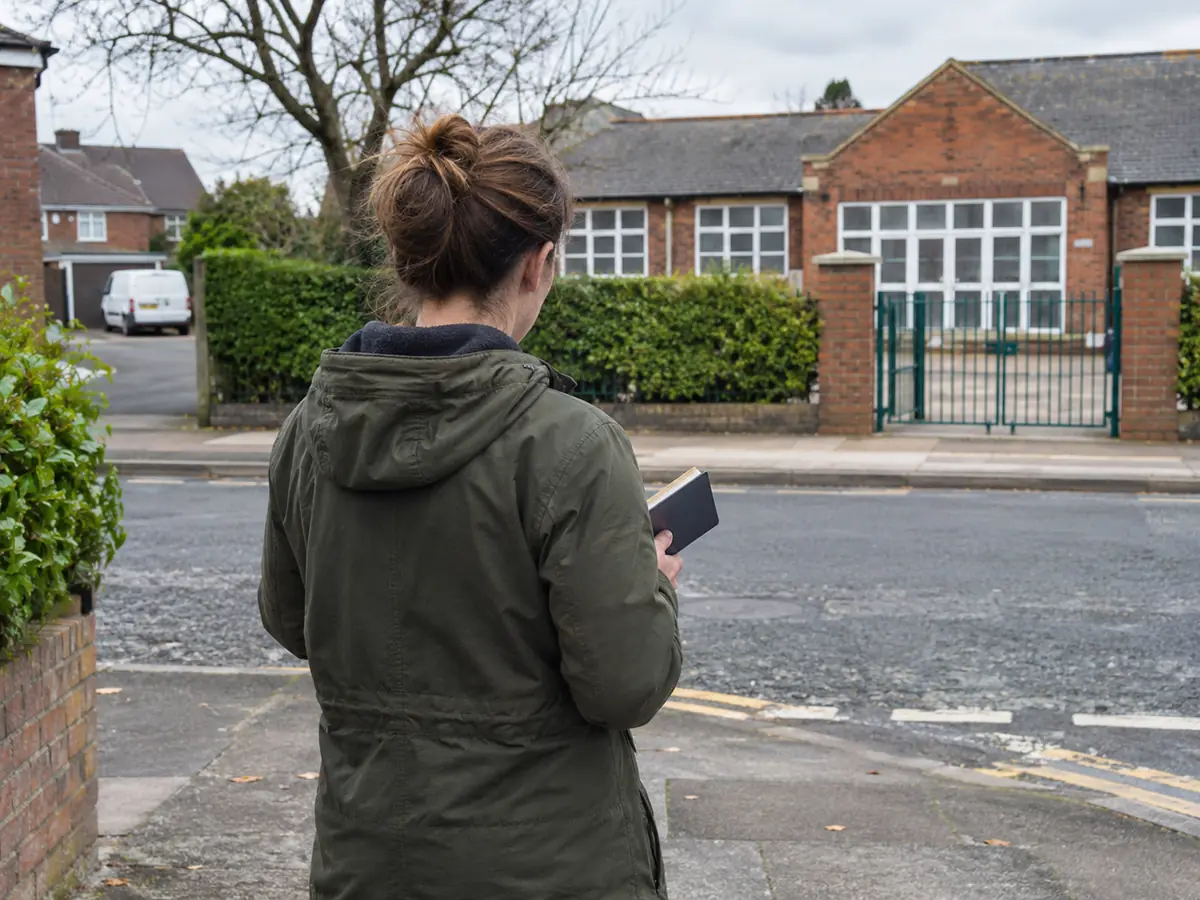
A property can be accessible for most of the day and still have a difficult moving window. A School Street may restrict motor-vehicle entry around the school day, while your building, keys or loading space have separate times. Check all three before fixing when the van should arrive.
Start with the entrance used for the move, not just the school name or postcode. The restriction may cover only part of a road, and the route to a rear service entrance may be different. This guide explains the planning task; permission comes from the authority responsible for the actual scheme.
Find the precise scheme and affected approach
Open the council’s current School Street location page and map. Record the restricted stretch, the approach junctions, the signed days and times, and whether the scheme is already operating. A consultation or proposed scheme is not evidence of a current restriction.
Photographs of signs can help the provider understand the entrance, but use the authority’s information to resolve unclear boundaries or eligibility. Ask the council’s School Streets or traffic team about any conflict between the published map and what is at the address. Do not interpret an absent camera as permission to enter.
A specific example: Oldridge Road in Balham
Wandsworth’s Alderbrook Primary School Street page, checked on 13 November 2026, identifies Oldridge Road between Bellamy Street and the No Entry point. It lists Monday–Friday restrictions of 8.30–9am and 3–3.40pm in term time, with limited exemptions and retractable bollards at Bellamy Street.
That example is specific to the stated stretch. It does not establish that every Balham address is restricted, that the van may approach from either direction, or that another school uses the same hours. Check the scheme and school calendar again for your moving date. If the approach remains uncertain, Wandsworth lists schoolstreets@wandsworth.gov.uk for scheme queries; use the responsible authority elsewhere.
Ask about the actual moving vehicle
Do not assume a resident’s exemption, a Blue Badge or the fact that you are moving grants entry to the allocated van. Give the council the address, date, purpose, expected arrival and departure, vehicle category and registration when known. Ask whether that vehicle is eligible, whether advance registration or written permission is required, and what to do if the provider changes the van.
The Department for Transport’s School Streets guidance for England describes scheme-specific exemptions rather than a general entitlement for deliveries. Wandsworth has its own exemption arrangements. Treat an application as pending until the relevant process confirms it.
If the vehicle has not been allocated, flag the restriction when enquiring about transport. Agree who will supply its registration and complete any necessary follow-up. Keep that task visible rather than inserting an assumed registration into the plan.
Separate entering, loading and waiting
Entry permission does not reserve a loading place. Identify where the vehicle can lawfully stop, which authority or landowner controls it and whether a separate suspension, dispensation or private booking is needed. Our restricted-access guide explains these separate checks.
If lawful loading outside the restricted stretch is proposed, give the mover the complete carrying distance, crossings, surfaces and steps. A longer carry changes the work. It should be assessed and agreed, not treated as a way to bypass an unresolved entry question.
Keep waiting separate too. Do not plan to queue at the restriction, block the school entrance or stop on an unapproved space until the operating period ends. Ask the provider how a delayed arrival or unavailable loading place will be managed.
Test the window against the whole move
Put collection access, loading, travel, delivery entry and unloading on one timeline. Distinguish confirmed deadlines from preferred times. A legal arrival just before a restriction starts is not, by itself, a workable plan for the complete loading task or a later re-entry.
Ask the council about any question involving leaving and returning during operation; do not transfer another scheme’s rule. Then check whether the building appointment and key arrangements still work. The city-moving guide helps coordinate these separate windows.
For a hypothetical afternoon delivery, the useful question is not simply whether travel can finish before school collection. It is whether the actual van can reach the confirmed loading position and complete the agreed work within all applicable conditions. If that is not established, discuss a different appointment before booking around it.
Send a short access brief and keep it current
Give the booking team the exact moving entrance, official scheme link, restricted stretch and times, vehicle-registration follow-up, confirmed permissions, loading place, carrying route and contact at each end. Label unresolved items clearly.
Recheck when the date, vehicle, entrance or appointment changes. Share revised instructions through the agreed booking channel, and keep the council and building contacts available. Once access is established, choose small-move transport or house removals from the actual inventory and help needed. A transport booking and road-entry permission remain separate arrangements.

Liz
Liz is a content creator and digital marketing consultant. Originally from Toronto, Ontario, Canada, she is now happily settled in the UK (after living in four different countries across 2 continents and moving house 10 times). Drawing on her experiences, Liz shares practical advice and insider tips to help others enjoy smoother, stress-free moves.

Our Moving House Guides support homeowners and renters through every stage of relocating to a new property. At Find My Man and Van, we provide step-by-step advice on planning timelines, organising utilities, preparing furniture, and coordinating your move day efficiently. Whether you’re moving locally or further afield, these guides are created to help make your house move smoother, more organised, and less stressful.