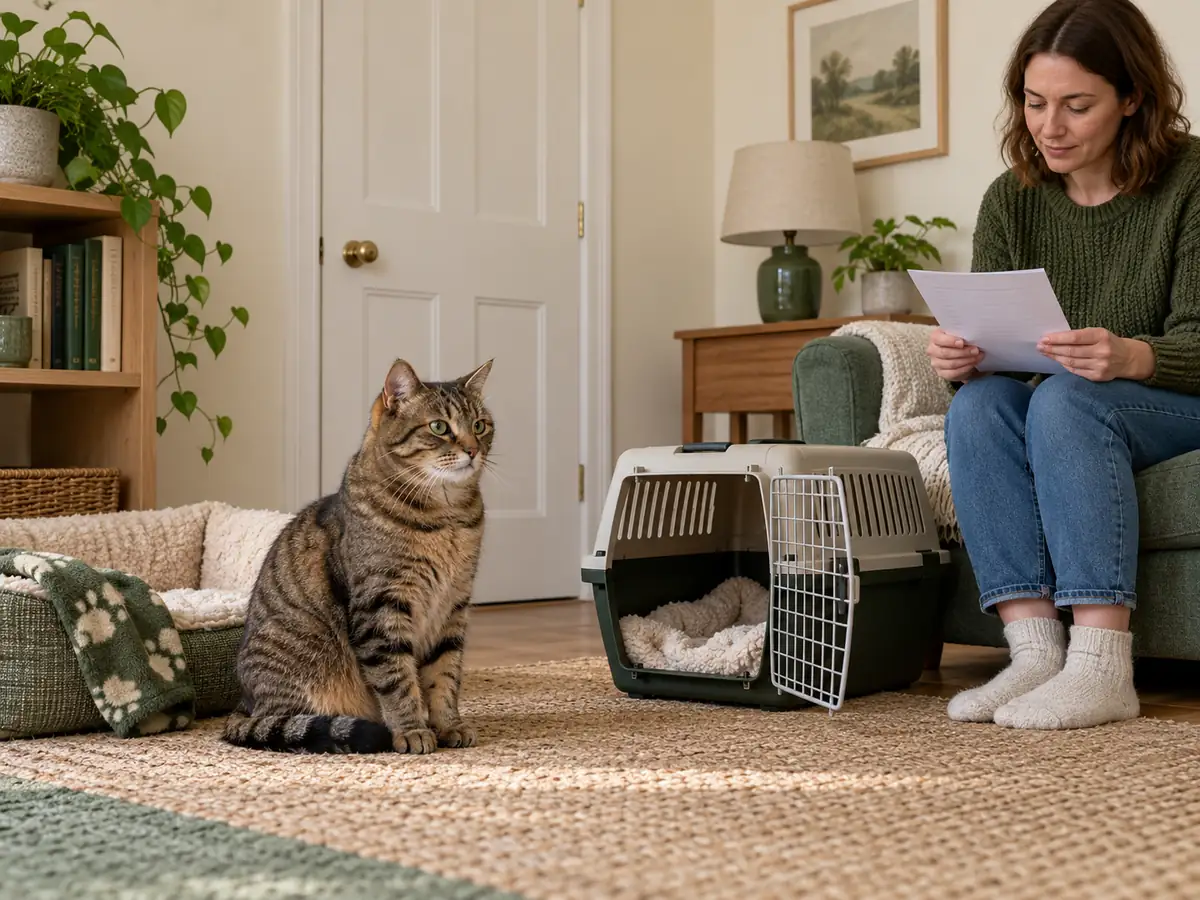
A pet needs its own moving plan, including someone responsible for its care while the household load is being collected and delivered. Decide where your pet will be, how it will travel and who will look after it before you confirm the day's arrangements.
The right plan depends on the animal, the journey and the new home. This guide helps organise those decisions; ask your vet about health, travel anxiety or species-specific needs rather than applying one routine to every pet.
Start with care and travel arrangements
Work backwards from the date you expect to have access to the new home. Put pet care, transport and arrival arrangements alongside the furniture booking. Explain any change of timing to the person caring for the animal, particularly if keys may be delayed.
For dogs, Dogs Trust's moving-home guidance suggests considering a trusted friend, family member or sitter during the disruption. It also advises planning veterinary care in the new area and updating identification details. Discuss journey sickness or anxiety with your vet in advance.
If a friend or sitter is helping, agree collection, handover and contact details. Give them the information they need for the actual animal and make sure their involvement does not depend on the van arriving at an exact minute.
Do not assume your goods-transport booking includes pet or passenger travel. Arrange the animal's journey separately and confirm any proposed arrangement explicitly before booking. Removal of a pet bed or empty equipment is a different task from transporting a live animal.
Prepare cats before the final rush
Cats Protection's moving-home guide recommends quiet rooms at both homes, away from the busy moving route. Plan familiar bedding and the cat's essential items there, and tell everyone helping where the cat will be so the door is not opened accidentally.
Carrier preparation should not begin only when it is time to leave. Cats Protection's carrier guidance describes gradual familiarisation and keeping the carrier visible between practice sessions. Follow its guidance at your cat's pace; ask for help if you cannot make suitable arrangements.
Put responsibility for the cat's room on the moving plan. The person overseeing it should know when the room becomes off limits, when the cat leaves and who checks it at the destination. Do not rely on a sign alone when people are working to a changing schedule.
Keep pet essentials out of the furniture load
Make a separate list of what your pet needs during the journey and the first period at the new home. Include familiar bedding, the usual food, water arrangements and any prescribed medication with its instructions. Keep veterinary contact information accessible.
Check that the person caring for your pet knows which items must stay available. A carefully prepared bag is little help if it is packed into the household load by mistake. Label the belongings clearly and give the moving team a separate inventory of equipment they are expected to carry.
For tanks, cages and large pet furniture, provide dimensions and preparation requirements before booking. Do not ask the mover to decide how to dismantle a living habitat or maintain its conditions as part of an ordinary furniture collection.
Plan the journey for the animal
Use travel arrangements appropriate to your pet. PDSA's safe-car-travel advice covers suitable restraint and carriers, journey preparation and veterinary advice where needed. Check the equipment and how it will be used before moving day rather than selecting a restraint while the car is being loaded.
Keep the pet-care plan usable if the day changes. Agree who will make calls about a delay and where the animal can remain appropriately cared for. Avoid making the animal's safety depend on gaining immediate access to an unconfirmed property.
For fish, reptiles and other animals with specialist habitat needs, obtain a species-specific plan from an appropriate vet or knowledgeable specialist before arranging transport. Confirm how the animals and habitat equipment will be handled separately. There is no fixed aquarium-water percentage or universal loading order offered here.
Prepare the new home before the pet arrives
Check the receiving space before releasing an animal from its travel arrangement. The area should be ready for the specific pet and separated from the active unloading route. Make sure the person receiving it has access and knows the plan.
Dogs Trust recommends a quiet place with familiar belongings and checking garden security. Keep changes manageable and follow your dog's normal routine as far as practical. Individual dogs settle at different rates; being in the new building does not mean the animal is ready for every part of it.
For cats, follow Cats Protection's settling-in and outdoor-access guidance rather than opening the whole house or garden immediately. Seek tailored veterinary advice if you are concerned about behaviour or health. Do not treat a fixed timetable as proof that every cat is ready.
Finish the household handover separately
Once your pet is in the care of the agreed person, keep the furniture handover focused on the declared inventory and access. Explain any rooms the team should avoid and who to ask before a door is opened. Confirm changes directly if the loading route needs to alter.
Use our packing preparation guide for the household belongings. When arranging house removals, declare the equipment that travels with the load and keep pet travel separately confirmed. A clear division of responsibility gives the animal's care its own place in the move.

Liz
Liz is a content creator and digital marketing consultant. Originally from Toronto, Ontario, Canada, she is now happily settled in the UK (after living in four different countries across 2 continents and moving house 10 times). Drawing on her experiences, Liz shares practical advice and insider tips to help others enjoy smoother, stress-free moves.

Our Moving House Guides support homeowners and renters through every stage of relocating to a new property. At Find My Man and Van, we provide step-by-step advice on planning timelines, organising utilities, preparing furniture, and coordinating your move day efficiently. Whether you’re moving locally or further afield, these guides are created to help make your house move smoother, more organised, and less stressful.