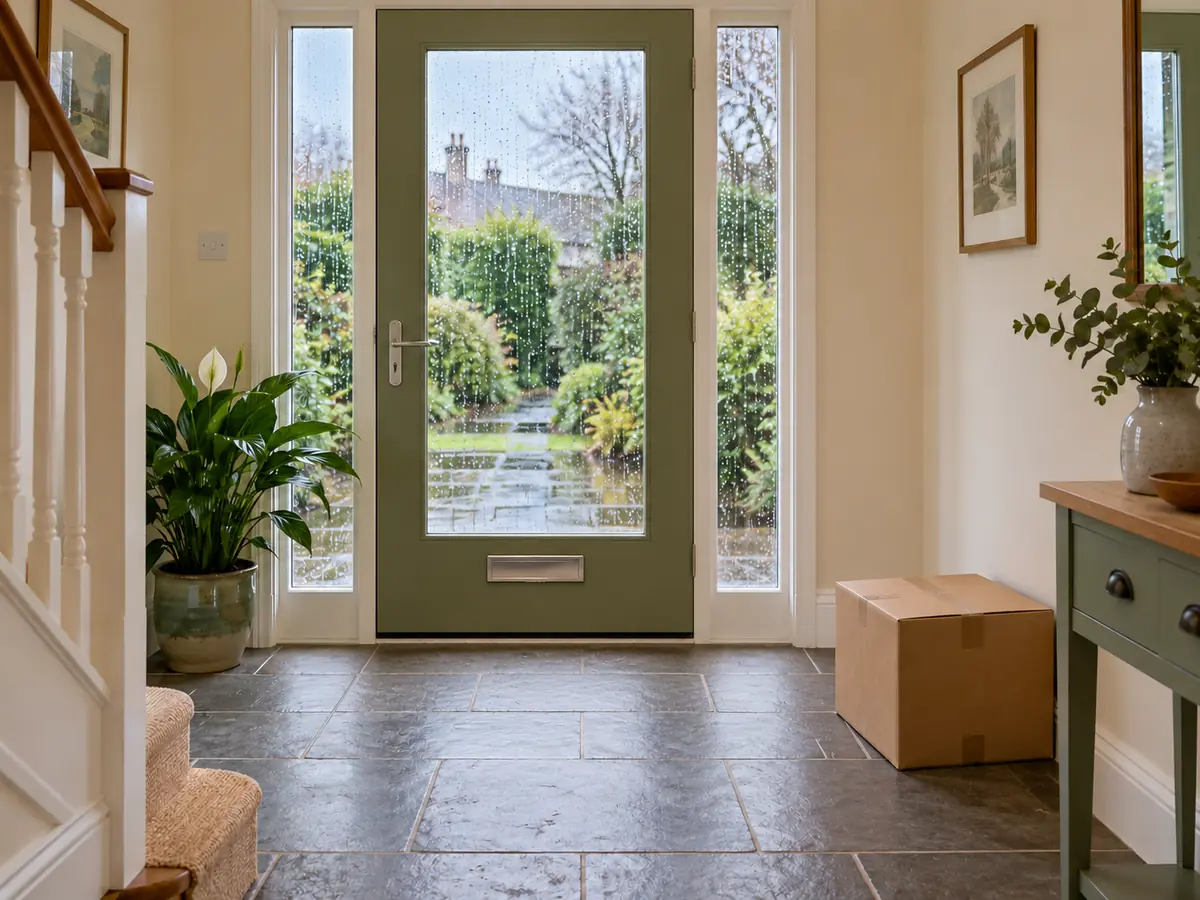
Bad weather can affect the road journey, the loading position and the route through each property. Review all three with the mover before collection, then keep the plan open to change if conditions deteriorate.
Protective packaging and extra time do not make every move safe to continue. Use current official advice and the actual access conditions to agree the next step, rather than relying on a general promise that rain or snow can always be worked around.
Read the full warning, not just its colour
The Met Office weather-warning guide explains that warning colours combine the expected impact with its likelihood. Yellow and amber warnings cover a range of situations, so the details matter for your particular location and time.
Read the affected area, timing, expected impacts and advice. Check both addresses and the travel route. A warning elsewhere in the country is not a description of your doorstep, while a local problem can still make access unsuitable even when the wider forecast looks less severe.
For a red warning, the Met Office advises avoiding travel where possible and following emergency-services and local-authority advice. Do not treat a moving appointment as permission to ignore that guidance.
Keep checking for updates. A saved screenshot from yesterday is useful context, but it does not establish what applies when loading begins.
Give the mover an accurate access update
Tell the team about changes since the booking: standing water, an icy path, fallen debris, a closed entrance or a loading place that can no longer be used. Send a clear description through the established contact route and explain which address is affected.
Agree who will review the situation and when you will next speak. Include anyone who controls access, such as a building manager, where their arrangements matter. Do not assume a different loading position is available merely because it would be more sheltered.
The city-moving guide covers wider parking, lifts and access coordination. Weather adds another condition to that plan; it does not remove existing restrictions.
Plan the entrance before boxes start moving
Look at the route from the vehicle position to the receiving room. Keep it clear and tell the people handling the load about wet surfaces or other hazards. If the route cannot be used safely, pause and agree what happens next.
HSE's slips-and-trips guidance, written for retail workplaces, highlights wet floors, contamination and trip hazards. The relevant principle for move planning is to avoid adding another hazard while trying to protect a surface.
Do not scatter loose rugs or sheets of cardboard across the carrying route as a default solution. Agree suitable floor protection with the people doing the work and keep checking that it stays secure and does not obstruct movement. Deal with water or debris without leaving a newly wet surface for the next person to cross.
Keep packed belongings sheltered until needed
Arrange an indoor holding position where boxes can wait without blocking the entrance or escape route. Keep the belongings that need to stay accessible separate from the main load, including documents and any change of clothing you have planned for moving day.
Discuss protection for the actual items and the time they may spend exposed. Do not assume a thin cover makes every carton or piece of furniture weatherproof. Let the people packing and handling the items confirm what is suitable.
If packaging becomes wet or damaged, flag it before carrying continues. More tape is not a reliable substitute for checking the container and repacking where needed. The box-selection guide explains checking condition and choosing containers around the load.
Recheck the plan when conditions change
Agree a short review before loading and another if the route or conditions change materially. Useful questions include:
| Part of the move | What needs confirming? |
|---|---|
| Collection | Can the agreed loading route still be used? |
| Journey | Has current travel advice or access changed? |
| Arrival | Is the property accessible and ready to receive the load? |
| Any delay | Who is coordinating the revised arrangements? |
This is a planning record, not a technical safety assessment or a guarantee that the move can proceed. The people responsible for the work need to decide whether the task can be carried out safely.
Do not rush carrying to make up time lost to a delay. If loading has to stop, agree where people and belongings can remain safely while the next step is decided.
Discuss changes before assuming a new arrangement
Ask what happens if collection cannot start, travel is disrupted or arrival is delayed. Confirm any revised timing, access and charges through the appropriate booking contact rather than assuming a free change or automatic cancellation.
Check the cover and reporting arrangements relevant to your booking without treating weather damage or delays as automatically included. Keep the agreement and any updated instructions with your move record. If you have a separate handover deadline, tell the relevant parties promptly when a change affects it.
When arranging house removals, include the known access conditions and the help required. A useful weather plan gives the mover accurate information and clear contacts, then leaves room to stop or revise the move when the situation calls for it.

Liz
Liz is a content creator and digital marketing consultant. Originally from Toronto, Ontario, Canada, she is now happily settled in the UK (after living in four different countries across 2 continents and moving house 10 times). Drawing on her experiences, Liz shares practical advice and insider tips to help others enjoy smoother, stress-free moves.

Our Moving House Guides support homeowners and renters through every stage of relocating to a new property. At Find My Man and Van, we provide step-by-step advice on planning timelines, organising utilities, preparing furniture, and coordinating your move day efficiently. Whether you’re moving locally or further afield, these guides are created to help make your house move smoother, more organised, and less stressful.