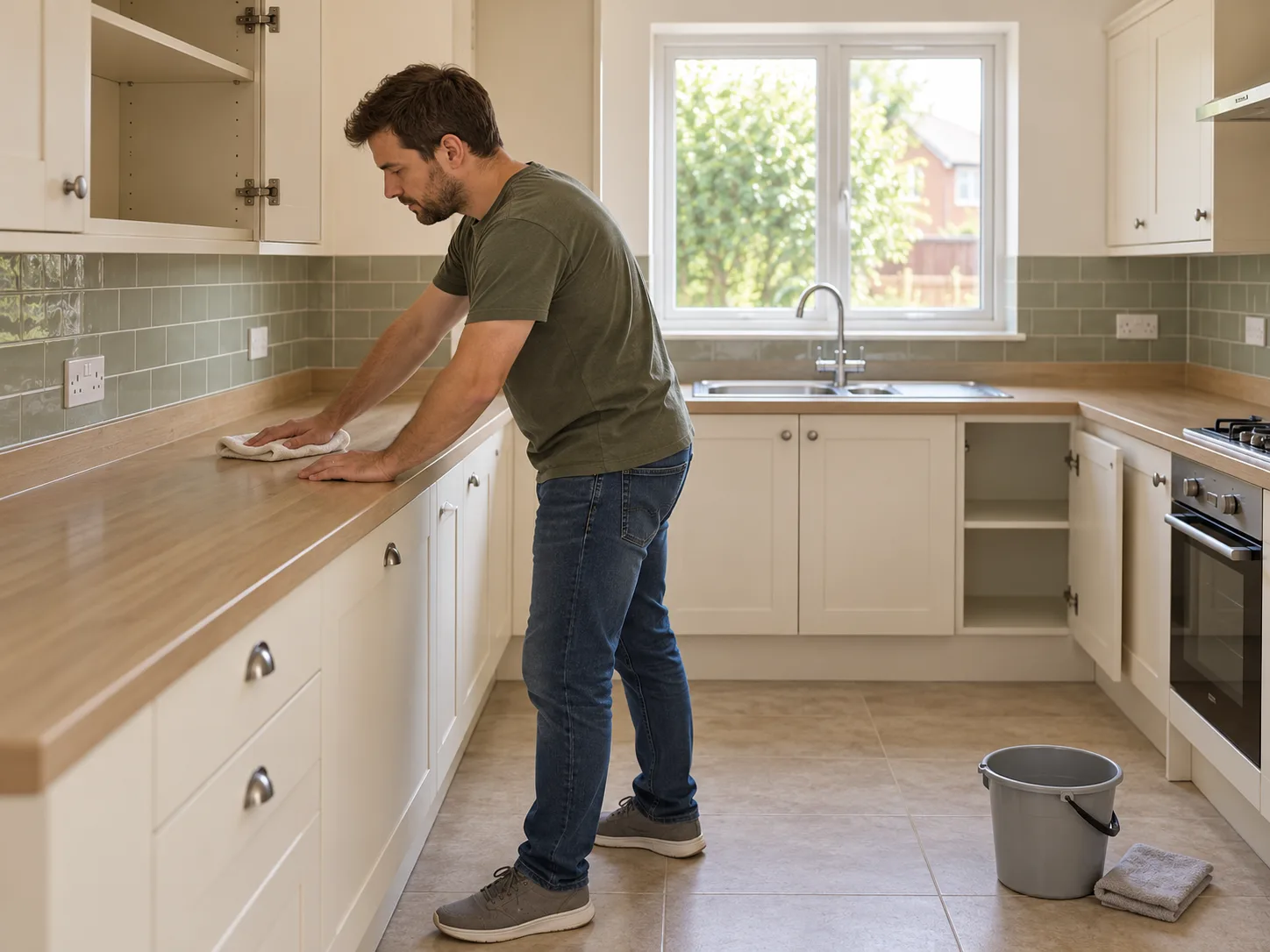
End-of-tenancy cleaning is easier to organise when you know what needs doing and when each room will be empty. Start with the property’s check-in record, then work out which tasks you can complete before moving day and which need to wait until your belongings have gone.
A cleaning plan helps you prepare for handover, but it cannot guarantee a particular deposit outcome. This guide focuses on practical preparation, with deposit guidance relevant to renters in England. For questions about deductions or your agreement, use the appropriate housing adviser or deposit scheme.
Start with the original record
Find the inventory, check-in photographs and any messages about the property’s initial condition. Look at the recorded cleanliness of individual areas rather than relying on a general memory of how the home looked.
Tenancy Deposit Scheme guidance explains that the starting standard of cleanliness is the reference point. It also distinguishes cleanliness from wear: an older item can be worn but still clean. Its guidance notes that written descriptions matter because photographs do not show every aspect of cleanliness.
Make a room list with three headings: cleaning to do, questions to clarify, and separate repair issues. Do not turn every mark into a cleaning task. If a surface is damaged or a fitting is broken, discuss the appropriate next step rather than trying an improvised repair or painting over it.
Decide what can happen before collection
Empty and sort cupboards as you pack, keeping items that belong to the property separate from your own load. Clean accessible spaces in stages, then keep them free of packed boxes where possible. Leave the final floor clean until the loading route is clear.
Keep the supplies for your last tasks out of the removal load. Plan how they will travel afterwards, particularly if you are leaving separately from the van. Avoid opening a packed box just to find a cloth or charger at the end of the day.
If several people share the home, allocate rooms and common areas explicitly. A list with a person and completion time beside each task is more useful than assuming everyone will help after their own belongings are collected.
Work through rooms with suitable methods
Use products and methods appropriate to the surface or appliance, following its care instructions. Do not assume the same product suits stone, painted wood, laminate and upholstery. If you do not know the material or the required method, ask before treating it.
Use this as a planning checklist rather than a prescription to perform every task regardless of condition:
| Area | What to check |
|---|---|
| Kitchen | Empty cupboards and drawers; inspect worktops, sink and the inside of appliances included with the property |
| Bathroom | Check sanitary fittings, accessible surfaces and any remaining personal items |
| Living spaces | Check shelves, skirting, accessible fittings and areas exposed as furniture leaves |
| Floors | Choose the correct method for the floor covering; avoid applying moisture or treatments indiscriminately |
| Windows and coverings | Check accessible glass and follow care instructions for curtains or blinds |
| Storage and outdoor areas | Check what belongs to you, remove agreed belongings and plan appropriate waste disposal |
Do not take risks to reach exterior windows or high areas. Identify inaccessible tasks early so a suitable arrangement can be discussed. Likewise, moving heavy appliances simply to clean behind them may need a separate handling plan; do not improvise disconnection or lifting.
If you book a cleaner
Describe the property accurately: rooms, floor types, appliances, access and whether your belongings will still be present. Ask what the quoted work includes and what is excluded. Particular jobs such as oven or carpet cleaning should be confirmed explicitly rather than assumed from a package name.
Agree who provides access, what facilities the cleaner needs and how completion will be checked. If the cleaning depends on the van finishing first, discuss what happens if the collection takes longer than expected. Give both bookings realistic information rather than overlapping them tightly and hoping the timings work.
Keep the booking confirmation and receipt, if applicable. Paying for a cleaning service does not itself settle whether the property’s condition is acceptable, and cleaning is separate from the belongings move.
Check the result before handing over
Go through your room list once the cleaning is finished. Check cupboards and other spaces that may have been missed while packing. Record what has been done and any unresolved points, using clear notes alongside photographs where useful.
Shelter England’s move-out guidance recommends finding the original inventory and keeping written communication about the end of the tenancy. Keep the cleaning record with those documents so it is available for the handover rather than packed away.
If something cannot be finished as planned, communicate it promptly. Do not promise a repair you have not arranged or assume an extra visit will be possible after keys are returned. Confirm access before making any follow-up booking.
Coordinate the belongings move
Set collection, cleaning and key-return arrangements together. For a full household, describe the load when arranging house removals; for a smaller collection, see small moves. Include stairs, loading access and any fixed appointments when discussing the booking.
Keep the final tasks manageable: an empty property, suitable cleaning methods, a clear record and an agreed handover. Cleaning services and tenancy inspections must be arranged separately from the transport booking.

Liz
Liz is a content creator and digital marketing consultant. Originally from Toronto, Ontario, Canada, she is now happily settled in the UK (after living in four different countries across 2 continents and moving house 10 times). Drawing on her experiences, Liz shares practical advice and insider tips to help others enjoy smoother, stress-free moves.

Our Moving House Guides support homeowners and renters through every stage of relocating to a new property. At Find My Man and Van, we provide step-by-step advice on planning timelines, organising utilities, preparing furniture, and coordinating your move day efficiently. Whether you’re moving locally or further afield, these guides are created to help make your house move smoother, more organised, and less stressful.