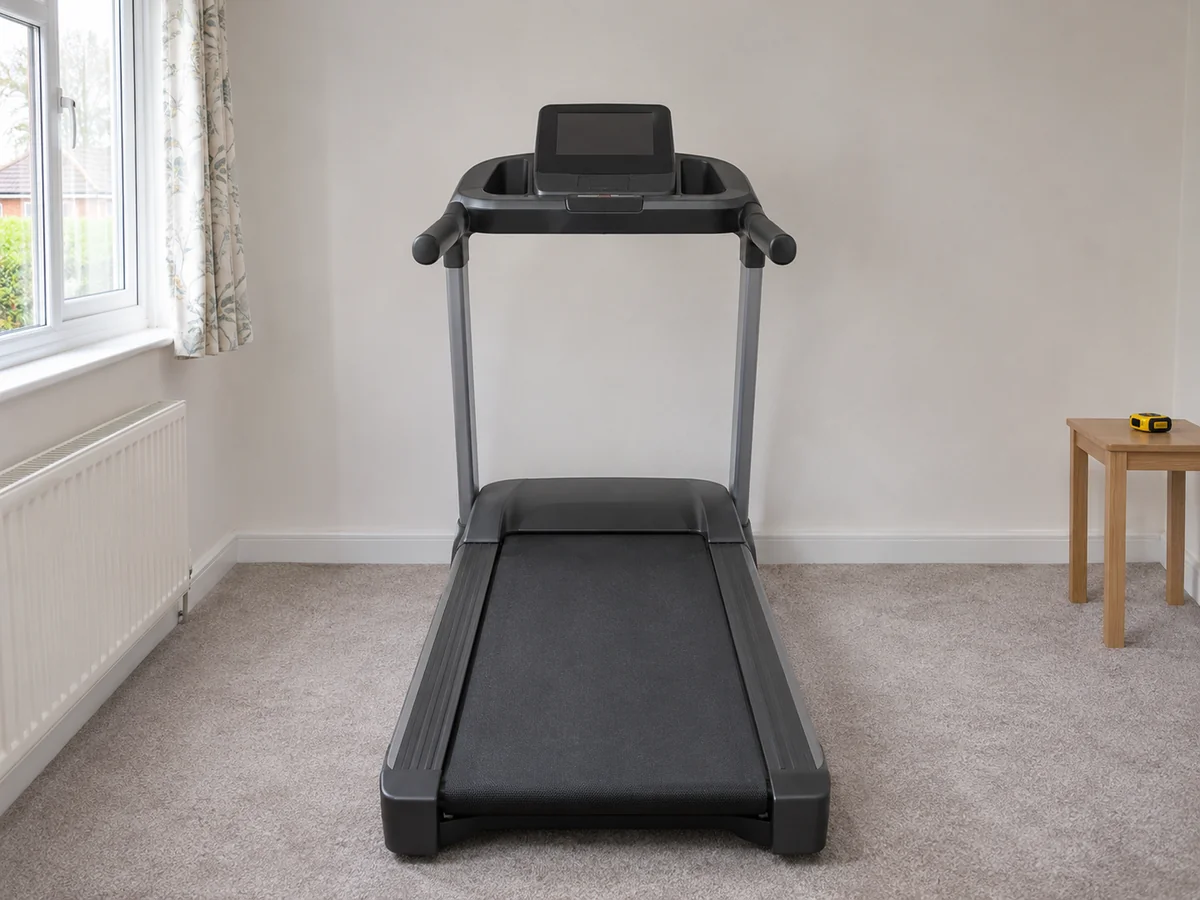
A treadmill needs more description than “one piece of gym equipment”. Its model, dimensions, weight, transport configuration and route through the property all matter when assessing whether a collection can be arranged.
Start those checks before choosing the van or fixing a seller's collection time. A treadmill that rolls a short distance within a room has not necessarily been prepared for stairs, loading or road transport.
Identify the exact machine
Find the maker and model number, and obtain the corresponding owner's manual. Photograph the whole machine and record its known condition, including any loose parts, damaged rails or problems with a folding latch.
Use the manufacturer's published weight where available and say if you cannot verify it. Do not substitute a figure from a similar-looking model. Include the assembled dimensions and any manufacturer-specified transport dimensions as separate details.
If you are buying second-hand, ask the seller for this information before arranging collection. Establish whether they have the instructions and whether the machine is in the condition shown in the photographs.
Check which transport configuration is permitted
Some treadmills fold; others do not. The permitted preparation can also differ between models that appear similar.
Horizon Fitness's moving guidance distinguishes folding and non-folding designs and refers readers to their owner's manual where handrail removal may be needed. That supports checking the actual model, rather than applying one folding or dismantling method to every treadmill.
Ask the manufacturer or a competent service technician to resolve any uncertainty about preparation. Do not remove rails, release a latch or loosen a mechanism simply to discover whether the machine will become easier to carry.
Measure the route in the agreed configuration
Check the whole route from its present position to a lawful loading point and from the unloading point to its new position. Include door clearances, tight corners, steps, stair landings and any lift restrictions.
The machine's width alone may not describe a turn on a staircase. Show the prospective mover the awkward parts and ask what measurements or further assessment they require. Describe the distance between the van and the entrance, not just the property's floor number.
If no workable route has been established, resolve that before confirming transport. A plan that depends on improvised lifting, an unassessed external route or removing building fittings needs appropriate advice and permission first.
Agree preparation as a separate task
Confirm who will put the treadmill into the permitted state for collection. Where dismantling is necessary and allowed, agree who does it, what instructions they use and how parts, fixings and cables will be recorded.
Follow the model's power and preparation instructions. Arrange any service work before collection instead of expecting the driver to undertake unfamiliar electrical or mechanical work on arrival.
Ask what packaging or protection is needed for the console, frame and other components, and who supplies it. If pieces travel separately, include each one in the load rather than describing an incomplete frame as the entire machine.
Confirm handling before booking the vehicle
Send the model, known weight, dimensions, photographs, agreed configuration and access details for assessment. Ask whether this specific treadmill and route can be accepted and what help or equipment would be required.
The Health and Safety Executive's manual-handling guidance places avoiding hazardous handling, assessment and reducing risk ahead of relying on lifting technique. It is workplace guidance, but the planning point is relevant: a general promise to “lift carefully” does not establish a suitable moving method.
Do not assume that built-in wheels are suitable for every surface or that extra helpers alone make stairs manageable. Leave the handling method to the people who have assessed the job. A standard furniture or van booking does not, by itself, confirm specialist treadmill handling.
Prepare the receiving space and handover
Check that the new location and route allow the machine to be received in its agreed configuration. Keep the route clear and arrange access with the person receiving it. Follow the maker's placement and reassembly requirements before use.
Record the components and visible condition at both ends using the agreed handover process. Confirm who will reassemble or check anything dismantled; delivery is not a guarantee that installation or a fitness-equipment service is included.
For general inventory and access questions, use the heavy furniture planning guide. When making a single-item transport enquiry, describe the treadmill and ask for acceptance of its actual requirements before booking. Include additional items and tasks from the start so the assessment covers the complete job.

Liz
Liz is a content creator and digital marketing consultant. Originally from Toronto, Ontario, Canada, she is now happily settled in the UK (after living in four different countries across 2 continents and moving house 10 times). Drawing on her experiences, Liz shares practical advice and insider tips to help others enjoy smoother, stress-free moves.

The Man and Van Guides from Find My Man and Van are designed to help you understand how man and van services work, when they’re the right option, and how to get the best value for your move. From van sizes and loading tips to short-notice bookings and single-item moves, our expert guides break down everything you need to know before hiring a man and van anywhere in the UK.