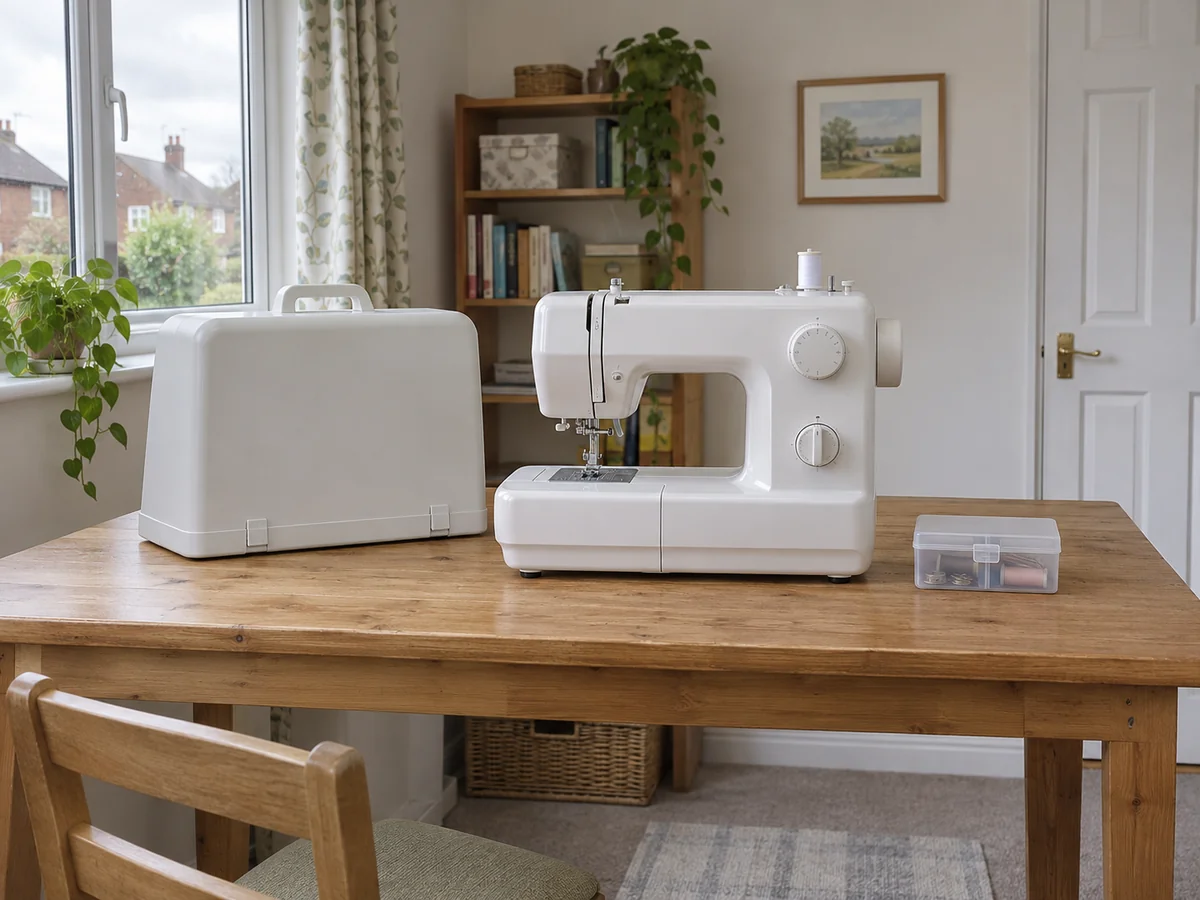
A sewing machine may be a portable household appliance, a machine fixed into a cabinet or a larger embroidery system. Those are different collection jobs. Start with the exact model and everything travelling with it, then establish what preparation is needed before a van arrives.
A transport booking does not automatically include servicing the machine, removing it from furniture or setting it up at its destination. Agree those responsibilities before confirming the collection.
Identify the machine and its complete setup
Record the manufacturer and model from the machine or its documents. Provide photographs of the whole setup and measurements in the condition in which it will be collected. Include a case or carton in those measurements if it is already packed.
Say whether it is freestanding, attached to a table or part of a cabinet. Describe separate embroidery units, stands, frames and other fittings. If you do not know the weight, say so rather than using a figure for a similar-looking machine.
Do not describe a large or commercial setup simply as “one sewing machine”. Ask whether its actual requirements can be accepted and what further assessment is needed.
Use the instructions for the exact model
Find the maker's transport and packing instructions. Ask the manufacturer, dealer or a competent sewing-machine technician if the instructions are missing or the setup raises questions. Do not improvise a removal or dismantling procedure from a photograph.
For example, Brother's transport guidance for the embroidery models listed on its support page directs owners to an authorised dealer before transport or storage. That is specific advice for those machines, not evidence that every domestic sewing machine needs the same preparation.
Agree who will complete any necessary technical work. If a machine must be separated from a cabinet or stand, resolve the method and responsibility before presenting the job as ready to collect. Do not assume the driver is a sewing-machine technician.
Check the packing system, not just the outer box
Establish whether the original carton, fitted supports and other packing pieces are complete and usable. If they are missing, ask what replacement protection suits the model and intended journey. An outer carton large enough to contain the machine is not a complete packing plan.
If you have a hard case or carrying cover, check what it is designed to do and whether additional protection is needed. A cover should not be assumed to provide the same support as the machine's original transport packaging.
Follow the maker's instructions for shutdown, disconnection and the position of moving parts. This checklist deliberately does not give a universal needle, presser-foot, thread or oil-handling procedure: those details should come from the relevant instructions or technician.
Make an accessory record
List the power lead, foot control, attachments and separate units that are part of the collection. Record which items remain with the machine and which are packed separately, following the appropriate instructions.
Keep small parts identified and contained so they can be checked at delivery. For several machines, match each control and accessory box to the right model rather than packing everything under one vague label.
Brother's accessory-check guidance notes that supplied accessories can be tucked into packing material. Check retained packaging before deciding a part is missing or discarding anything you may need. It does not establish which accessories belong to your particular purchase.
Explain the carrying route and collection handover
Give the floor, stairs, narrow turns and distance to a lawful loading position at both addresses. For a cabinet or stand, include its dimensions separately and explain whether it will remain assembled. A portable machine and a heavy cabinet should not be assessed as the same item.
Agree the carrying help needed rather than assuming the driver can manage the whole setup alone. Have the route and receiving space ready before collection.
For a shop, repairer or private seller, confirm that the machine is ready, who may release it and the collection appointment. Settle purchase, repair or ownership questions separately. The collecting person should not be expected to test the machine, judge its stitching or decide whether a repair is satisfactory.
Plan arrival and any technical setup
Check the delivered machine, packaging and accessory count against the collection record. Follow the agreed process for reporting a concern and retain useful packaging until the contents have been checked.
Arrange any reassembly or technical inspection separately where required. Follow the model's instructions before reconnecting and using it. Delivery of the equipment does not establish that a dismantled or previously faulty machine is ready to operate.
Request the complete job
Send the model, photographs, packed dimensions, preparation plan, accessory list and access details with a single-item transport enquiry. Declare the item's nature and value so the applicable cover and any limits or exclusions can be checked.
If the machine is part of a room or workshop move, include all tables, cabinets, boxes and other equipment in the inventory. Use the general packing guide for the surrounding belongings, while keeping the machine's own technical preparation separate. Confirm the particular load and handling scope before relying on the collection date.

Liz
Liz is a content creator and digital marketing consultant. Originally from Toronto, Ontario, Canada, she is now happily settled in the UK (after living in four different countries across 2 continents and moving house 10 times). Drawing on her experiences, Liz shares practical advice and insider tips to help others enjoy smoother, stress-free moves.

The Man and Van Guides from Find My Man and Van are designed to help you understand how man and van services work, when they’re the right option, and how to get the best value for your move. From van sizes and loading tips to short-notice bookings and single-item moves, our expert guides break down everything you need to know before hiring a man and van anywhere in the UK.