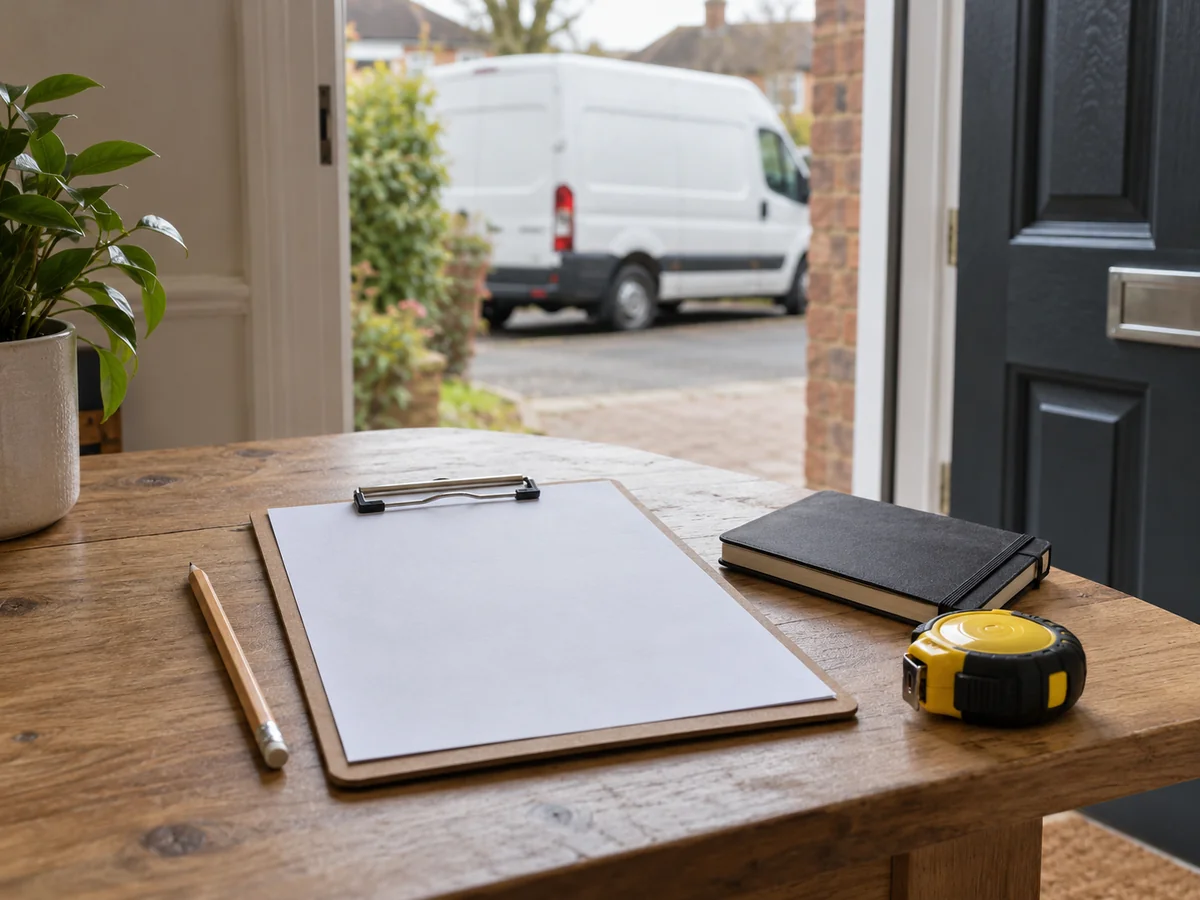
Start with the job you need done: the full load, the two addresses, the access and who will carry the items. Clear answers to those questions make it easier to assess a booking than a headline price or a promise that a van is available.
Use the questions below before confirming transport. Keep the answers with the written booking details, and raise anything uncertain before the move begins.
What exactly is included in my load?
List the furniture, boxes, bags and loose components travelling. Give dimensions and photographs for bulky items, and explain whether they travel assembled. Declare unusual weight, delicate parts, damage or anything that changes how an item can be handled.
Ask whether the selected vehicle and booked time suit the complete job. Our van-size and loading-help guide explains the planning questions; the actual vehicle still needs to be suitable for your load.
If more items are added, update the booking before moving day. Do not assume a second journey will be available if the original inventory is incomplete.
Who loads and unloads, and what preparation is separate?
Confirm the number of people included and what carrying help they will provide. Explain stairs, awkward turns and any item you cannot help move yourself. Do not base the plan on a friend attending unless that help has actually been arranged.
Ask separately about packing, dismantling and assembly. Those tasks are different from carrying an item to or from the van. Describe each extra task, where it is needed and what materials or instructions are available, then confirm whether it can be booked.
Check who supplies boxes and protective materials. Prepare anything outside the agreed scope before the collection time rather than expecting it to be added automatically.
What access information changes the booking?
Give the floor, stairs or lifts, entrance restrictions and the distance from a lawful stopping point to the door at both addresses. Tell the booking team about a loading-bay appointment, lift reservation, height barrier or separate delivery entrance.
Confirm who will arrange any required permission. Permission to enter a building does not itself authorise stopping on the public road outside it.
If keys are not yet available or the delivery window is uncertain, explain that before finalising transport. Ask how a delay would be handled; do not assume waiting or temporary storage is included.
How is the price calculated, and what can be additional?
Compare the same inventory, addresses, vehicle, time and help. Ask what is included in the written price and which changes can affect it.
FMMV's pricing and booking explanation sets out the details that shape the price, additional time and external route charges. Parking, congestion or clean-air charges, tolls and ferry fares require separate attention. Where they apply, establish the expected arrangement before confirming the move.
Check the additional-time rate shown for your booking and declare every extra collection or delivery stop. A lower initial figure is not a complete comparison if it leaves out work another quote includes.
Who am I booking with, and who carries out the transport?
Check the booking business, the person or business carrying the goods and how confirmation is issued. Keep the contact details and the process for raising questions available on moving day.
With FMMV, you book through the service and a suitable provider is allocated. The driver carries out the transport; the booking process explains allocation and confirmation. Do not assume a provider profile you have viewed guarantees that particular driver will be assigned.
Review customer feedback in context. Look for information relevant to the work you are booking, while remembering that reviews are not a specification for the services included in your own job.
What cover applies to my particular items?
Declare the nature and value of the load and ask what goods-in-transit cover applies. Check relevant limits, exclusions, excess and the procedure for reporting a problem. An assurance that a driver has insurance does not answer every question about a particular item.
Use the support FAQs and booking terms for the current details, and resolve anything material before payment. Do not assume that unusually valuable, fragile or specialist items are accepted on ordinary terms.
Are passenger requests or extra arrangements confirmed?
If you want to travel with the driver, raise that request in advance. A suitable seat, seatbelt, insurance and the driver's acceptance are needed; a space in the load area is not a passenger place.
Likewise, confirm any seller collection, third-party release or additional stop through the booking process. Make sure someone can provide access and hand over or receive the goods. A contact's name on a message is not enough if they cannot attend at the agreed time.
What happens if the details change?
Find out how to request a change to the date, addresses, inventory, loading help or access. Keep the cancellation and amendment terms with your confirmation and use the stated contact route if a problem arises.
Before confirming a man-and-van booking, check that the full job brief and the answers you rely on are reflected in the booking details. Update the plan when something changes, rather than leaving the driver to discover a different job on arrival.

Liz
Liz is a content creator and digital marketing consultant. Originally from Toronto, Ontario, Canada, she is now happily settled in the UK (after living in four different countries across 2 continents and moving house 10 times). Drawing on her experiences, Liz shares practical advice and insider tips to help others enjoy smoother, stress-free moves.

The Man and Van Guides from Find My Man and Van are designed to help you understand how man and van services work, when they’re the right option, and how to get the best value for your move. From van sizes and loading tips to short-notice bookings and single-item moves, our expert guides break down everything you need to know before hiring a man and van anywhere in the UK.