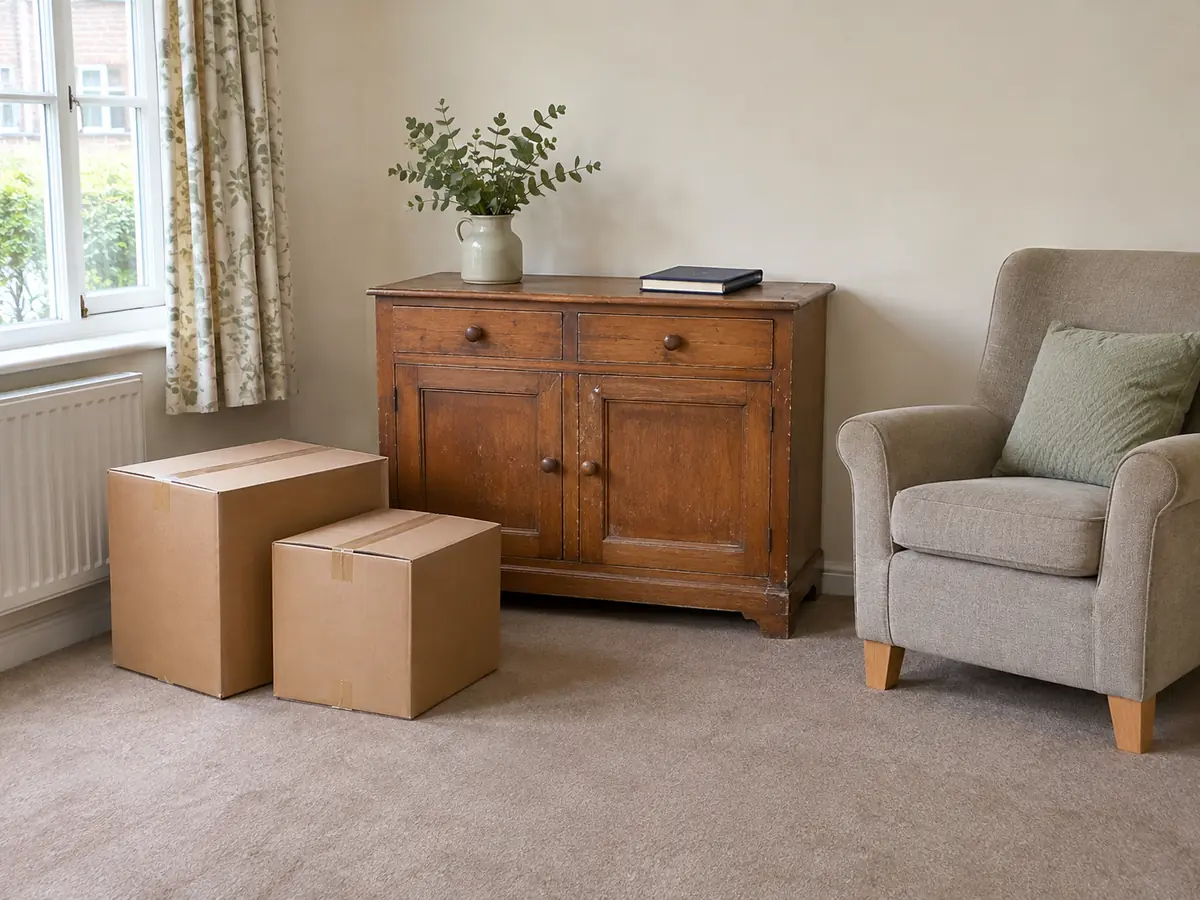
Arranging furniture collections after someone has died can involve several people, destinations and decisions that are still unsettled. A useful starting point is a clear instruction from the person authorised to manage the belongings, followed by an item list everyone involved can identify.
This guide covers the practical organisation of UK household-goods collections after a bereavement. It does not determine inheritance, permission to distribute an estate, probate requirements or legal deadlines. It is also not a house-clearance or waste-removal service. Settle legal questions with the responsible estate representative and an appropriate legal adviser before arranging the affected collection.
Identify who can authorise the collection
Choose a named contact who can confirm the instructions and explain their authority. A relative who opens the door, a neighbour holding keys and the person managing the estate may have different roles. Make those roles clear before a transport team arrives.
GOV.UK’s estate guidance explains the responsibilities of personal representatives and that probate may be needed before dealing with some assets. Do not use a furniture collection booking as confirmation that an item can be sold, donated or passed to a particular person.
Use the legal process appropriate to the estate. The Scottish Courts and Tribunals Service explains confirmation in Scotland; nidirect provides Northern Ireland’s probate guidance. These are starting points for the responsible person, not interchangeable procedures or a checklist for the mover to adjudicate.
If an instruction is disputed or its authority is uncertain, leave the affected item out of the confirmed collection while the responsible person obtains advice. Keep a property handover date separate from the question of whether particular belongings are ready and authorised to leave.
Create one agreed item-to-destination list
Give each item or container a simple reference. Add a description, photograph where useful, current room, approved destination and receiving contact. Distinguish similar pieces of furniture and record separate parts, so “the small table” does not mean different things to different people.
Keep undecided belongings identifiable and outside the transport instructions. A pile awaiting a family decision should not look like a pile ready for the van. If several people will attend, agree who gives the final instruction to the collecting team.
HMRC’s estate-valuation guidance includes household goods and personal items among assets to identify. A moving inventory can help describe what is being handled, but it is not an estate valuation, tax record or decision about entitlement. Ask the estate representative what records must be retained before belongings are moved or sorted further.
Separate transport from sorting, donations and disposal
Agree what will happen to belongings that are not going to the named receiving address. A charity enquiry, sale listing or intended gift is not a completed handover. Confirm the actual recipient, acceptance and appointment before arranging transport around it.
The decluttering guide covers checking recipient acceptance and completing separate disposal arrangements. For bereavement-related work, those arrangements also need the responsible estate contact’s agreed instructions; the collecting team should not decide what is unwanted.
Find My Man and Van does not provide waste or rubbish removal. Check the rubbish-removal FAQ before including goods in an enquiry. Damaged or rejected belongings do not automatically become an extra disposal task. Arrange any waste route separately through a suitable service.
Prepare the actual furniture and access brief
For the confirmed moving items, record dimensions, known condition and any preparation needed. Say which pieces are still assembled, which have separate components and who will prepare them. Keep fixings matched to the right item and flag anything requiring specialist advice.
Use the furniture access checklist for stairs, lifts, turns and carrying distances. Include the route to the final receiving room, not just the street addresses. Explain any building appointment, lawful loading arrangement or restricted access contact at each end.
Confirm who packs and who carries, and describe any requested optional work before booking. A collection appointment should not depend on the driver finishing an unagreed sorting or dismantling job. Keep valuable, fragile or unusually heavy belongings subject to their own explicit assessment and acceptance.
Check each recipient before confirming the route
Make sure the receiving person has agreed to the actual item, can provide entry and has suitable space and access. An agreed destination on a family list does not establish that a wardrobe can get up its stairs or that someone will be there to receive it.
If goods are going to several addresses, give the booking team the complete route, inventories and access windows before confirming the arrangement. Keep each destination group identifiable and tell support about changes. Do not add a stop because a recipient calls while the van is being loaded.
Where goods are going to storage, arrange the actual facility, account access and authorised receiver separately. The self-storage moving guide helps coordinate that handover; a transport booking is not a storage contract.
Keep the handover manageable
Have an informed person available at collection with the final list and the authority to answer practical questions. Allow time for decisions already agreed to be checked without expecting a family member to resolve every remaining issue during loading.
At delivery, compare the item references and component count with what is received. Record discrepancies or concerns through the agreed reporting process. Keep the condition record and the estate contact’s instructions together, sharing only information necessary for the collection.
When the list, permissions and recipients are settled, use a small-move enquiry for an appropriate limited accepted load, or discuss the full inventory with booking support. Give the team the agreed goods, addresses, access, preparation and contacts. That keeps the transport task clear while decisions about the estate remain with the people responsible for them.

Liz
Liz is a content creator and digital marketing consultant. Originally from Toronto, Ontario, Canada, she is now happily settled in the UK (after living in four different countries across 2 continents and moving house 10 times). Drawing on her experiences, Liz shares practical advice and insider tips to help others enjoy smoother, stress-free moves.

The Man and Van Guides from Find My Man and Van are designed to help you understand how man and van services work, when they’re the right option, and how to get the best value for your move. From van sizes and loading tips to short-notice bookings and single-item moves, our expert guides break down everything you need to know before hiring a man and van anywhere in the UK.