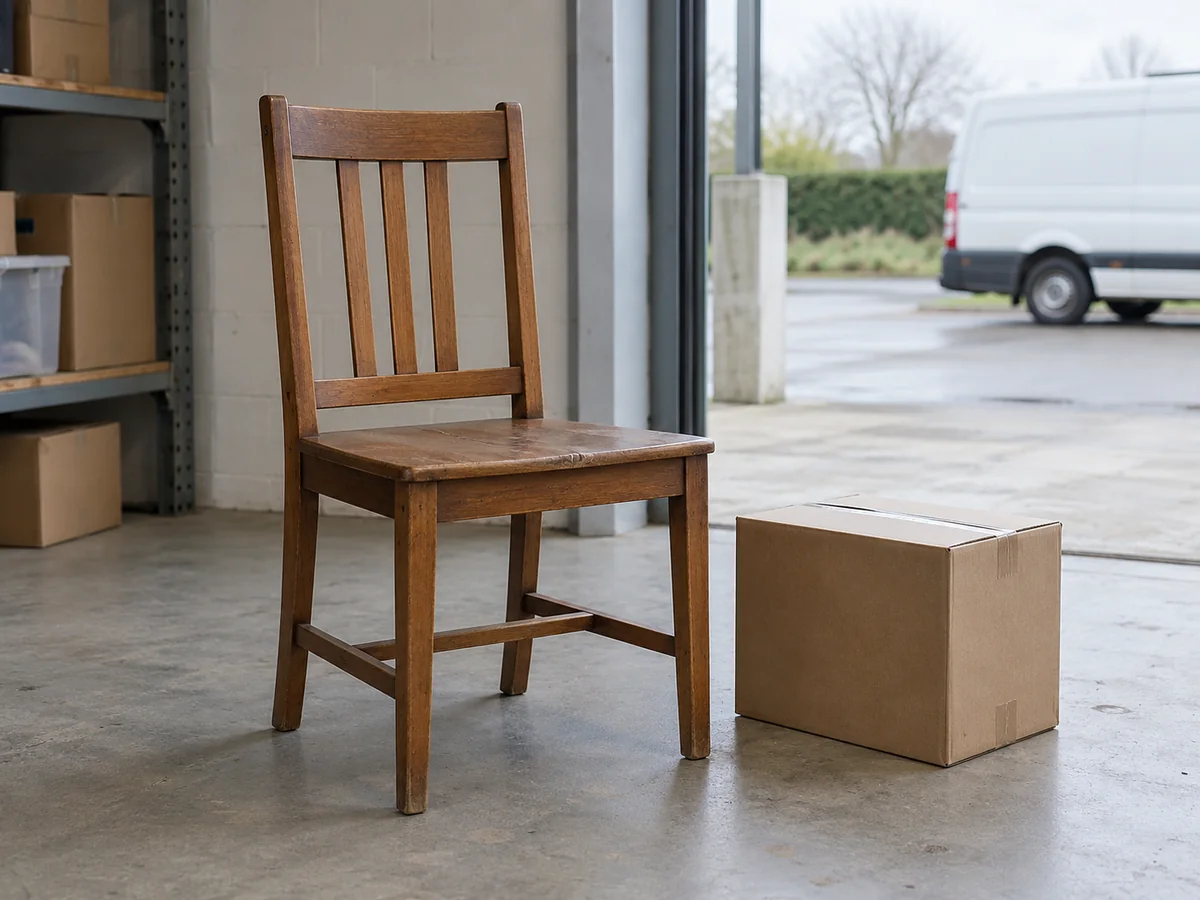
Winning a furniture lot does not mean it is ready for a driver to collect. The auction house may need cleared payment, written authority and a booked appointment before it will release anything. The furniture may also be held somewhere other than the saleroom where it was sold.
For a man-and-van collection, get the release details and the transport details together before fixing the date. A catalogue link is useful, but it is only the beginning of the collection brief.
Confirm that the lot can be released
Ask the auction house what must be complete before your representative arrives. Check payment clearance, any outstanding buyer checks, the collection reference and how to authorise the person collecting for you.
As one example, Dreweatts' collection guidance requires payment and buyer checks to be complete before release, appointments for collection and written authority for a shipper. Your own sale's instructions remain the reference; do not apply another auction house's arrangements to your purchase.
Ask what details are needed once the driver is allocated, and pass any required identification instructions through the booking process. Do not send account passwords or assume the driver can settle an unpaid auction invoice on arrival.
Verify the collection address and deadline
Get the actual pickup address, entrance instructions and collection contact in writing. Establish whether the furniture is still at the saleroom, at an off-site sale venue or in storage. A sale catalogue's office address may not be the place that holds your lot.
Dreweatts also explains that uncollected purchases may move to commercial storage under its stated timetable. This illustrates why a missed deadline can change both the charges and the pickup location. Check the terms for your sale rather than relying on a standard number of free days.
Match the confirmed appointment to an available transport booking. If the deadline cannot be met, resolve the next collection arrangement with the auction house before sending a van to an uncertain address.
Describe every part of the lot
Record the sale reference and lot number, then list what is physically included. A “dining set” could mean a table, separate extension leaves and several chairs; a cabinet may include shelves, a key or removable fittings. Ask the auction house to clarify anything the description leaves uncertain.
Provide dimensions, photographs and weight if available. Explain whether measurements are for the assembled item and whether anything will already be dismantled. Include loose components in the inventory so they do not become an unplanned extra collection.
For the general size and access questions, use the furniture collection and delivery guide. This auction checklist adds the release and lot-control steps around that transport plan.
Separate release, packing and loading
Confirm who will prepare the furniture for collection. Being available for release does not necessarily mean an item will be wrapped, boxed or ready to lift into the van.
For example, Dreweatts says it cannot pack lots for a buyer's chosen carrier. That is a question to resolve before choosing transport: describe the item and ask whether the preparation it needs can be provided. Do not assume a basic van booking includes auction packing or that saleroom staff will help load.
Fragile, unusually valuable or specialist pieces may require preparation beyond an ordinary furniture collection. Ask whether the item can be accepted with the proposed handling and cover. Where specialist packing or conservation advice is needed, arrange it before the collection appointment.
Check access at the receiving address
Measure the route to the intended room, including doors, stairs, turns and lifts. A piece that can leave an auction warehouse may still be too large for your landing.
Tell the booking team about the delivery floor, the lawful stopping position and the distance to the entrance. Agree the loading help needed at both ends and any dismantling or assembly separately. If you cannot establish whether the item will fit, resolve that before collection rather than relying on a doorstep decision.
Keep the handover record specific
Agree how the collecting person will identify the right lot and record what is handed over. Keep the description, lot reference, component list and any available condition information together. Photographs can support a record of visible condition, but they do not authenticate an item or replace a specialist assessment.
If the wrong item is presented, a part is missing or the condition differs from the agreed collection information, contact the auction house and booking support before proceeding. Do not assume the driver can negotiate the purchase on your behalf.
Request transport for the complete job
Supply the actual collection site, confirmed appointment, release instructions, full lot inventory, preparation arrangements and delivery access. Declare the item's nature and value so applicable cover, limits and exclusions can be checked before booking.
Use furniture movers for a furniture enquiry or single-item transport for one accepted piece. Include every stop and task in the brief. The auction purchase and the transport booking are separate arrangements, and both need to be ready for collection to go ahead.

Liz
Liz is a content creator and digital marketing consultant. Originally from Toronto, Ontario, Canada, she is now happily settled in the UK (after living in four different countries across 2 continents and moving house 10 times). Drawing on her experiences, Liz shares practical advice and insider tips to help others enjoy smoother, stress-free moves.

The Man and Van Guides from Find My Man and Van are designed to help you understand how man and van services work, when they’re the right option, and how to get the best value for your move. From van sizes and loading tips to short-notice bookings and single-item moves, our expert guides break down everything you need to know before hiring a man and van anywhere in the UK.