
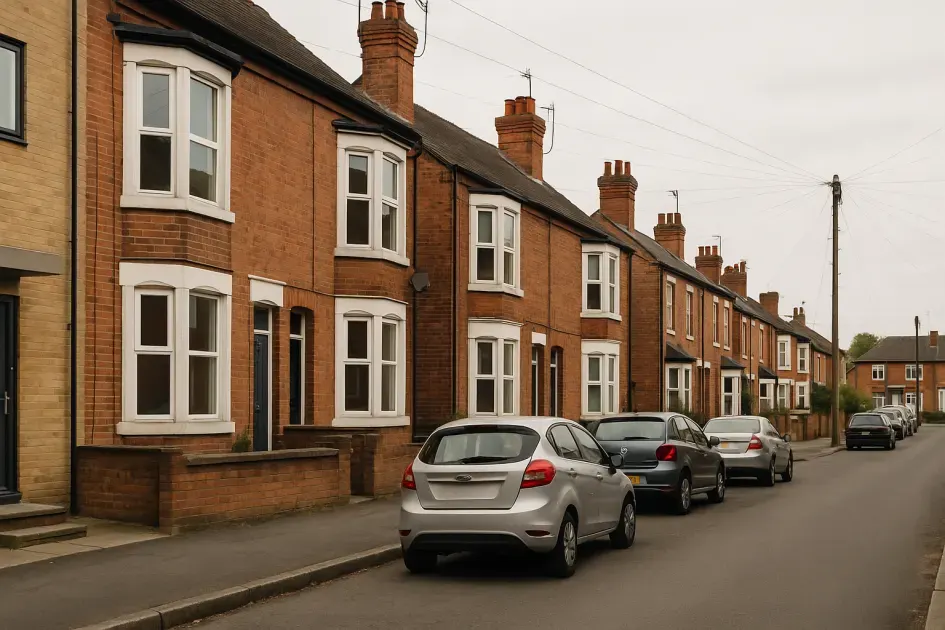
South Nottingham contains many traditional terraced streets — notably areas approaching The Meadows and pockets south of the city centre — where properties sit directly onto the pavement with limited or no forecourts. These terraces commonly have:
When you need the main move page rather than property detail alone, start with removal service in South Nottingham.
For a broader regional view, see access and property guide for Nottingham.
Practically, each of these factors increases the number of staff-hours required and extends loading windows. If a van can’t park outside, porters may need to shuttle items from a parked vehicle further away — every 10–20 metres of extra carry can add 10–20 minutes of labour per trip for bulky items.
Flats in South Nottingham range from older walk-ups with no lift to newer apartment blocks near Clifton and riverside regeneration sites with modern but often compact service lifts. Key local realities:
You will often need to consider For the problems that tend to appear with awkward access, look at moving guide for South Nottingham and hidden moving costs in South Nottingham too. at the same time.
The operational impact is measurable: moves involving stair-only access typically take 25–40% longer than the same property with a service lift, and management-imposed time slots can force half-day or full-day allocations rather than shorter morning or afternoon bookings.
Many residential roads in the southern part of Nottingham are narrow Victorian streets or modern estate lanes where parking uses most of the carriageway. In practice this means:
These constraints translate into longer operational cycles: arranging temporary parking or repeat shuttle runs adds to the removal timeline and increases direct labour costs and vehicle mileage.
South Nottingham’s suburban pockets — such as parts of Clifton and Wilford — have wider frontages, driveways and cul-de-sacs that make street-level loading easier. However, newer estates and riverside terraces present their own challenges:
From a planning perspective, suburban moves generally need fewer labour hours but may require coordination with estate managers; dense-street moves demand more hands and time but less estate coordination.
New-build homes and apartments in the southern sector tend to have modern layouts — wider doors, level thresholds and open-plan living — which speeds internal handling. But those benefits are often counterbalanced by external limitations:
In short, new-build interiors reduce handling friction but external estate constraints can create delays that offset those gains — this often shows up as planning time and administrative cost rather than straightforward labour alone.
South Nottingham moves are shaped by the combination of building type and street environment. Concretely:
Because these are local, physical constraints, successful planning for a South Nottingham removal requires assessing the property type, mapping actual parking and carry routes, and building time buffers for stair work, lift bookings and potential council permissions. For broader guidance on access categories and typical measures used in Nottingham, see the city-wide access information at access and property guide for Nottingham.
Start by identifying your local street type and building access: terraces, semis, new builds or flats each demand different on-the-day resourcing. For a focused overview of services and local planning issues specific to this area, see the main South Nottingham removals page at removal service in South Nottingham. If you need practical step-by-step preparations tailored to common properties in South Nottingham, the moving guide for this area highlights checklist items that directly address the issues above: moving guide for South Nottingham.
Practical answers about how specific building types, parking rules and street layouts in South Nottingham affect removal planning, timings and likely extra costs.
Victorian and early-20th-century terraces around The Meadows and some streets south of the city centre have narrow frontages, steps up to front doors and little or no off-street parking. These factors typically increase carry distance and handling time: porters must move items down narrow hallways and out along the pavement, often juggling parked cars. Expect longer loading windows and potentially higher labour costs to allow for careful manoeuvring, additional stair work and protective equipment for narrow internal staircases.
Flats in South Nottingham vary: older low-rise blocks often lack lifts, while newer blocks near Clifton Village or riverside developments in Wilford have lifts but frequently with restricted internal dimensions and strict service-hour rules. When the lift is small or absent, each large item becomes a stair carry, adding minutes per item and sometimes requiring dismantling. Communal entrances, concierge hours and access codes can also mean set arrival windows — all of which affect total job time and may require coordination with building managers.
Yes. Streets closest to the city — and pockets of residential South Nottingham — have residents' parking zones, loading restrictions and narrow carriageways. Securing a temporary loading bay or short-term parking suspension on a busy residential road can take days to arrange and may involve council charges. Where a removal lorry cannot park close by, additional carry distance increases labour time and can require smaller shuttle vans alongside larger vehicles, both adding to cost.
New-builds south of Nottingham (estate developments and infill sites) often present a different friction: estate roads are sometimes tight, feature low kerbs, bollards and gated entrances, and have restrictions on large commercial vehicles. Garages and driveways might exist but be narrow, making direct loading awkward. Although interiors tend to have level thresholds and larger doors, external manoeuvring limits can force longer loading times, staged parking or pre-booked delivery windows with estate management.
Yes — parts of South Nottingham follow the River Trent and include sloped approaches, riverside terraces and conservation-area streets with narrow pavements. Steps from street level to entrances, alleyway routes to rear gardens, and terraced back-to-back layouts increase carry distances. These physical features translate directly into extra handling time, the need for more staff or specialist equipment and sometimes permission from local authorities for temporary street occupation.
Yes. Lofts, garages and secondary storage areas spread the inventory across more space, which lengthens the loading phase even when the property looks manageable from the front door.