
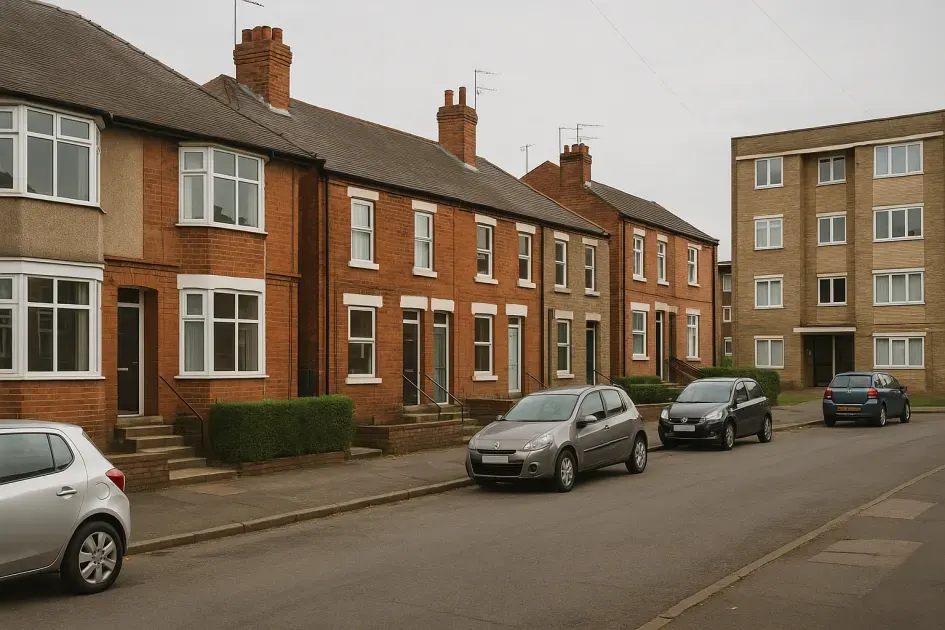
North Nottingham covers a mix of inner suburbs and outer commuter neighbourhoods — Bulwell and Basford to the north-west of the city centre, Sherwood and Highbury Vale closer in, and pockets of newer development toward Hucknall. Each of these places presents physical layouts and access conditions that directly affect how a removals operation must be planned and priced.
removals in North Nottingham is the main booking page for checking availability, pricing and move details in one place.
Many terraces in Basford and around Bulwell were built in the late 19th and early 20th centuries. They typically have narrow frontages, raised thresholds, tight internal corridors and short but steep external steps. Rear access is often via narrow alleyways or ginnels that are only wide enough for single-file carries.
For a broader regional view, see access and property guide for Nottingham.
Real-world implications: tight thresholds and single-file carries increase handling time — every bulky item can take several extra minutes to manoeuvre. Narrow alleyways prevent parking directly outside, so portering distance increases and crews may need to make multiple short runs between vehicle and property. On a full house move that adds up to tangible additional labour time and therefore higher cost.
Access issues usually sit alongside other planning points, so compare this page with moving guide for North Nottingham and hidden moving costs in North Nottingham.
Purpose-built blocks and conversions are common in Sherwood and pockets of northern suburbs. Many first- and second-floor flats above shops or houses have no lift; where lifts exist they can be shallow and have low door clearances — insufficient for wide sofas or wardrobes. Communal corridors and stairwells are often narrower than modern standards.
Real-world implications: moves into stair-only flats multiply carrying time per item and raise physical risk. Small lifts require advance measurement and sometimes dismantling of belongings. Booking longer on-site windows and allocating more porters are common outcomes when moving to these properties.
Streets in older parts of North Nottingham were designed before car ownership was widespread. Many are single-track or only allow limited kerbside parking. Nearer the city edge, new estates may have slim verge parking or no visitor bays. Some streets fall within Controlled Parking Zones that restrict loading times and require resident permits.
Real-world implications: a removal lorry may not be able to park adjacent to the property, forcing longer carries and extra handling. Securing a temporary parking suspension from Nottingham City Council or Nottinghamshire County Council can mitigate this, but it adds administrative lead time and fees — planning these permits into the schedule is essential to avoid delays and additional labour charges.
Outer suburban neighbourhoods north of the city, including estate pockets near Hucknall, have wider plots and driveways — often easing direct vehicle access. However, they also bring long driveway or garage carries, segmented house designs with multiple doorways, and estate layouts where large vehicles can’t turn or park safely.
Conversely, dense terraces closer to Sherwood and Basford offer short quarries from door to vehicle but suffer from pedestrian congestion, parked cars blocking access and narrow pavement widths. Each setting affects the choice of vehicle, crew size and time allocation differently.
Real-world implications: suburban moves often use fewer flights but longer distances; dense urban terrace moves use shorter carries but require careful scheduling around restricted loading windows and double-parking risks.
New-build developments north of Nottingham typically have modern internal layouts and sometimes integrated garages, which reduces internal manoeuvring issues. Yet these estates often lack clearly defined loading bays and have estate roads that are unsuitable for heavy or wide vehicles — builders’ parking and recent landscaping can also block access.
Older properties, especially period terraces and conversions, bring narrower stairs, awkward corners and door heights that predate today's furniture sizes. Basements, cellar steps and Victorian staircases are still commonly encountered in North Nottingham’s older housing stock.
Real-world implications: new builds can still cause extra time due to restricted external access and lack of parking; older homes require more physical labour to protect fabric and furniture. Both types can require advance site visits and clear measurement checks to confirm that large pieces can be moved safely.
Across North Nottingham the most common operational frictions are: longer carry distances from legal parking to door, additional porters for stair-only flats, extra time for reversing or turning on narrow streets, and administrative lead time for parking suspensions or loading permits. These factors directly increase on-site hours, the number of crew members required and sometimes the number of vehicle trips.
Practical planning steps for these realities include measuring stair widths and lift doors ahead of the move, identifying legal parking options and permit requirements, and planning for additional handling time on streets where direct access is impossible. For further guidance on contested access or permit applications see access and property guide for Nottingham.
For an overview of typical move scenarios encountered across North Nottingham, including local examples and a practical checklist, consult the area page at removals in North Nottingham. For a step-by-step pre-move checklist focused on the neighbourhood’s common property layouts, see moving guide for North Nottingham.
Short answers to common location-specific questions about property access, parking and planning for removals across North Nottingham.
Some streets in Bulwell and Basford are narrow or within Controlled Parking Zones. For large removals vehicles a temporary suspension from Nottingham City Council or Nottinghamshire County Council may be needed to hold a bay; arranging this often takes several days and will add to the cost and planning time.
Flats above shops commonly have narrow communal stairs and no lift. Each heavy item requires careful carrying and negotiation of turns, which increases handling time per item — expect longer on-site hours and higher labour costs than a ground-floor move.
New builds north of the city (typical on former greenfield edges) often lack visitor parking and have tight estate roads. Although internal layouts may be easier, long carry distances from the street to front door and restrictions on where a lorry can sit create operational friction that affects time and sometimes extra unloading charges.
Many older terraced streets around the city’s northern suburbs have shallow front gardens and raised doorways, requiring items to be carried up steps or down narrow alleyways to a rear yard. These constrained approaches increase physical handling and add minutes per large item, which compounds across a full house move.
Several residential roads north of Hucknall and adjacent villages have substandard widths for large removal trucks. Smaller rigid removals vehicles or multi-load plans are often required, increasing labour time and potentially the number of vehicle trips.
Yes. Lofts, garages and secondary storage areas spread the inventory across more space, which lengthens the loading phase even when the property looks manageable from the front door.