
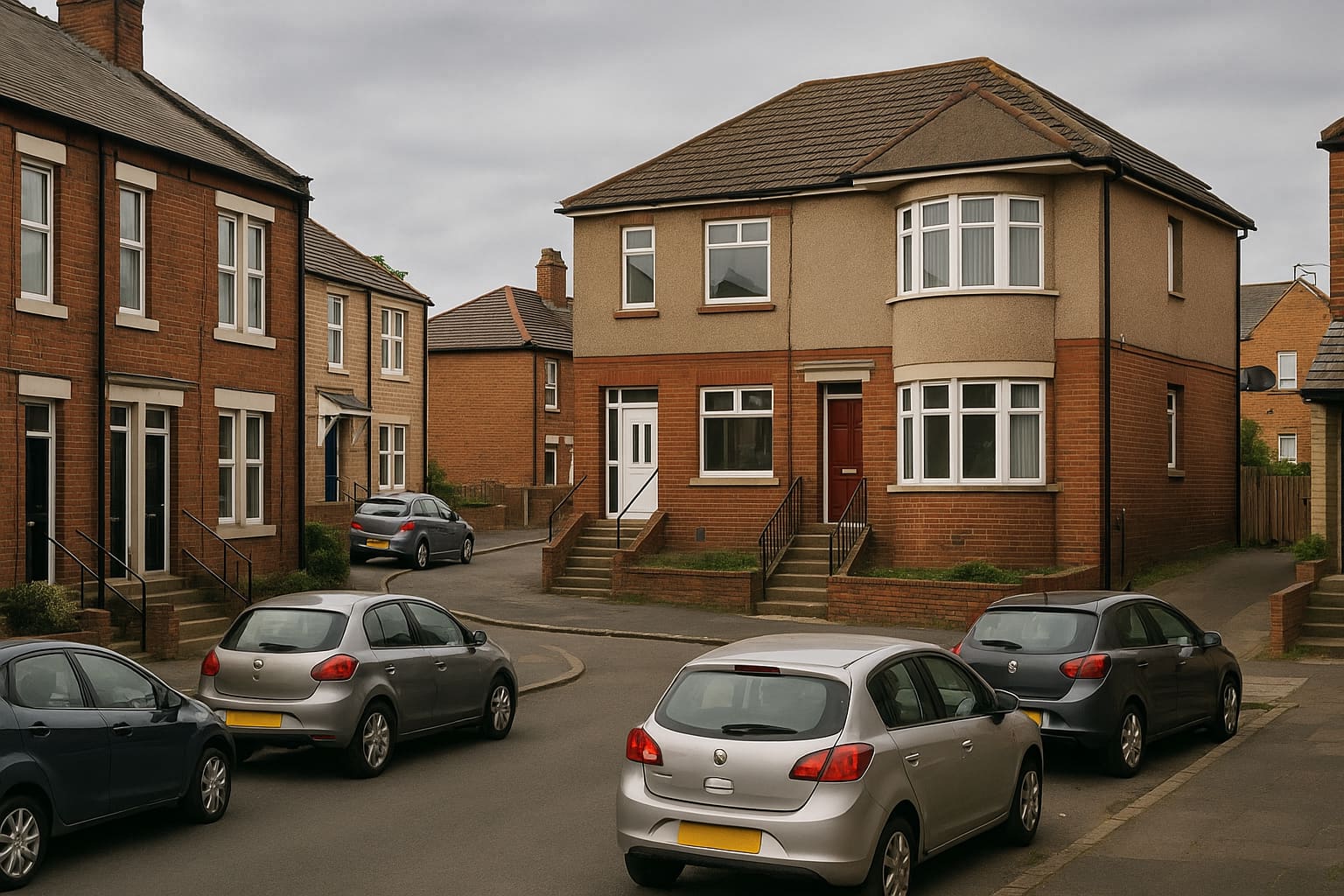
Property challenges for removals in Gateshead

Physical and structural challenges for removals in Gateshead

Gateshead’s mix of riverside developments, Victorian terraces and suburban estates creates distinct, location-specific friction for full-house, flat and office removals. The sections below describe the real-world constraints removal teams encounter across the borough and how those constraints influence planning, time on site and cost.

Terraced housing: narrow doorways, tight staircases and external steps

Large swathes of Gateshead — for example streets radiating from Saltwell Park and older neighbourhoods in Bensham and Low Fell — are lined with Victorian terraces. These properties commonly have:

When you need the main move page rather than property detail alone, start with removal service in Gateshead and use access and property guide for Newcastle for the broader regional picture.

  • Narrow external entrances and internal doors that make manoeuvring wardrobes, sofas and tall bookcases much slower and sometimes impossible without partial dismantling.
  • Steep, single-flight stairs and tight landings where two-person carries have restricted movement. Banisters, cornices and plasterwork need protection, adding to setup time.
  • Front steps or raised thresholds that increase slip and trip hazards and require extra padding and handling care.

Operationally, these factors mean extra labour per cubic metre moved — a removal team will typically need longer to load and unload a terraced house than a similarly sized modern property. Expect increased time allowances for protective wrapping and dismantling, and potential cost uplifts where extended carry or specialist handling is required.

Flats and apartments: conversions, communal corridors and lift restrictions

Gateshead’s flats fall into two broad categories with different practical challenges:

You will often need to consider For the problems that tend to appear with awkward access, look at moving guide for Gateshead and hidden moving costs in Gateshead too. at the same time.

  • Converted Victorian properties (common around central Gateshead and areas close to the river) with narrow staircases, low ceilings and odd-shaped hallways. These increase the time required per item and often rule out moving large, assembled furniture without partial dismantling.
  • Modern apartment blocks near the Quays and in recent developments that have lifts and wider corridors but come with delivery rules: booked lift slots, weight and size limits, strict loading bay hours and sometimes security/concierge procedures. Underground parking can have height barriers that prevent direct van access.

In practice, removals involving flats frequently require coordination with building management to reserve lifts and loading bays. If lifts are not available or are too small, manual carries up stairs significantly extend on-site time and labour costs.

Narrow roads, parking limitations and permit zones

Road layout across Gateshead varies from wide arterial routes (A167, A184) to narrow residential streets. Constraints to consider include:

  • On-street parking scarcity and controlled parking zones near Gateshead town centre and the Quays — bay suspension or short-term loading permits from Gateshead Council are often required for large vehicles.
  • Narrow terraced streets where a large van cannot park directly outside the property, forcing teams to park on a nearby main road and make repeated carries.
  • Restrictions around pedestrianised areas and busy commercial corridors where loading is limited to specific times of day.

These constraints translate into practical delays: time spent locating legal parking, walking between vehicle and property, and applying for suspensions. Each factor increases labour hours and can push a move into a multi-day operation if not planned.

Suburban versus dense urban layouts: contrasting friction

Gateshead’s suburban neighbourhoods (for example parts of Whickham and the residential pockets around Team Valley) differ materially from dense terraces nearer the river:

  • Suburban layouts often provide driveways, garage access and wider roads, which reduce carry distance and speed up loading — but cul-de-sacs and narrow estate roads can still block large vehicles.
  • Dense urban pockets near the town centre and Quays have high pedestrian activity and limited kerb space; removal vehicles may have to use designated loading bays or off-street parking which must be booked in advance.

Operational planning must therefore be site-specific: suburban moves can be quicker overall but may still require alternative vehicle arrangements when estate roads are unsuitable for large vans. Dense moves need permit planning and allowance for slower street-side operations.

New builds versus older properties: different kinds of friction

Newer developments in Gateshead have been built to modern standards but bring their own constraints:

  • New-build apartments frequently have lifts and wider hallways, cutting manual handling time — however, they often rely on allocated parking bays or underground car parks with height restrictions, requiring pre-booked access or multiple short carries from the van to the building entrance.
  • Older properties have awkward room layouts, uneven floors and period features that need protection. Converted houses can present unusually shaped openings and staircases that force dismantling of items on site.

These differences influence both price and schedule: new builds may reduce physical handling time but increase admin time for access permissions; older properties increase physical handling and require more protective materials and labour.

Real-world implications for time, cost and planning

Specific consequences for removal operations in Gateshead include:

  • Increased labour hours where properties have long carry distances, tight stairs or lack direct van access — this is commonly seen in terraced streets near Saltwell and in converted flats across town.
  • Additional time and potential fees for bay suspensions or council permits in town centre and Quays areas; failure to secure these in advance can cause on-the-day delays and parking fines.
  • Potential need for partial dismantling, specialist handling or protective boarding in older properties, which raises both time on site and material costs.
  • Arranging lift bookings and delivery windows for modern apartment blocks; missed bookings can force waits or rescheduling into another day.

Because these factors vary street by street, review the specifics of your Gateshead property early in the planning process. See the local removals overview at removal service in Gateshead for contextual information, and consult the detailed access considerations on the broader Newcastle region at access and property guide for Newcastle. For move-day coordination tips specific to Gateshead properties, also see moving guide for Gateshead.

Rooting planning in the physical realities of your street and building — parking space, stair configuration, lift size and estate layout — is the most reliable way to control timings and avoid last-minute costs on a Gateshead removal.


Frequently asked questions about Gateshead removals and property access

Answers to common, Gateshead-specific questions about parking permits, lift access, carry distances and operational delays you can expect when organising a full house, flat or office removal.

Gateshead town centre and residential areas close to the Quays have controlled parking zones and loading bays with time restrictions. For a large removals vehicle you often need to book a bay suspension through Gateshead Council in advance; without it teams can face fines or be forced to park further away, adding carry distance and time. Check local council regulations and allow extra planning time for any required applications.

Victorian terraces common in Saltwell, Bensham and parts of Gateshead have narrow front doors, tight internal hallways and steep staircases. These constraints increase handling time per piece, often requiring two people for awkward items and protective boxing for banisters and doorframes. Expect longer loading windows and possible additional labour charges for extended carry and manoeuvring.

Flats in Gateshead vary from converted Victorian houses with narrow spiral staircases to modern blocks near the Quays with lifts. Converted flats usually require longer carry distances and more manual handling; modern apartment blocks can impose lift-booking rules, restricted delivery hours, or height/weight limits in lifts. Communal corridors and concierge policies can also require advance coordination, which affects scheduling.

New-build estates often have larger internal corridors and lift access which makes moving bulky items easier, but they also introduce different friction: allocated parking spaces or underground car parks with height barriers, gated access, and strict reserved delivery slots. These require booking and can add waiting time if not arranged ahead of the move.

Many suburban pockets around Whickham and Ryton feature narrow residential lanes and cul-de-sacs that restrict where a large removal vehicle can park. Drivers may need to use smaller satellite vehicles for the final leg, or park on a main road and make multiple carries. That increases labour hours and affects the overall quote and schedule.

Measure doorway widths, stair turns, lift dimensions where relevant, and the real path from the furthest loaded room to the van position.