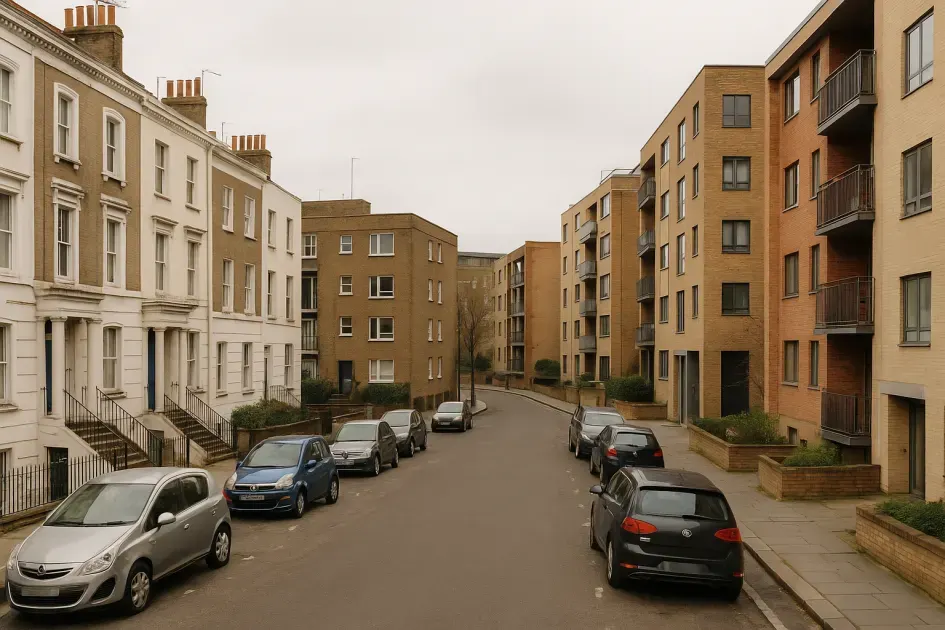
Central London moves are shaped by dense streets, mixed building stock and tight access rules. Typical property types include Georgian and Victorian terraced houses, converted flats in period buildings, mid-century and post‑war blocks with communal stairwells, and new-build developments with concierge-controlled entrances. Each property type brings distinct access constraints that affect time, crew size and cost.
Use removals in Central London first for the core service page when you want the clearest next step from general guidance to booking.
For a broader regional view, see London area guide.
Physically inspect entrance widths, stair riser heights, lift dimensions and communal corridors. Measure sofas, beds and dining tables against corridor and lift sizes. Check whether the building has restricted delivery hours or requires proof of insurance for contractors — this affects whether large items need dismantling.
Identify nearest legal stopping points (loading bays, single-yellow windows, council loading bays) and whether those require temporary suspension. In many Central London streets, uncontrolled standing is enforced frequently; if a bay suspension is needed, allow lead time for borough processing and budget for the fee.
In practice, this usually connects with This overview works best when read alongside moving costs in Central London and property access challenges in Central London..
Determine whether the property falls inside Congestion Charge or ULEZ boundaries. Add any daily charges and possible driver permits into cost planning, and allow additional time for parking and drop-off to avoid fines.
For high-complexity moves (large houses, listed buildings, new-builds with concierge rules or properties requiring bay suspensions) start planning and seeking specialist logistical arrangements now. Early booking secures crew time, truck access and any required permissions.
Typical booking window for flats and smaller houses. Confirm move date, request any required parking suspensions from the local council, and arrange lift bookings or concierge notifications for the destination. Prepare a measured inventory to define vehicle and crew requirements.
Confirm exact arrival times, finalise parking arrangements, print maps for crew showing legal stopping points and carry routes, and check building rules (refuse collection/cleaning hours). Re-measure awkward items if there was any uncertainty.
Because of longer carry distances and multiple handovers, pack fragile items in small, clearly labelled boxes and seal them. Use robust wardrobe boxes for clothes to speed loading in buildings without internal hanging rails or where lifts are small.
Each trip from truck to front door is more likely to be repeated in Central London due to limited parking. Protect floors and narrow hallways with runners and edge guards; poorly wrapped items can be damaged in tight turning spaces, which increases claims and delays.
Plan to dismantle large wardrobes, beds and tables before move-day when access is constrained. Dismantling off-site or the night before reduces time spent in restricted loading windows and lowers labour costs on the day.
Position the vehicle at a pre-identified legal stopping point. If a bay suspension has been arranged, keep clear signage and copies of the suspension permit to show wardens. Expect wardens to patrol frequently; an unauthorised stop can lead to immediate fines and tow risks, increasing costs and delays.
Assign crew roles: loading, driving, stair carries and lift coordination. Central London moves are physically intensive; schedule short, frequent rotations to maintain pace when stairs and long carries are involved. Failing to factor rotation time will extend the move and increase labour charges.
Many streets restrict loading during morning and evening peaks. Where loading is only allowed in narrow windows, plan the heaviest items first so legal stopping time is used efficiently. If building regulations limit move times (common in concierge-controlled blocks), arrange earlier arrival slots and confirm lift reservations in writing.
Typical frictions include last-minute parking enforcement, lifts out of service, and tight stair landings requiring extra dismantling. Each can add 30–90 minutes to the schedule and sometimes require secondary trips, increasing both time and cost. Build contingency hours into the plan and budget.
Every access restriction and extra carry in Central London converts directly into time and cost. A short additional carry of 30 metres can add one or more extra crew hours; unexpected lift failures or enforcement action can add multiple hours or necessitate return trips. Budget for contingencies (typically 10–25% extra time for dense central locations) and for permit or suspension fees plus any congestion/ULEZ charges. Early surveys and accurate measurement will reduce surprises, and formalising lift and bay bookings will limit last-minute enforcement delays.
Answers to common practical questions about moving in Central London, including access, parking permits, lifts and timings.
Book as early as possible—aim for 4–8 weeks for a typical flat or house, and 8–12 weeks if the property is in a listed building, a new-build with concierge rules, or requires a suspended parking bay. Peak dates (end of month, school summer) reduce available slots, increasing cost and the time needed to secure suitable crews and vehicle access.
Many Central London streets have resident permit bays, restricted loading times or dedicated loading bays that require temporary suspension. Borough processes vary, but arranging a bay suspension or temporary loading permit can take several working days and incur fees, and failing to arrange one risks fines or extra walking distance.
Victorian and Georgian conversions often have narrow staircases and small lifts; commercial conversions can have larger freight lifts but limited booking windows. New-builds frequently require advance lift booking with concierge. Expect extra time and possible dismantling for large items — factor this into timings and crew size.
Yes. Central London includes Congestion Charge and Ultra Low Emission Zone areas. Vehicles that do not meet standards may incur daily charges; even if exempt, parking and loading restrictions can add time. Include potential congestion/ULEZ fees and the extra labour time caused by restricted parking when budgeting.
Carry distances in Central London can be substantial — from a few metres up to several dozen metres if parking is limited or a loading bay isn’t available. For each 20–30 metres of additional carry, expect the move to take significantly longer and require more crew rotation, increasing labour costs and total hours.
Return to the main service page once the logistics are clear and you are ready to progress the actual booking path. Planning pages should support that step, not compete with it.