
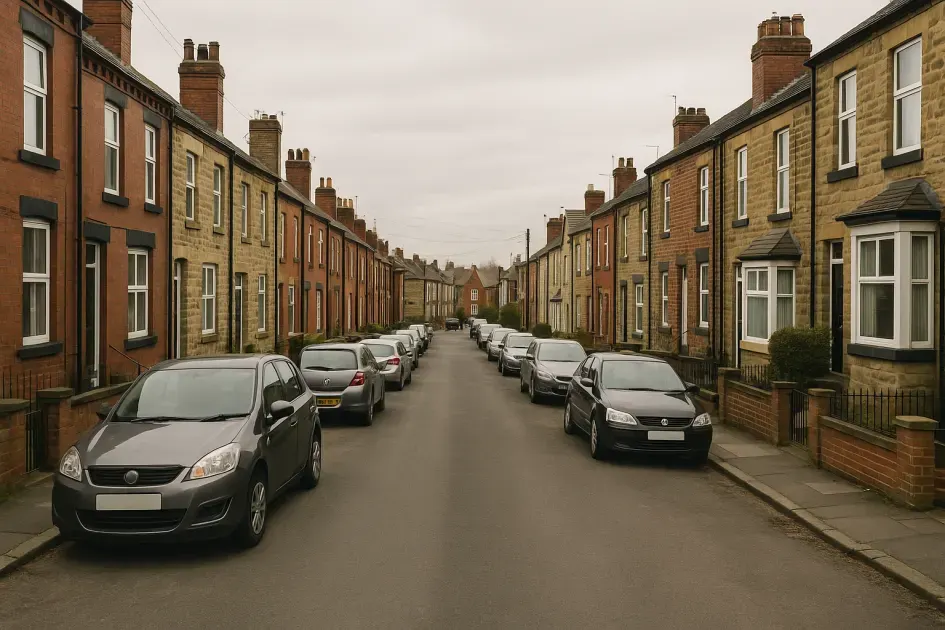
Costs for a removals job in West Leeds are driven by hard, physical realities: the type of property, street layout, vehicle access and how long crews spend loading and carrying. West Leeds covers a patchwork of neighbourhoods — Armley and Wortley with dense terraces, Kirkstall and the canal corridor with mill flats and tight loading points, Bramley and Pudsey with mixed semis and local centres, and pockets of new-build estates with cul-de-sacs. Each of these creates different operational friction that directly impacts time and price.
Terraced houses (common in Armley and parts of Bramley) tend to have narrow doors and staircases, which slows down bulky item movement and often requires more careful manoeuvring and padding — increasing handling time. Converted flats along the River Aire and Leeds-Liverpool canal in Kirkstall often mean long corridor carries or stair-only access; even where lifts exist they may be too small for large sofas or wardrobes. Semi-detached family homes in Bramley and Pudsey often have driveways, which cuts loading time and therefore cost. New-build estates on the outskirts (for example around New Farnley) frequently place parking bays away from front doors in landscaped cul-de-sacs — that adds carry distance and shuttle time despite the modern stair/lift layouts.
removal service in West Leeds is the main booking page for checking availability, pricing and move details in one place, while moving costs in Leeds gives the wider regional cost picture.
If you want to separate headline pricing from the details that change the final job, hidden moving costs in West Leeds and property access challenges in West Leeds.
Many West Leeds streets are covered by residents' parking controls or have busy high streets where legal parking is limited. Bramley Town Street, Kirkstall Road and parts of Pudsey see high footfall and short-term bays — these restrict where a removal vehicle can stop. Narrow terraced streets and tight turning radii in Wortley or older parts of Armley mean a large vehicle cannot park adjacent to the property; crews may have to park legally a short walk away and carry every item over that distance, which multiplies labour time. In some canal-side locations the only practical loading point is a designated loading bay or a canal towpath access, which can influence vehicle choice and loading duration.
Large 18-tonne vehicles are efficient for long-distance bulk moves, but they struggle on narrow West Leeds streets and in estate cul-de-sacs. When a big lorry cannot get close, operators will use a smaller 7.5-tonne or 3.5-tonne rigid to shuttle loads — this adds vehicle hours and double-handling. Low bridges and restricted roads around some canal crossings and older suburbs also require route planning and sometimes longer detours, increasing mileage and driver time compared with areas where direct access is possible.
Cost is largely crew-hours. A short ground-floor move with driveway access might need two movers and one driver, and finish quickly. A three-storey terraced property or a flat without a lift frequently needs an extra pair of hands to keep loading time reasonable; a four-person crew working longer carries will spend more chargeable hours on site. Long carries of 30–100 metres from legal parking to front door — common on some new estates and canal-side apartments — add several minutes per item. Multiply that by 200–400 boxes and furniture items and the extra time becomes significant.
The busiest arteries in West Leeds — Kirkstall Road (A65 corridor), the A647 and the routes into Pudsey — suffer predictable congestion at school drop-off/pick-up times and morning/evening commutes. Crews stuck in traffic or delayed finding a legal loading spot increase the job time and therefore cost. Saturdays and market days in Bramley and Pudsey can mean restricted access and fewer parking opportunities, which often results in weekend surcharges or longer on-site times. Bank holidays and high-demand weekends can attract higher hourly rates or limited availability of suitably sized vehicles, so timing a move midweek in term-time typically reduces the overall bill.
Compared with inner-city Leeds, West Leeds has more mixed outcomes: it isn’t uniformly constrained by tight city-centre access but features pockets of very narrow terraces and long-courtyard new builds. Unlike affluent North Leeds suburbs where many properties have private drives and wide streets, West Leeds shows a higher proportion of on-street parking and converted flats with carry challenges. Compared with East Leeds estates that often have wider roads and predictable estate layouts, West Leeds’ mix of canal-side mills, Victorian terraces and fragmented new developments produces more variable vehicle access and more frequent need for parking suspensions or shuttle loading — and that variability is what most often increases time and cost. For a broader look at city-wide cost drivers, see /removals/leeds/moving-costs.
Real cost savings in West Leeds come from reducing time-on-site and avoiding double-handling: ensure clear access to a legal parking place, check whether the destination has lift dimensions suitable for large items, and allow for parking suspension applications where necessary. For more on potential additional fees that can appear on moving day in this area, read /removals/leeds/west-leeds/hidden-costs. If you want a place-specific overview of operational constraints in the immediate neighbourhood and typical crew sizes for different property types, start at the local removals landing page: /removals/leeds/west-leeds.
| Move size | Typical range | What usually affects it |
|---|---|---|
| Studio / small 1-bed | £140–£280 | permit-controlled terrace rows with short kerb access and loading done in sequence and resident permit bays and short-stay controls on dense streets near armley, kirkstall and bramley. |
| 1–2 bed flat | £260–£480 | Carry distance, stair cycles, lift access and van positioning. |
| 2–3 bed home | £420–£780 | Furniture volume, loading distance, disassembly needs and timing pressure. |
Practical answers to common cost questions that reflect West Leeds realities: terraces, mill flats, parking controls and how they change time and labour required.
Victorian terraces common in Armley and parts of Bramley typically have narrow front doors, tight hallways and steep staircases. Those features increase carry time and often require more handlers or smaller internal manoeuvres, which lengthen the job and therefore increase labour and time-based charges.
Yes — many mill conversions have long corridors, narrow stairwells and no dedicated loading bay. Even when a lift is present it may have restricted dimensions. The extra carry distance from a legal parking space or canal-side loading point to the flat adds minutes per box and furniture item, raising total crew hours.
Permits and parking suspension requests through Leeds City Council can add time and cost. If a moving vehicle needs a single yellow suspension or a loading bay booking, arranging and paying for that — plus possible on-street meter charges or civil enforcement delays — increases the operational overhead and can extend the on-site duration.
Morning and evening rush hours on Kirkstall Road and the A647 cause predictable delays; weekday daytime moves on shopping streets (Bramley Town Street, Pudsey centre) face congestion. Weekends, bank holidays or school-run peaks typically attract higher labour rates or longer travel and loading windows, so the same job booked midweek can be materially cheaper than during peak times.
Not necessarily. Narrow terraces, cul-de-sacs on new-build estates and bridges or weight-restricted lanes near the canal often prevent large 18-tonne vehicles from getting close. That forces shuttle loading with a smaller vehicle or longer carry distances from a legal parking spot — both of which add crew hours and increase cost.
In many cases, yes. A quieter weekday slot can reduce waiting and make access more predictable, especially where factors such as school-run congestion on routes through pudsey, farnley, bramley in the morning, mid-afternoon and peak delays on the a647 corridor through armley, stanningley affecting arrival windows tend to create friction at busier times.